
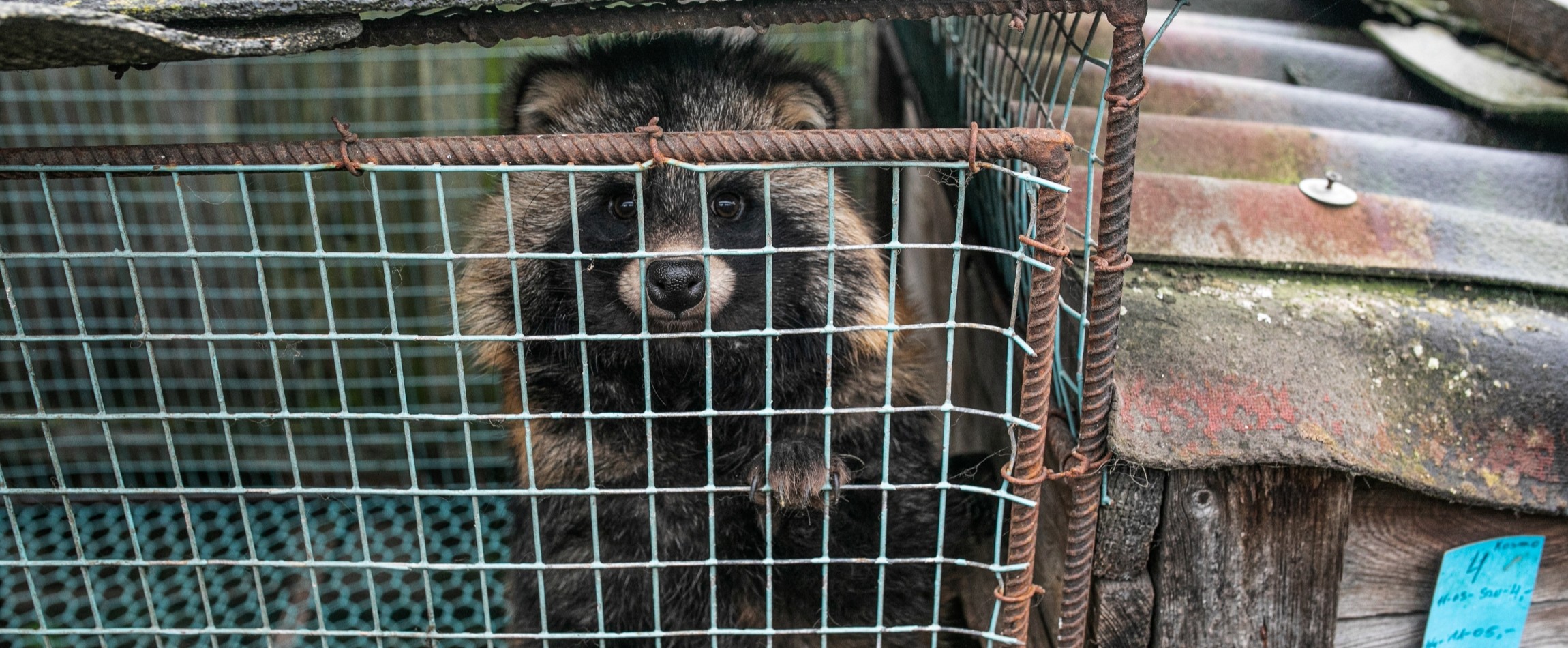
The Economic Case For A Fur Farming Ban In The European Union


In light of a successful European Citizens’ Initiative calling for an end to fur farming, the European Union (E.U.) is considering a ban on the practice and the trade of farmed fur products. Already, 23 E.U. member states have implemented full, partial, or effective bans, signaling a major shift away from the industry.
To inform the policy debate, this report provides a “full-cost account” of the E.U. fur industry, which goes beyond traditional financial metrics to include the industry’s impact on the environment and public health. The study focuses on the four main species farmed for fur in the E.U.: minks, foxes, raccoon dogs, and chinchillas.
The analysis used a holistic, full-cost accounting method to monetize the industry’s total contributions where possible.
- The economic account assessed seven metrics, including production value, employment, and gross value added (GVA).
- The environmental account converted pollution and resource-use data from life-cycle analyses into monetary damage costs, and also estimated the costs of the impacts on local communities and invasive species management.
- For the public health account, the researcher identified six major zoonotic disease risks and estimated the on-farm prevention (or “abatement”) costs for SARS-CoV-2 and influenza viruses.
Animal welfare harms weren’t monetized, as damage costs are still such a new field of research. Further, scientific reviews have concluded that no on-farm improvements can adequately provide for the welfare needs of these species, meaning that abatement costs couldn’t be estimated either.
Economic Findings
The E.U. fur farming industry has dramatically declined over the past decade. Since 2015, the number of fur farms has fallen by 73%, the number of pelts produced has dropped by 86%, and the value of sales has plummeted by 92%. As of 2024, the industry produced 6.3 million pelts worth an estimated €183 million and employed about 2,048 full-time equivalents (FTEs).
Key findings from the economic analysis show that the industry is not financially viable:
- Unprofitable: The sector has been unprofitable for several years, as the prices paid for pelts are below the costs of production.
- Negative GVA: Fur farming generates a GVA of -€9.2 million, meaning it actively reduces the E.U.’s overall economy rather than contributing to it.
- Reliant on public funds: The industry receives substantial public payments (e.g., for lost sales due to COVID-19 and avian influenza) that greatly exceed the tax revenues it generates. For example, the €3.2 billion paid to Danish mink farmers for the COVID-19 cull was 99 times the sector’s pre-crisis annual tax contribution.
Environmental Costs
The annual environmental damages from the fur farming sector total an estimated €226 million. The largest costs are outlined below.
Air Pollution
The single largest impact is particulate matter formation, costing €83 million annually. This fine particulate matter comes from ammonia emissions from animal waste and is a cause of chronic respiratory illnesses. These pollutants travel long distances: a study of fur farming in Denmark found that most of the resulting premature deaths (51 of 63) occurred in other E.U. countries.
Invasive Species
American minks and raccoon dogs are among Europe’s most problematic invasive species, and fur farms are their main source. The estimated annual cost to eradicate minks from the E.U. is €79 million.
Impacts On Local Communities
The large quantities of raw meat and animal waste on fur farms cause strong odors and attract insects. This negatively impacts local residents, depressing nearby property values by an estimated €3.8 million annually.
Public Health Risks
Fur farms create ideal conditions for viruses to mutate and be transmitted to humans, posing unique public health risks that scientific reviews have placed in the same high-risk category as live animal markets. Zoonotic pathogens linked to fur farming include SARS-CoV-2, influenza viruses, Salmonella, and Campylobacter. The estimated annual cost to implement on-farm prevention measures for SARS-CoV-2 alone is €200 million. When extrapolating to include influenza prevention measures, this increases to €211 million a year.
Limitations
The study notes that its cost estimates are likely conservative, as many significant impacts couldn’t be included. Major omissions include animal welfare costs, public health risks from zoonotic diseases other than SARS-CoV-2 and influenza viruses, and eradication costs for invasive raccoon dogs.
A Call To Action
This report provides a comprehensive, evidence-based argument for ending fur farming in the E.U. The full-cost account reveals that the total contribution of E.U. fur farming to society is an estimated -€446 million per year. Both the environmental costs (€226 million) and the public health prevention costs (€211 million) independently exceed the industry’s total revenue (€183 million).
For animal advocates, the study offers powerful, monetized data demonstrating that the fur industry is an economic drain on society, propped up by public funds while imposing massive costs on public health and the environment.
This summary was drafted by a large language model (LLM) and closely edited by our Research Library Manager for clarity and accuracy. As per our AI policy, Faunalytics only uses LLMs to summarize very long reports (50+ pages) that are not appropriate to assign to volunteers, as well as studies that contain graphic descriptions of animal cruelty or animal industries. We remain committed to bringing you reliable data, which is why any AI-generated work will always be reviewed by a human.

