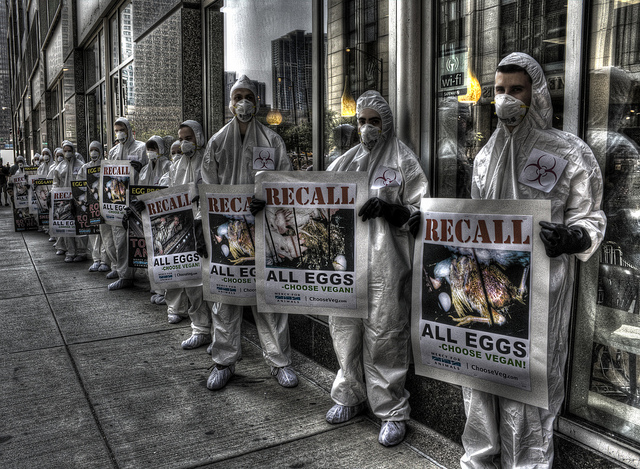
Consumers Spend Less On Meat When Farmed Animals Are In The Media


By creating an index of the animal welfare issues related to beef, pork, and poultry since 1982, researchers concluded that media coverage increases consumer awareness of farmed animal production practices, thereby influencing consumer perceptions of meat product quality and consumption for up to six months following the media coverage.
Over the most recent decade, the poultry index for animal welfare issues increased by 253% and the pork index increased by 181%; the beef index did not seem to follow animal welfare publicity over this period. However, beef increased by almost 900% in 2008, following publicity about a downer cow in California.
Researchers found that media coverage influenced consumer demand for meat for up to six months after the publicity; the influence of publicity is not as strong as price and expenditure, but it is still significant. Pork demand would have been 2.65% higher and poultry demand would have been 5.01% higher but for the media coverage of animal welfare issues from 1999 to 2008.
In general, increasing media coverage of animal welfare issues influences consumers to buy less meat rather than encouraging them to reallocate expenditures across other meats. This attention, in turn, causes consumers to eat less meat and spend food dollars on non-meat items for up to six months after the publicity.

Citations:
Glynn Tonsor, Nicole Olynk, Kansas State, Purdue University, 2010 United States (National)