Rethinking Food Systems In Africa


For animal advocates, conversations about food systems often circle back to the same truth: industrial farming doesn’t just harm animals; it harms people and the planet too. In Africa, these connections are especially stark. Large-scale, export-driven agriculture threatens to disrupt communities, reshape diets, and cause extensive damage to land and water. These harms can be captured in the concept of ecological debt — the environmental and social costs of industrialized systems created by the Global North but disproportionately borne by the Global South.
This article explores how ecological debt plays out in Africa in the context of industrial farming, and why building just and sustainable food systems requires more than technical fixes. Arguably, progress depends on recognizing the human and cultural losses caused by industrial agriculture, in addition to the suffering of animals trapped in intensive farming systems. For advocates, this framing provides a powerful way to connect animal welfare with broader struggles for justice and sustainability.
Ecological Debt And Industrial Farming
Ecological debt describes the unpaid costs of extractive industries like industrial farming. These include deforestation, soil degradation, biodiversity loss, greenhouse gas emissions, and water pollution. In Africa, many of these harms are intensified by the fact that industrial farming often serves international markets rather than local communities.
Crop production is shifting away from traditional cereals and pulses to higher-footprint monocultures, sometimes displacing smallholder farmers and indigenous food systems. Much of this production is destined for animal feed or export instead of nourishing the people who live where it’s grown. This process not only strips the land of its fertility but also undermines food security.
Rural communities bear the brunt of degraded land and polluted rivers, wild animals lose habitat, and future generations inherit the consequences. Yet the beneficiaries of industrial farming, namely export markets and multinational corporations, rarely account for these more intangible costs. For advocates, the ecological debt framework is useful because it highlights how animal exploitation is tied to much broader patterns of exploitation and injustice.
The Human And Cultural Dimension
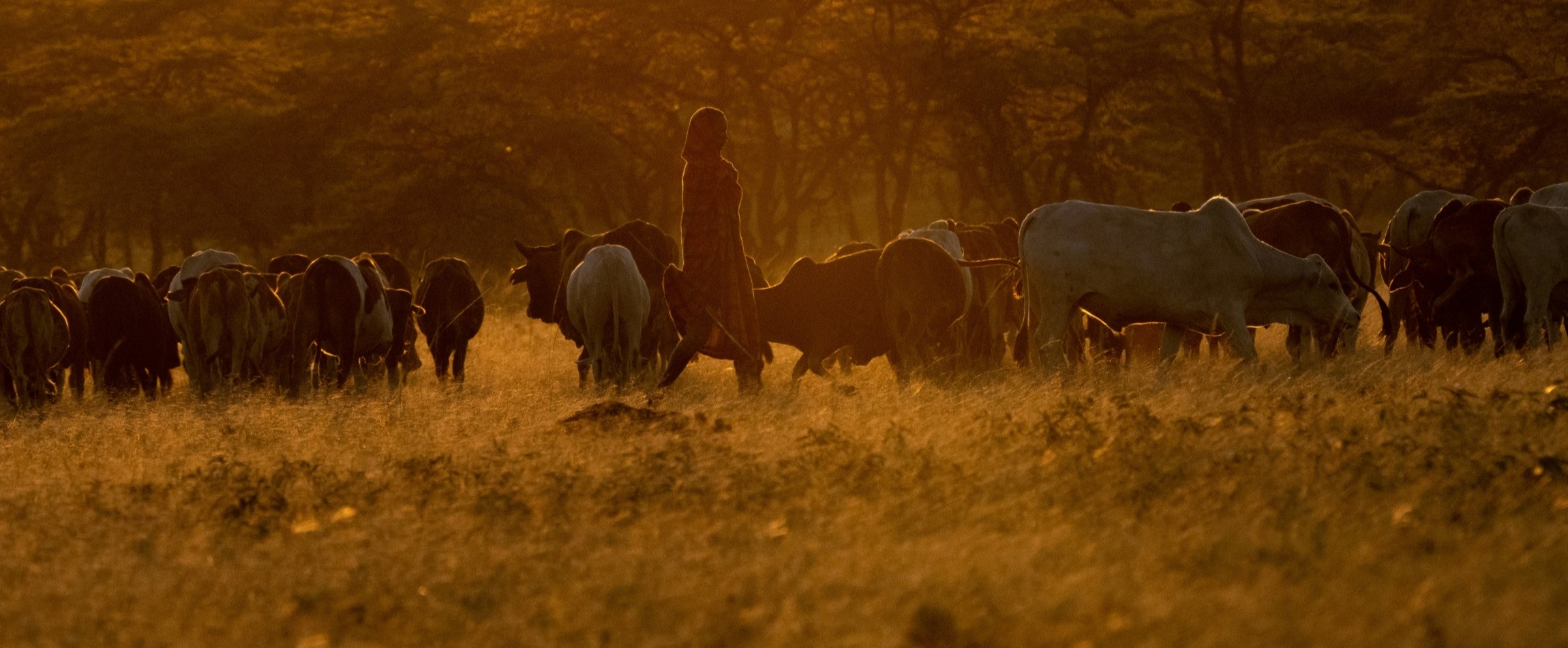
Industrial farming isn’t only about land use or emissions; it also reshapes cultural traditions. Across Africa, communities have relied on small-scale, diversified farming that respects ecological limits and sustains local diets. These practices often involve mixed cropping, seasonal rhythms, and more balanced relationships with animals.
The expansion of industrial farming disrupts this balance. It introduces models that treat food as a commodity for global markets rather than a shared cultural resource. It encourages diets heavy in meat and other animal products, often marketed as symbols of wealth or progress, at the expense of traditional plant-based staples. Over time, this shift erodes cultural practices that once promoted ecological harmony and food security.
By including cultural erosion in the idea of ecological debt, we’re reminded — and rightly so! — that industrial farming does more than harm the environment. It also uproots values and knowledge systems that could guide more sustainable futures. For advocates, this is a call to support food traditions that value both ecological integrity and compassion for animals, in line with the traditional African philosophies of Ubuntu and Ukama, which emphasize interconnectedness and respect for all living beings.
Animal Welfare At The Center
Too often, debates about agriculture focus only on productivity, climate change, or human nutrition. Animals are mentioned only as production units or sources of emissions. But, imperatively, animal welfare must be central to the conversation.
Africa is currently at a crossroads. Industrial farming systems — factory farms and feedlots — are expanding across the continent. If left unchecked, billions of animals could be subjected to confinement, mutilation, and slaughter, with little regard for their suffering.
Placing animal welfare at the heart of food justice reframes the debate. It challenges the idea that “development” must mean replicating the intensive models of the Global North. It opens space for advocates to argue that humane and sustainable farming requires respecting animals as sentient beings, not simply as commodities.
A 3Rs Pathway
What would a just and sustainable African food system look like? Key elements might include:
- Agroecological practices that restore soil health, protect biodiversity, and work with rather than against natural cycles
- Cultural revival, where communities reclaim plant-based traditions and resist the push toward Western-style, meat-heavy diets
- Animal welfare protections that recognize the intrinsic value of animals rather than treating them as production inputs
- Policy reforms that earmark ecological debt finance to support smallholder farmers and community food systems instead of subsidizing corporate agribusiness
A 3Rs framework is proposed to guide this transition. The article adapts the classic 3Rs — reduction, refinement, and replacement — from animal research to food systems. In this context, reduction includes addressing food waste and rebalancing diets toward plant-based options. Refinement emphasizes regenerative agriculture, animal welfare, and traditional knowledge. Replacement promotes healthy, nutritious alternatives, including indigenous superfoods, plant-based options, and cultivated products. By combining ecological repair with justice for people and animals, the 3Rs framework offers a path out of the ecological debt trap.
Why This Matters For Advocates
For animal advocates, the significance of this perspective is twofold. First, it shows that animal welfare is inseparable from environmental and social justice. Industrial farming exploits animals, people, and ecosystems simultaneously, so building alliances across these causes strengthens advocacy.
Second, it highlights the urgency of acting now. Industrial farming is still expanding in Africa, which means there’s an opportunity to shape its trajectory before harmful systems become fully entrenched. Advocates can help steer conversations toward alternatives that emphasize plant-based diets, ecological resilience, and humane treatment of animals.
By using the language of ecological debt, advocates can connect with broader movements working on climate change, land rights, and public health. This framing makes the case that cruelty-free food systems are not only better for animals, but also essential for sustainable and just futures.
Final Reflection
Ultimately, Africa must think critically about what kind of food future “she” will build. Will it replicate industrial models that prioritize profit and perpetuate ecological debt? Or will it draw on local traditions, ecological wisdom, and compassion to create systems that honor people, animals, and the planet?
For those committed to food justice and animal advocacy, the answer is clear: the path forward lies in systems that are humane, sustainable, and rooted in justice. The choices made today will determine whether ecological debt deepens — or whether it’s repaid through practices that nurture life in all its forms.
https://doi.org/10.3389/fanim.2025.1565731

Citations:
Mbaka, M., & Cox, J. H. (2025). Acknowledging ecological debt: Towards just, humane and sustainable food systems in Africa. Frontiers in Animal Science, 6, 1565731. https://doi.org/10.3389/fanim.2025.1565731