
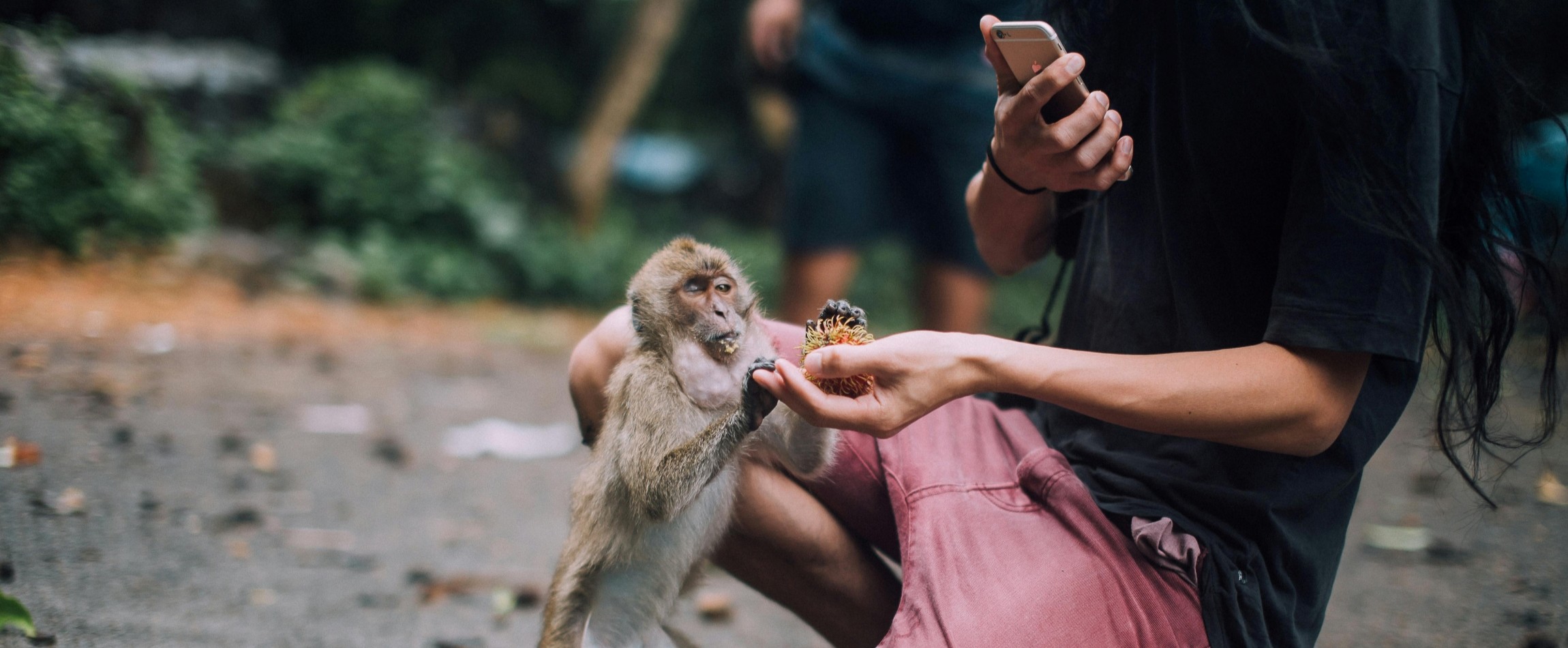
Social Media Is Fueling Harmful Wild Animal Tourism


From elephant rides to monkey selfies, social media is full of posts showing people interacting with wild animals, but these seemingly light-hearted images can hide a darker reality.
Wild animal attractions — places where people can view, touch, swim with, ride, or otherwise interact with wild animals — are often promoted on social media. Many of these interactions can cause stress, injury, or long-term harm to the animals, and some even threaten conservation efforts. There’s growing concern that seeing humans interacting with wild animals on social media may normalize these behaviors, making them seem acceptable and appealing. This could potentially increase demand for these types of experiences. Until now, however, there was little evidence examining how such depictions affect people’s emotions or influence their desire to attend wild animal attractions.
In this study, researchers surveyed 2,427 people from six countries, including the U.S., Australia, the U.K., Sweden, Denmark, and the Netherlands, to understand how social media depictions of interactions between humans and wild animals influence public attitudes. Participants were shown videos, pictures, or text about six different real-world attractions, all of which have documented negative animal welfare implications:
- Watching orangutans box
- Physically interacting with orangutans
- Physically interacting with tigers and tiger cubs
- Bathing with elephants
- Watching elephants paint
- Physically interacting with sloths
Participants were then asked about their emotional responses to the animals and whether they’d be likely to attend the attractions themselves.
The outcome was clear: participants who reacted positively to the animals were more likely to want to attend the attractions themselves. The type of depiction — picture, video, or text — had no consistent effect, suggesting that participants were more influenced by the content they were seeing than the format it was presented in.
Responses also varied by country. Participants from the U.S. and Australia were more eager to attend wild animal attractions than those from Europe. In the authors’ view, these differences likely reflect variations in cultural attitudes, national legislation, and public awareness. For example, the Animal Protection Index, which ranks countries based on their laws and policies protecting animals, assigned higher scores to Denmark, the Netherlands, Sweden, and the U.K. than either the U.S. or Australia.
Age and social media usage also influenced responses. Younger participants and those who use more social media platforms were more likely to report wanting to visit wild animal attractions. According to the authors, this suggests that repeated exposure to such posts may normalize these behaviors and reduce users’ ability to recognize potentially harmful practices.
These findings have important implications for wild animal advocates. Social media is a powerful tool that can shape how people feel and behave towards animals. Positive portrayals of humans interacting with wild animals, even seemingly benign ones, can unintentionally increase demand for attractions that harm animals, while educational campaigns about welfare and conservation consequences may help reduce interest. Effective advocacy should consider both the emotional impact of the content and the demographics of the audience, particularly younger, frequent social media users who are most influenced by what they see online. By understanding and addressing the emotional drivers behind online engagement, advocates can more effectively protect wild animals from exploitation in tourism.
https://doi.org/10.1111/cobi.70130

Citations:
Moorhouse, T. P., Elwin, A., & D’Cruze, N. C. (2025). Emotional and attitudinal responses to social media depictions of human-wildlife interactions at wildlife tourist attractions. Conservation Biology, e70130. https://doi.org/10.1111/cobi.70130
