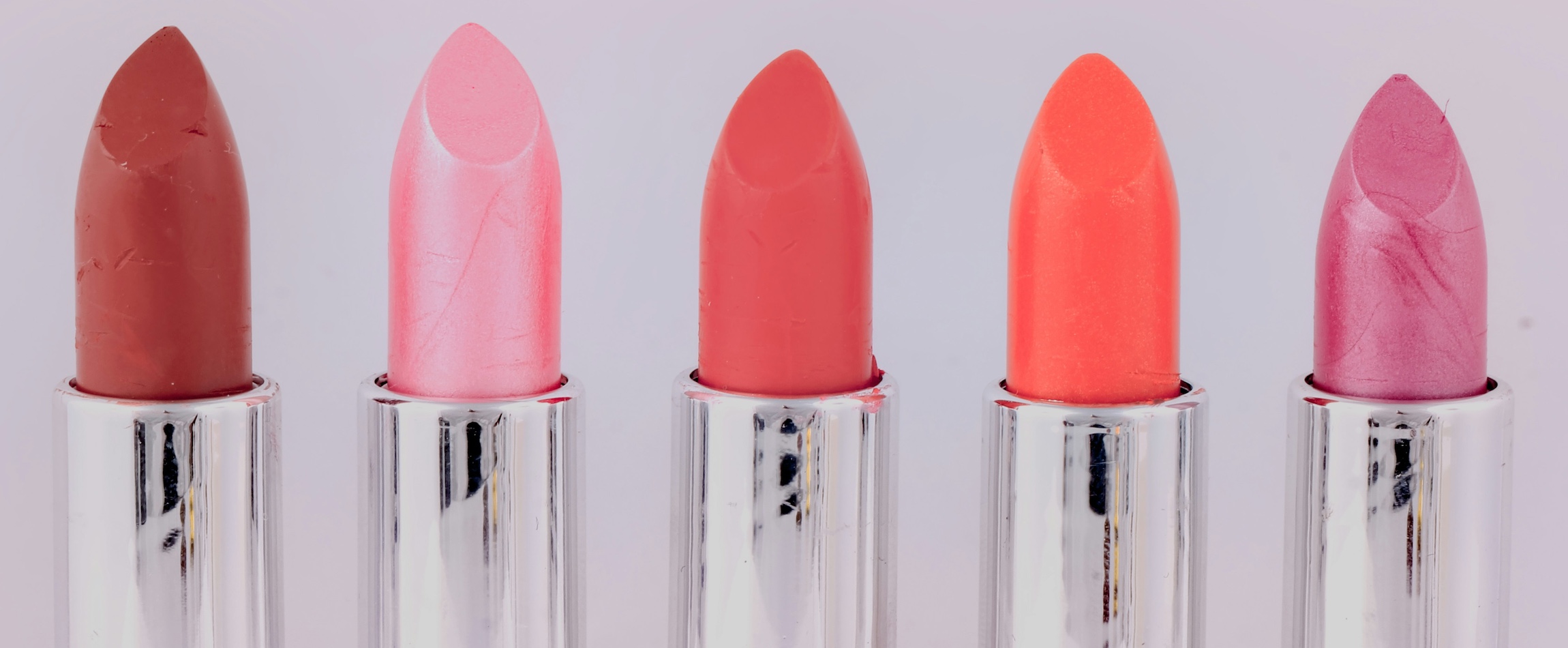
Cruelty-Free As An On-Ramp Into The Animal Movement


In a recent six-month program run by Te Protejo and evaluated by Björn Ólafsson, participants who entered the program already buying only cruelty-free cosmetics were more than twice as likely to be vegan by the end — 45%, against 22% for everyone else. While the evaluation was an exploratory one (more on that below), the takeaway was that the movement has been looking for “pre-vegans” in too narrow a place, and that the bathroom cabinet might be as promising an entry point as the dinner plate.
But the cruelty-free aisle is not a new pathway into animal advocacy. It is close to the oldest one we have — though somewhere along the way we seem to have stopped treating it as a pathway at all.
The Cause That Came First
Organized animal advocacy in the English-speaking world cut its teeth on vivisection. The first sustained movement built around abolishing one specific, named use of animals was the anti-vivisection movement — and it predates the vocabulary we now treat as central to the cause.
In December 1875, the Irish writer and women’s-rights campaigner Frances Power Cobbe founded the Victoria Street Society in London, the world’s first organization dedicated to campaigning against animal experiments. The following year, Britain passed the Cruelty to Animals Act 1876 — the first law anywhere to regulate vivisection. Cobbe’s society thought it toothless and called it, memorably, “infamous but well-named,” because it licensed the practice in secret rather than curbing it. By 1883, Caroline Earle White had founded the American Anti-Vivisection Society in Philadelphia, explicitly inspired by the British law. Rather than being fringe, these efforts drew in a broad coalition of suffragists, clergy, and social reformers, and they sat inside the same nineteenth-century reform networks — women’s rights, children’s welfare — that were in the process of shaping modern, Western civil society.
In 1898, Cobbe founded the British Union for the Abolition of Vivisection. In 2015, after more than a century of continuous operation, it took a new name: Cruelty Free International. It is part of the coalition that promotes the Leaping Bunny certification, the mark that tells a shopper a product was not tested on animals. In other words, the “cruelty-free” label at the center of the Te Protejo study is the living descendant of a foundational aspect of our movement, administered by the institutional heir of the very first anti-vivisection society.
Meanwhile, the word “vegan” would not be coined until 1944, when a small group in England split from the vegetarian movement and needed a name for a diet with no animal products at all. By then, the early anti-vivisection societies were nearly 70 years old. Today, when a study finds that cruelty-free shoppers may be unusually likely to go (or stay) vegan, it feels tempting to read it as a clever new lead for diet advocacy. However, the movement’s organized life arguably began at the lab, not the dinner table.
A Wide On-Ramp
If anti-vivisection is an on-ramp, it is an unusually wide one. What’s more, it is widening fast, which is something many advocates tend to miss.
Let’s start with the narrow, consumer-facing edge: cosmetics. Opposition to testing makeup on animals is close to consensus, and has been for a long time. More than a decade ago, a U.S. survey found that roughly 72% of adults considered cosmetics testing unethical; when I wrote about beauty-aisle labeling for Faunalytics in 2015, “not tested on animals” was already something most consumers consistently said they wanted. That consensus has since hardened, in some places, into law. The E.U. banned cosmetics animal testing in 2013; 45 countries have followed, and 12 U.S. states now bar the sale of newly animal-tested cosmetics, with major manufacturers backing the shift. The Leaping Bunny logo anchors programs like Te Protejo’s — and the fight it represents is, across much of the world, close to won.
There could be many reasons for this, but one likely reason is that rejecting cosmetics testing asks almost nothing of a person. It costs no identity, no politics, no defense of a lifestyle at a family dinner. It is a low-bar expression of a value most people already hold — and, increasingly, one their governments hold too. Concern for animals in laboratories more generally was stable and high in Faunalytics’ own Animal Tracker, with around three-quarters of U.S. adults calling their welfare important for as long as we asked the question.
That broad consensus sounds like good news, but it used to conceal a gap: the public’s comfort with the far larger practice of biomedical and scientific research, justified by the idea of necessity. Cosmetics testing fails the necessity test in almost everyone’s mind, which is why opposing it is easy. Scientific research, however, involves an estimated 190 million animals worldwide each year — where mice and rats, the overwhelming majority, aren’t even counted in the U.S. under the Animal Welfare Act — and continues apace.
Fortunately, the necessity argument for biomedical testing is breaking down in the public’s mind.
Gallup has asked U.S. adults for more than two decades whether medical testing on animals is morally acceptable. In 2001, 65% said yes. By 2025, it was 47% — an even split with “no,” and 6% not sure. In results released this June, it fell further to 45% — a record low. Of the roughly 19 behaviors the Gallup survey tracks, animal testing is the only one that has declined steadily across the poll’s entire history, and it is now among the most bipartisan items on the list, with Republicans souring on it faster than Democrats and younger adults less accepting than their elders. A 2024 poll commissioned by the Physicians Committee for Responsible Medicine put support for phasing out animal experiments in favor of modern methods at around 80 to 85%, with little variation by age, region, or education.
On the institutional side, in late 2022, Congress passed the FDA Modernization Act 2.0, ending an 84-year-old mandate that new drugs be tested on animals. In April 2025, the U.S. Food and Drug Administration released a roadmap aiming to make animal studies “the exception rather than the norm” in preclinical safety testing, and the National Institutes of Health announced a parallel turn toward human-based methods that same month. On June 1, 2026, the European Commission adopted the Roadmap Towards Phasing Out Animal Testing for Chemical Safety Assessments, and labs using alternative methods are spreading across Latin America. The stated rationale for these initiatives is both ethical and scientific: animal models often fail to predict human outcomes. None of this means animal research is ending completely, but the direction is unmistakable, and it’s bipartisan in a way that almost nothing else in animal advocacy is.
Cruelty-free cosmetics are the consumer-facing edge of a value that is, right now, reshaping federal drug policy and broader scientific research regulation around the world. In other words, anti-vivisection isn’t a quaint Victorian cause the movement outgrew. Indeed, it may be the most winnable and least polarized front in the entire animal advocacy landscape — and the one diet advocacy is least connected to.
Where The On-Ramp Might Lead
A wide on-ramp is not the same as one that leads somewhere. The mechanism that carries someone from a cruelty-free purchase or ethic towards a broader concern for animals is not mysterious — but it may be gradual.
One useful frame for thinking about it is moral circle expansion. The research on circles of compassion describes our concern as a series of boundaries that can widen or contract, and finds that people who already extend concern to one out-group of animals are more disposed to extend it to others. It’s the same engine behind the foot-in-the-door logic of incremental asks and nudges: even a small act helps animals; it can also shift a person’s sense of the kind of person they are.
But entry points are genuinely various. Our study of how advocates got their start found no single on-ramp into the movement — people arrive through media, through relationships, through a general urge to do good, and the route they take in shapes what they care about afterward. There is no reason cruelty-free cosmetics couldn’t be one such route. But perhaps the most valuable aspect of Te Protejo’s exploratory findings is what it might mean for retention.
This is where the movement repeatedly stumbles. Faunalytics’ foundational retention research found roughly five times as many former vegetarians and vegans in the U.S. as current ones — many of whom lapsed within months. In follow-up research, we found that it was crucial that people have more than one reason to stay: people who held animal, health, and environmental motivations stuck with the diet better than people running on one reason alone.
Another way to think of it is that someone who arrives at veganism already carrying an anti-cruelty commitment or sentiment may be standing on sturdier ground. They bring a secondary reason that bolsters behavior, a value they’ve already been acting on at the checkout. The cruelty-free shopper who goes vegan is not starting from one motivation and hoping a second arrives. The secondary motivation is already there.
Understanding The Road
The Te Protejo study was exploratory, and we should be clear about its limitations: the study does not show that cruelty-free buying causes people to go vegan; it marks a population whose values already overlap. There was no control group, attrition was high, and the sample was self-selected and almost entirely women. This may be a signal about who is receptive, but much more research is needed.
The deeper caution is that concern does not automatically generalize. Advocates repeatedly find that loving companion animals does not reliably extend to farmed animals; people compartmentalize with remarkable ease. A cruelty-free commitment could just as easily become a stopping point as a starting point — a small good deed that quietly licenses the larger habit of animal use. Instead of being an on-ramp to a broader journey, it could become a traffic circle.
Still, it’s worth contemplating whether our movement’s de-emphasizing of anti-vivisection as a niche issue has been a strategic error. The Western movement organized itself around the laboratory before it had a word for veganism, but has spent the last decade drifting away from its first commitment. In this context, the Te Protejo study is a gentle reminder: generations of animal advocates entered the movement through anti-vivisection (indeed, I’m one of them). Currently, however, for those finding themselves on the cruelty-free on-ramp, there are few places for them to go: only a handful of groups actively engage in anti-vivisection campaigns, and the issue barely registers in the Effective Altruism landscape.
There are many millions of people around the world who are committed to buying cruelty-free products, but who still consume meat. There are practical ways to meet them where they are. Groups running cruelty-free pledges and certification programs could build explicit next steps into them — a follow-up ask, a lab-animal campaign, a bridge to broader advocacy — rather than letting the pledge be the end of the road. Funders could treat anti-vivisection as a tractable grantmaking area rather than a legacy cause, particularly now that regulators are moving faster than the movement is. And researchers could replicate Te Protejo’s exploratory work properly, with control groups and more representative samples, to deepen our knowledge of the dynamics of cruelty-free ethics.
Part of bringing cruelty-free consumers in will require that we honor the concern that brought them in rather than bait-and-switch it — to treat anti-vivisection as a real and unfinished cause in its own right, not a gateway for a cause we’d rather they cared about. The cosmetics fight is nearly won; the larger fight against vivisection is, for the first time in a century and a half, genuinely winnable. Winning that fight is worthwhile in its own right — and we have good reason to think we may pick up a lot of committed animal advocates along the way.
[Special thanks to Camila Cortínez-Bethmann of Te Protejo for her help in reviewing a draft of this blog and offering feedback and further context.]