
Carnivorous Aquaculture Threatens Wild Fishes And Ecosystems


Aquaculture, the farming of aquatic animals, is one of the world’s fastest-growing food production sectors. In 2022, its output surpassed that of wild-capture fisheries for the first time. While often presented as a solution to meet rising seafood demand, the expansion of certain types of aquaculture raises serious environmental, social, and animal welfare concerns. This is especially true for carnivorous aquaculture, which involves farming species like salmons, trouts, and tunas who naturally eat other animals and require high-protein feeds in captivity.
This report from Compassion in World Farming examines the growing threat posed by this industry. The authors analyzed global aquaculture and trade data to assess historical trends, project future growth in Europe, and understand the risks associated with the industry’s reliance on wild-caught fishes for feed.
A Growing Reliance On Wild Fishes
A primary component of feed for carnivorous species is fishmeal and fish oil (FMFO), which is largely sourced from small, wild-caught “forage fishes” like anchovies, sardines, and mackerels. This dependence creates a host of problems.
Forage fishes are a critical link in marine food webs, transferring energy to larger fishes, seabirds, and marine mammals. Removing them in massive quantities for feed weakens entire ecosystems.
In regions like West Africa and Southeast Asia, these same fishes are a vital source of protein and income for coastal communities. Using them for aquafeed creates direct competition with human consumption and threatens local livelihoods. It’s estimated that up to 90% of wild fishes used in aquafeeds could instead be eaten directly by people.
Aquaculture’s Animal Welfare Crisis
The report draws attention to the many harms experienced by fishes raised for food. Farmed fishes are often kept in crowded, barren enclosures that cause stress, disease, and high mortality rates. At the same time, the hundreds of billions of wild forage fishes used to feed them suffer during capture and slaughter, representing a massive and often overlooked welfare crisis.
Europe’s Unsustainable Trajectory
The report projects that in Europe, production of the top 10 carnivorous and omnivorous aquatic species will increase by 30% by 2040. This growth is expected to drive a 70% increase in the demand for wild-caught forage fishes to produce FMFO, reaching 2.5 million tonnes per year. This is equivalent to between 83 and 192 billion individual fishes annually. While the U.K., Greece, and Spain are predicted to see the highest levels of carnivorous aquaculture production, Malta and Spain are projected to have the greatest demand for forage fish feed.
Spain is presented as a particularly concerning case study. In 2020, Spain sourced its FMFO from 26 different countries, the largest network of any European nation. This sourcing included countries with a relatively high risk of illegal, unreported, or unregulated fishing and poor performance on sustainable fishing practices.
The Emerging Threat Of Octopus Farming
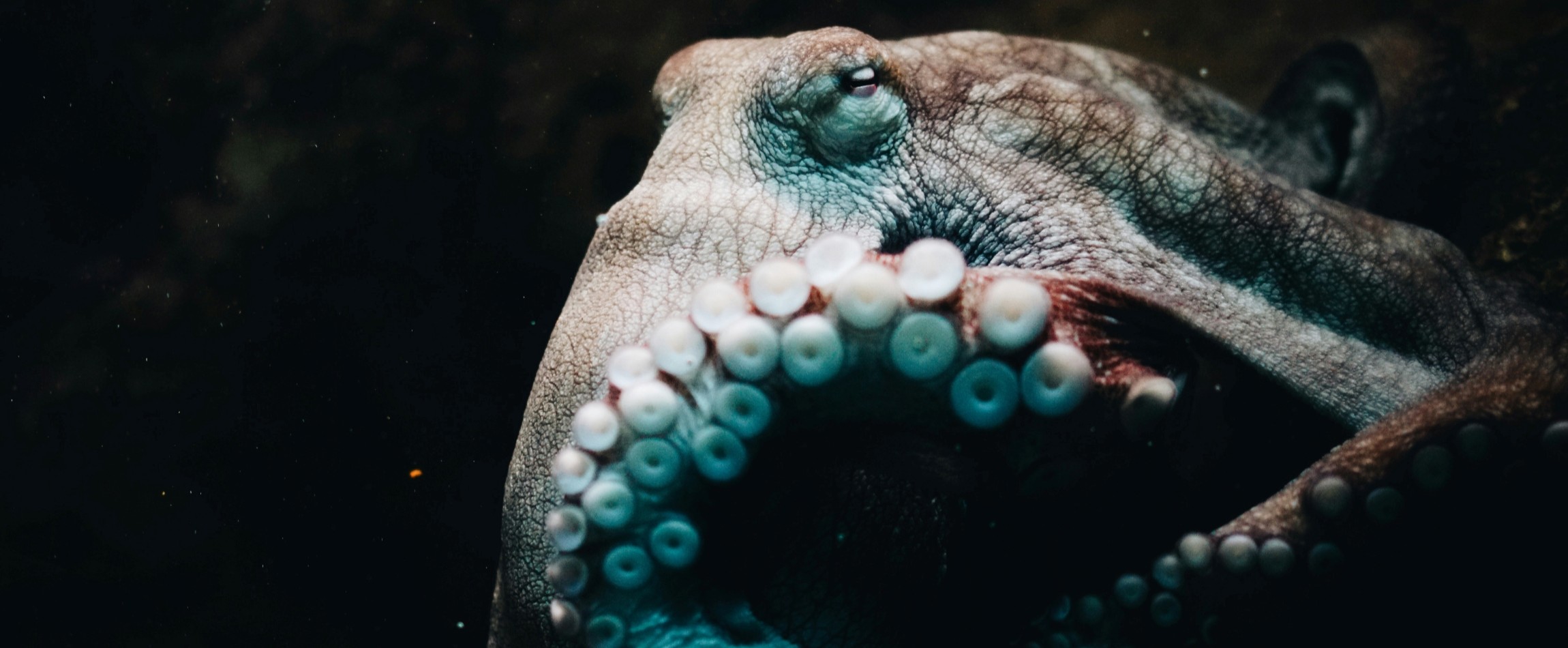
The push to farm new carnivorous species is intensifying these problems, with octopus farming being the most striking example. The company Nueva Pescanova plans to build the world’s first industrial octopus farm in the Canary Islands, Spain, with a target of producing 3,000 tonnes of octopus — equivalent to one million individuals — each year.
This proposal has sparked international opposition for several reasons. Octopuses are highly intelligent, sentient, and solitary animals. Farming them in crowded tanks poses a significant threat to their well-being, with risks of aggression, injury, and cannibalism. Sustainability is also a concern. If the farm’s production grows as projected, by 2040 it could require up to seven billion wild-caught forage fishes — 90,700 tonnes — for feed annually. This would place additional strain on already overexploited fish populations.
The report notes that some governments are already acting on these concerns. The U.S. states of Washington and California have banned octopus farming, and a bill to do the same at the federal level has also been introduced.
Strategic Priorities For Advocates
The report concludes that the future of aquaculture must shift away from intensive, feed-based systems and toward low-trophic, extensive systems focused on organisms like mussels, oysters, and seaweed that require little to no external feed. While alternatives to FMFO from wild-caught fishes exist, such as seafood byproducts, microalgae, and plant-based ingredients, they face challenges with cost and scalability and don’t solve the fundamental inefficiency of farming carnivorous species.
Advocates can use this report to push for specific policy changes:
- Shift species: Call for an end to the expansion of carnivorous aquaculture and a redirection of subsidies toward low-trophic species.
- Reform aquafeeds: Advocate for phasing out the use of wild-caught fishes for feed and promoting sustainable, low-impact alternatives that don’t rely on human-edible resources.
- Strengthen animal welfare: Demand comprehensive welfare protections for all farmed aquatic animals throughout their production cycle.
- Ban octopus farming: Highlight the severe welfare and environmental risks to support a ban on octopus farming in Spain and elsewhere.
By promoting these changes, advocates can help ensure that aquaculture evolves into a truly sustainable food system that protects animals, ecosystems, and global food security.
This summary was drafted by a large language model (LLM) and closely edited by our Research Library Manager for clarity and accuracy. As per our AI policy, Faunalytics only uses LLMs to summarize very long reports (50+ pages) that are not appropriate to assign to volunteers, as well as studies that contain graphic descriptions of animal cruelty or animal industries. We remain committed to bringing you reliable data, which is why any AI-generated work will always be reviewed by a human.

