The State Of Farmed Duck Housing And Welfare


In 2019, the United Nations’ Food and Agriculture Organization (FAO) estimated that around 27.5 million ducks were slaughtered in the U.S. and over 178 million in the European Union (E.U.). Despite the scale of duck farming in these regions, duck welfare gets little attention from regulators at the national level and not much more from researchers, as this review shows.
In the E.U., the only supranational guidance is a non-binding 1999 Council of Europe recommendation. Oversight is left to member states and voluntary assurance programs. Similarly, the U.S. has no federal or state laws governing duck welfare, leaving third-party labels like Animal Welfare Approved and American Humane Certified to set standards that vary in quality and scientific basis.
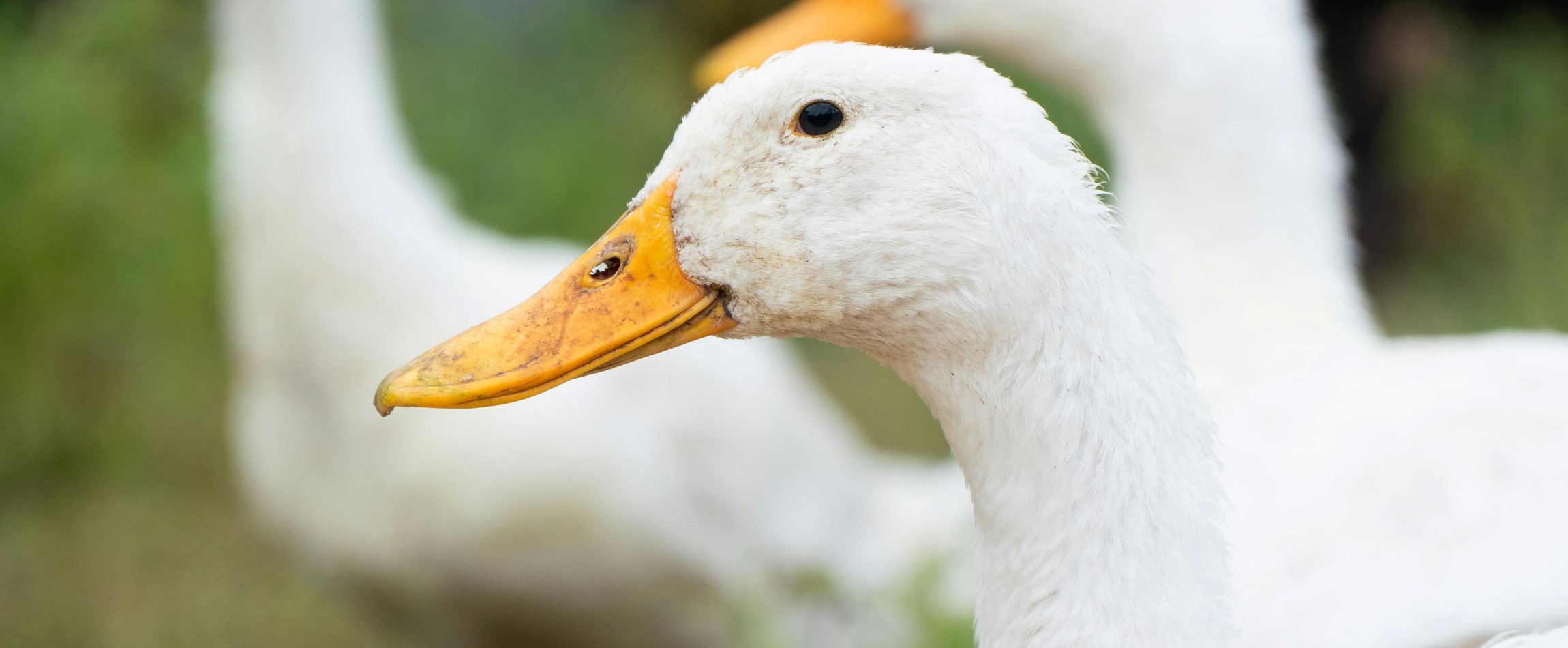
Given the lack of regulation and inconsistent guidelines, this review evaluated whether existing research can support evidence-based housing guidelines for farmed ducks. The authors focused on Pekin ducks — the most common commercial breed — and assessed how different housing systems affect their welfare. Their goal was to identify which areas are well studied, what’s still missing, and where research gaps limit our understanding of duck welfare.
Between December 2020 and August 2021, the researchers searched three major databases using keywords like “duck,” “welfare,” and “Pekin duck.” Studies on nutrition, slaughter, transport, and hatcheries were excluded. Of the more than 300 studies screened, 63 met the inclusion criteria. These included 37 lab-based studies, 20 farm-based studies, and seven literature reviews, with sample sizes ranging from four to over 17,000 ducks.
Seven housing details, including flooring, water systems, ventilation, space allowance, lighting, outdoor access, and nesting areas, were evaluated across seven welfare measurements: production metrics, clinical signs, behavior, gait, biological data, environmental conditions, and stress responses. These categories were chosen for their direct impact on ducks’ health, comfort, and ability to express natural behaviors, which are core components of animal welfare.
How Are Farmed Ducks Housed?
Ducks are housed differently depending on their intended purpose (meat, eggs, or organic production), but all ducklings start off in heated indoor barns with constant access to food and water. After the first couple of weeks, their living conditions diverge by industry.
Ducks raised for meat are kept in crowded, mixed-sex barns with litter-covered or slatted floors at a density of up to about 15 ducks per square meter. They’re free-fed until they’re slaughtered at between five and eight weeks of age.
Breeder or layer ducks are usually housed in flocks at a ratio of about one male to five females and are provided with nest boxes. Their feed is restricted to control their egg quality and fertility.
Organic and free-range ducks are still uncommon, but consumer demand for them is growing. These ducks are typically given outdoor access at two to four weeks of age (depending on the season) and water features, such as troughs or pools, to encourage natural behaviors.
Literature Review Findings
While the literature was found to be inconsistent in depth, definitions, and methods, several welfare trends were identified across multiple studies:
- Ducks prefer open water: Those given access to troughs or showers showed more natural behaviors than those limited to nipple or bell drinkers. While the behavioral benefits are clear, it’s uncertain whether water features translate into long-term health improvements in commercial settings.
- There’s no perfect flooring: Slatted floors, straw, and wood litter all have pros and cons. Too few comparative studies exist for the authors to recommend the most welfare-friendly barn surface.
- Crowding causes stress: High-density housing restricts ducks’ ability to freely move, rest, and preen. Further, these conditions were associated with slow growth and increased stress.
- Lighting influences behavior: Lighting schedule, brightness, color, and source all have an impact on duck behavior. However, results were often conflicting, and studies focused on production parameters like feed conversion more than duck preferences.
- Air quality affects health: Poor ventilation was linked to worse gait, feather damage, and stress, as well as higher bacterial loads in both the air and the ducks. Farmers have to balance airflow with barn temperature in colder months, but the industry lacks clear guidance on how to do this without compromising welfare.
- Nest boxes are essential but often inadequate: Commercial barns often don’t provide enough nest boxes, which increases aggression and stress as many ducks are forced to lay their eggs on the floor. There’s no research consensus on the optimal box quantity or design for large flocks.
- Outdoor access has benefits and trade-offs: Ducks with outdoor access showed more natural behaviors and grew faster, but tended to have higher mortality rates. Predation and disease exposure are added concerns in these setups, and there’s very little research on how to make outdoor areas enriching yet safe.
Research Gaps And Limitations
Many of the review’s limitations are inherited from the literature itself. For instance:
- Research bias: Most studies were conducted in lab settings, limiting the real-world applicability of their findings.
- Narrow scope: Nearly all studies focused on ducks raised for meat, an emphasis that has left long-lived breeds and those in organic or free-range systems unstudied.
- Inconsistent metrics: There’s no standard for assessing duck welfare. The reviewed studies used different scoring systems and terminology for the same indicators. For example, footpad dermatitis was rated on scales ranging from zero to two in some studies and zero to four in others, making direct comparisons difficult.
- Understudied environments: Lighting, ventilation, and outdoor access are insufficiently explored to make any inferences on what ducks need.
- Neglect of positive welfare: Welfare research prioritizes harm reduction and clinical health over enrichment, preferences, or quality of life.
Even in better-studied areas like water access, the research is fragmented, sometimes contradictory, and hasn’t been validated in on-farm contexts. As the authors caution, any policies based on this evidence may over-prioritize productivity at the expense of actual animal well-being.
The authors acknowledge the limitations of their own approach to this topic, such as their deliberate focus on housing-related research. This omits major welfare factors that also shape a duck’s experience on farms, minimizing how much we can broadly infer about duck welfare from this research.
Conclusions
Although some areas have garnered more scientific interest in recent decades, this review concludes that the field currently lacks the depth and consistency necessary to establish comprehensive welfare guidelines for farmed ducks.
Advocates can use this review to push for more on-farm research, advocate for welfare standards grounded in behavioral science, and hold certification programs accountable to evidence-based criteria.
Until welfare science and policies address what ducks actually need — not just what they can tolerate — claims of humane treatment in duck farming stand as premature and unsubstantiated.
https://doi.org/10.1016/j.psj.2021.101614

Citations:
Makagon, M. M., & Riber, A. B. (2022). Setting research driven duck-welfare standards: A systematic review of Pekin duck welfare research. Poultry Science, 101(3), 101614. https://doi.org/10.1016/j.psj.2021.101614