Relief Or Reliance? How U.S. Farmers Use The Livestock Indemnity Program


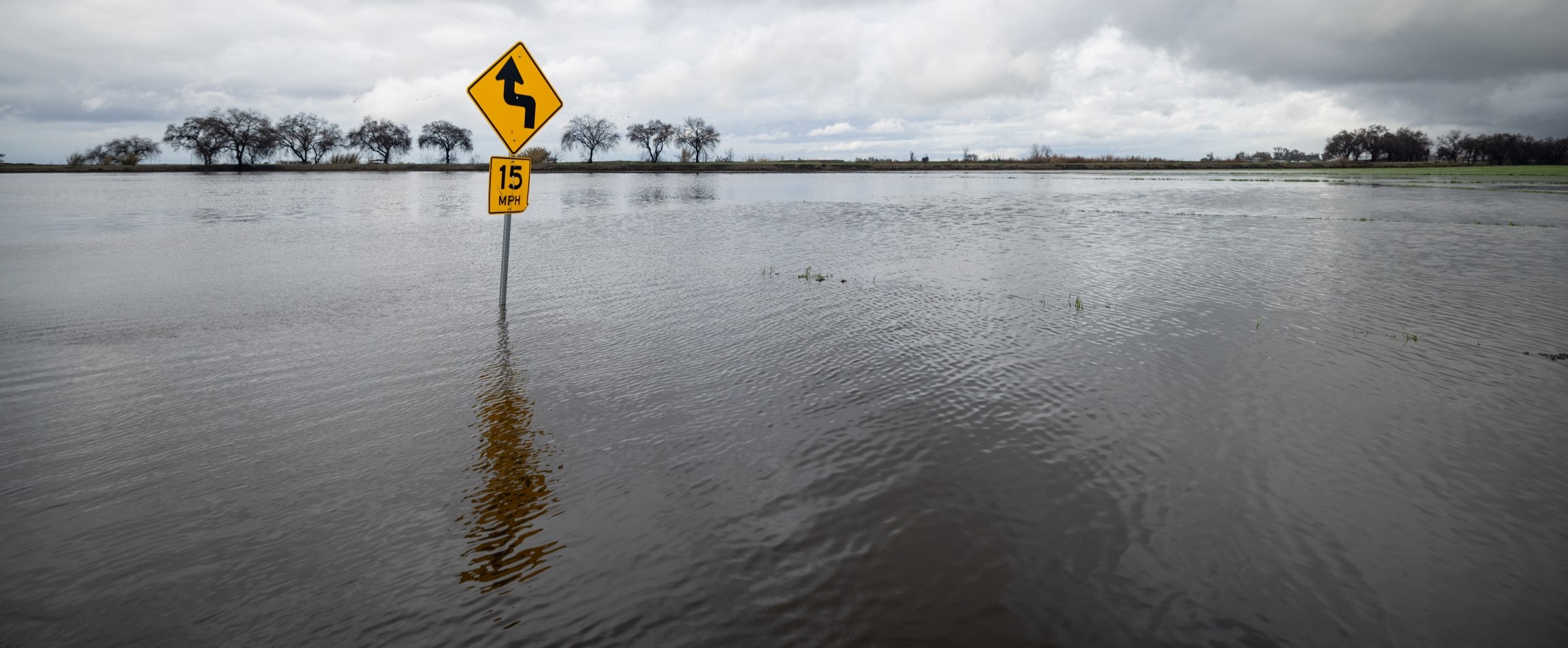
The Livestock Indemnity Program (LIP) is one of several federally funded relief programs in the U.S. that help farmers recover after extreme weather hits. Created by Congress in 1997 and managed by the United States Department of Agriculture (USDA), the LIP reimburses producers for animals lost or injured in these and other qualifying events.
However, as weather disasters become more frequent and severe, critics contend that the program isn’t doing enough to protect animal welfare. Unlike other USDA programs that offer incentives for risk reduction, such as discounted insurance for drought-resistant crops, the LIP doesn’t require any form of disaster mitigation, adaptation, or planning, even for repeat claimants.
This analysis suggests that the lack of preparedness requirements not only threatens animal welfare but may create perverse incentives — potentially subsidizing animal losses that could’ve been prevented, or even rewarding producers who choose not to evacuate animals during foreseeable extreme weather.
Using federal payment data, animal welfare theory, and case studies of recent climate disasters, this paper evaluates how the LIP functions as disaster assistance for farmers and its impact on farmed animals during emergencies.
The Case For Farm Disaster Preparedness
Grounding their evaluation of the LIP’s animal welfare implications in two widely recognized frameworks — the Five Freedoms and the Five Domains — the author illustrates how disasters harm animals beyond mere survival.
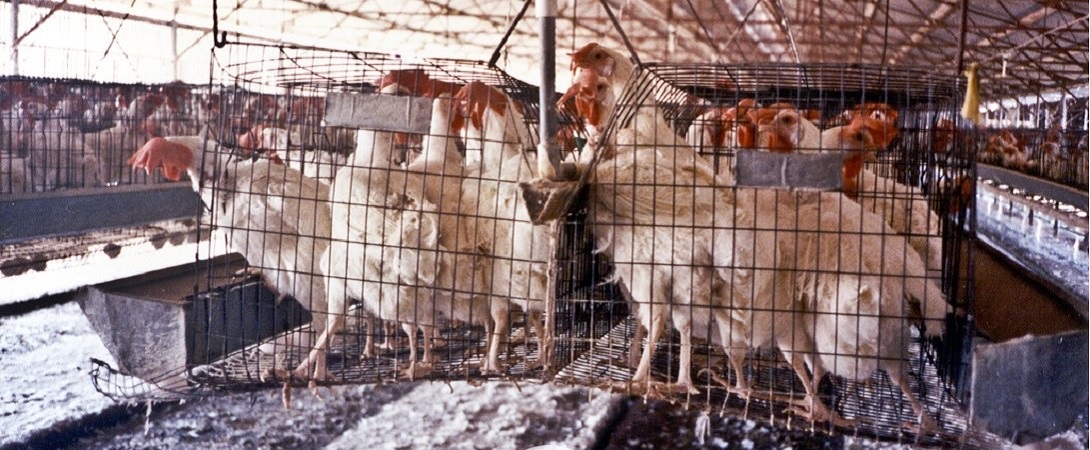
Emergencies can quickly compromise basic welfare in concentrated animal feeding operations (CAFOs). These operations rely on tightly controlled environments and often fragile infrastructure to provide food, water, temperature control, and air quality. When power is lost or staff can’t access the property, animals face starvation, dehydration, hypothermia, respiratory illness, or overheating. The breakdown of daily care is also compounded by fear and significant psychological distress.
From this perspective, excluding farmed animals from disaster planning reflects and perpetuates their marginal status in policy and society, treating them as less morally significant than other protected animals.
Producers have a moral duty to protect the animals they care for. Referencing case studies and interviews, the author points to examples where a certain level of planning helped prevent mass deaths during severe weather. Simple strategies of relocating animals, stockpiling supplies, and maintaining backup power sources are touted as having saved thousands of animals during Winter Storm Goliath and Hurricane Florence.
Farm disaster planning is also a public health and environmental issue. Large CAFOs generate more waste than some cities. This waste is often stored in open-air lagoons, which can contaminate communities with toxic pollutants when they rupture or overflow into nearby waterways.
Program Overview
The LIP offers straightforward eligibility with few requirements beyond reporting. To qualify for compensation, producers must report losses within 30 days and submit payment applications within 60 days of the year’s end. Payments cover 75% of the animal’s fair market value, with USDA-set rates that vary by species. In 2023, for instance, a beef cow was valued at $1,163, while an egg-laying chicken was valued at $0.72.
The program covers death and injuries resulting from specific events, including extreme weather, certain disease outbreaks, predation by federally protected species, and drought-related conditions like anthrax. Species covered include commercially raised cows, pigs, sheep, goats, and birds.
In 2017, Congress removed annual payment caps. As long as a producer’s average adjusted income remains below $900,000, they can collect unlimited compensation for eligible losses. This means farmers can claim federal aid year after year with no requirement to show they adapted to past events.
Payment Distributions And Trends
To examine how producers are using the LIP, and whether certain producers were relying on it, the author analyzed publicly available USDA data. Payment trends from October 2009 to March 2024 were reviewed and grouped into three time blocks (2009 to 2013, 2014 to 2018, and 2019 to 2023) to observe any changes in distribution. Payments were also mapped by state and county to identify areas that use the program the most.
Results show a geographic concentration of payments, with a small number of states accounting for the majority of issued funds.
According to USDA data presented in the research, South Dakota received the highest LIP payments ($119.7 million), followed by Nebraska ($50.4 million), North Dakota ($49.1 million), Texas ($42.4 million), and Kentucky ($40.5 million). Meade County, South Dakota, stands out as the top recipient nationwide, collecting over $14 million.
Repeat payments in several counties were also identified. Producers in 11 counties received LIP compensation for 15 consecutive years. An additional 25 counties received payments in 14 out of 15 years, and 38 counties in 13 out of 15 years.
These findings suggest the LIP increasingly functions less as emergency assistance for rare catastrophes and more as a predictable fallback subsidy, particularly in weather-prone regions such as the Great Plains.
Limitations
While the paper presents clear patterns in payment distributions, the author acknowledges data restrictions that limit any definite conclusions about causal links between the program’s design and producer behavior.
Because most USDA recipient names are redacted (over 93% are listed as “individual recipient”), it wasn’t possible to evaluate whether specific farms were taking steps to reduce future losses after receiving assistance. Additionally, the USDA combines all eligible causes of animal death, making it difficult to assess weather-related losses on their own.
Nevertheless, the concentration of payments and frequency of repeat claims indicate systemic reliance on the LIP, which provokes questions about its effective use of public funds in promoting farm resilience.
Conclusions
To better protect animals and promote long-term sustainability in agriculture, the LIP must evolve from reactive compensation to proactive preparation.
Since emergency planning is already recognized as best practice by industry leaders and federal agencies, the author recommends the following reforms to align the program with modern ethics of animal care and climate readiness:
- Require producers to submit a disaster mitigation plan when applying for aid;
- Offer financial incentives for proactive measures such as storm shelters and emergency feed;
- Improve payment transparency to enable public oversight;
- Partner with certification programs to standardize emergency preparedness requirements; and
- Implement a “strike” policy requiring emergency planning after a producer has received aid for a disaster event.
These changes aren’t intended to penalize producers acting in good faith, but to ensure that federal relief supports responsible, forward-looking farm management.
https://scholarworks.uark.edu/jflp/vol20/iss2/5

Citations:
Massey, C. K. (2025). Forced to weather the storm: Reforming the Livestock Indemnity Program to improve farm animal welfare. Journal of Food Law & Policy, 20(2). https://scholarworks.uark.edu/jflp/vol20/iss2/5