Promising Strategies For Improving Animal Welfare In Brazil


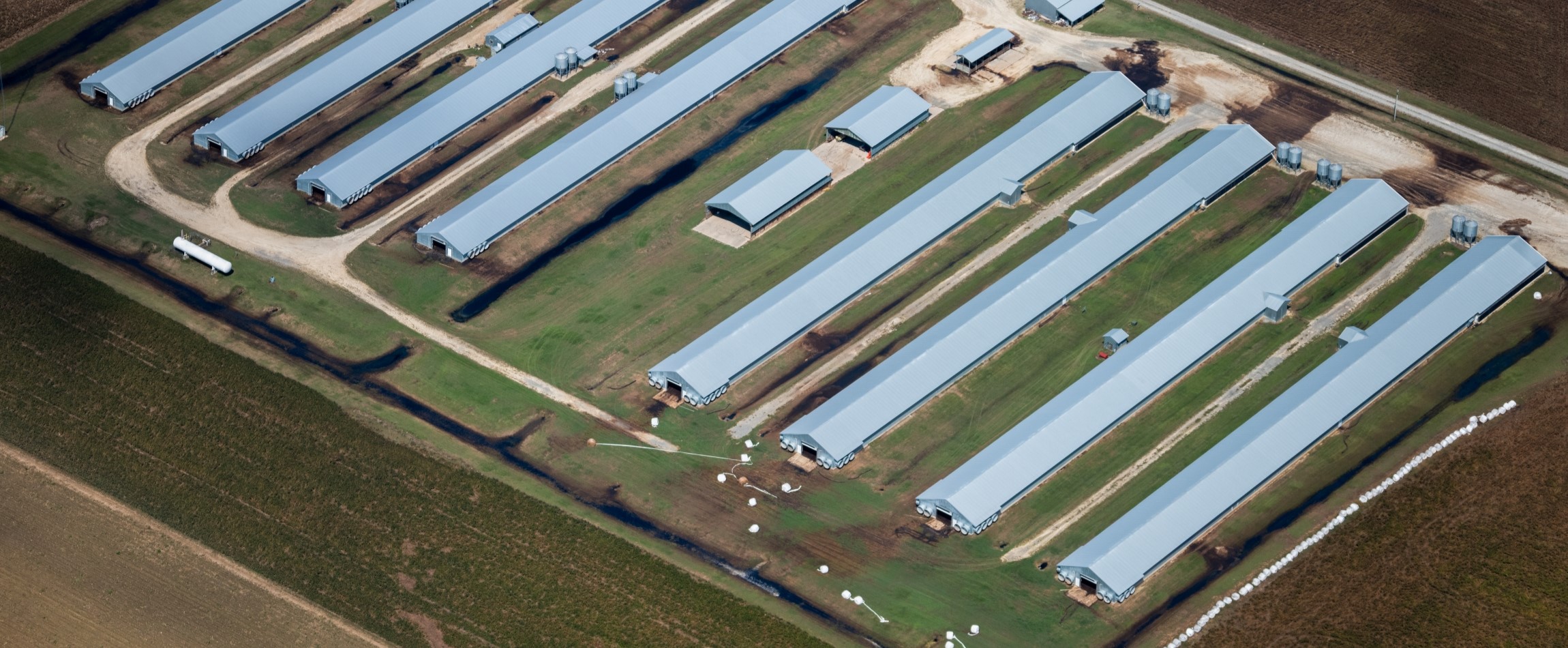
As an agricultural powerhouse, Brazil farms billions of animals each year for human consumption. With no single system in place, some species are raised in large, highly industrialized facilities, while others are distributed across millions of smaller, individually owned farms.
Given the size of the animal agriculture industry and its heterogeneous structure, Brazil offers several avenues for advocates to enact change, whether via broad political action or individual effort. As this report highlights, it’s a promising place for highly impactful animal welfare reform.
The authors draw attention to several areas of concern:
- Egg-laying hens: The vast majority — around 95% — of Brazil’s egg-laying hens are confined to caged systems, where they face severely cramped conditions and little to no opportunity for natural behaviors.
- Tilapia: Tilapia are farmed in cages with densities between 100 and 130 fishes per cubic meter, and mortality from low oxygen and poor water quality can reach up to 33% on some farms. Inhumane slaughter procedures, like live chilling, exsanguination, and asphyxiation, are common.
- Shrimps: Despite data deficiencies, the authors estimate that around 13 billion shrimps are farmed in Brazil each year. The sheer scale of individuals affected make shrimp farming a promising target for welfare interventions.
While they identify other animals in serious need of better welfare conditions, like pigs and broiler chickens, the authors argue that the power and high standardization of these industries mean that animal advocates’ resources may be better spent on more feasible campaigns.
Cage-Free Egg Commitments
One feasible animal welfare campaign could be encouraging more corporations to adopt and maintain cage-free egg commitments.
Estimating the reach of current commitments is difficult due to overlaps and double-counting between producers, retailers, and restaurants, but different groups place the proportion of corporations with cage-free pledges at between 12% and 19%. If more were to follow suit, millions of hens could experience better living standards.
Encouraging companies to adopt and maintain cage-free pledges could spark widespread change in the industry, but caution is also needed to ensure that cage-free is used to replace, not simply expand on, caged production.
Screwworm Eradication
Screwworms are parasitic maggots who burrow into open wounds, causing gruesome injuries and suffering for both wild and domestic animals, including farmed cows, pigs, sheep, and chickens. These insects are so harmful that several countries across the Americas have allocated significant resources into eradication programs.
While there are valid concerns about the environmental and ethical challenges of screwworm eradication, the authors estimate that their elimination would be a net positive on both fronts. Since screwworm eradication offers economic and public health benefits beyond animal protection, advocates may have more success lobbying for this program than they would for other welfare interventions.
Farm Engagement
In addition to these cooperative campaigns, there are also opportunities for individual advocates to help develop intervention strategies. Since many shrimps and tilapia are produced on small farms, data about their welfare conditions is rarely collected. Advocates could visit these farms to record specific welfare deficits for these animals.
Community-level advocacy groups may also have success by partnering with local farmers to implement mutually beneficial strategies. Welfare interventions like disease prevention and water quality monitoring can increase production by lowering mortality, making them more appealing to farmers.
Political Strategies For Animal Representation
The authors argue that, given the current political environment, a legislative intervention on behalf of farmed animals, such as a ban on cages, is unlikely in the near future. However, in the long run, Brazil’s political system opens systemic opportunities for animal protection.
Brazilian political procedures make it possible to create a single-issue animal protection party. Although this political party would, at best, have only a few seats in the legislature, it might be able to form alliances with adjacent causes like the environment or public health to pass laws that protect animals.
Brazil also allows individual citizens to propose legislation in a mechanism known as popular initiatives. If an initiative receives signatures from 1% of the population, including signatures from at least 0.3% of registered voters from at least five of the 27 federal states, congress is required to vote on it. Only seven initiatives have been attempted so far, but they show a relatively high success rate. With a coordinated effort to gather enough signatures, the animal advocacy movement in Brazil could feasibly use this strategy to increase the likelihood of animal welfare legislation.
Limitations
Due to the lack of rigorous data in some agricultural sectors, the authors acknowledge that their figures and estimates have a high potential for error. For this reason, data gathering is a great way for individuals to contribute towards the animal protection movement in Brazil.
Furthermore, any animal welfare legislation passed using the recommended strategies faces enforcement challenges. Brazil already has a constitutional article against animal cruelty and a ban on hunting, but both remain common. When planning legal or corporate interventions, advocates may need to consider how their legislative successes will actually be implemented.
While the massive scale of animal agriculture in Brazil may seem daunting, the size of the industry means that even small changes can benefit millions of animals. Coordinated efforts to engage companies and governments have the greatest potential for impact, but individuals can also help by engaging with smaller farms to gather data and promote mutually beneficial welfare interventions.