More Cow Time For Calves Improves Health And Welfare


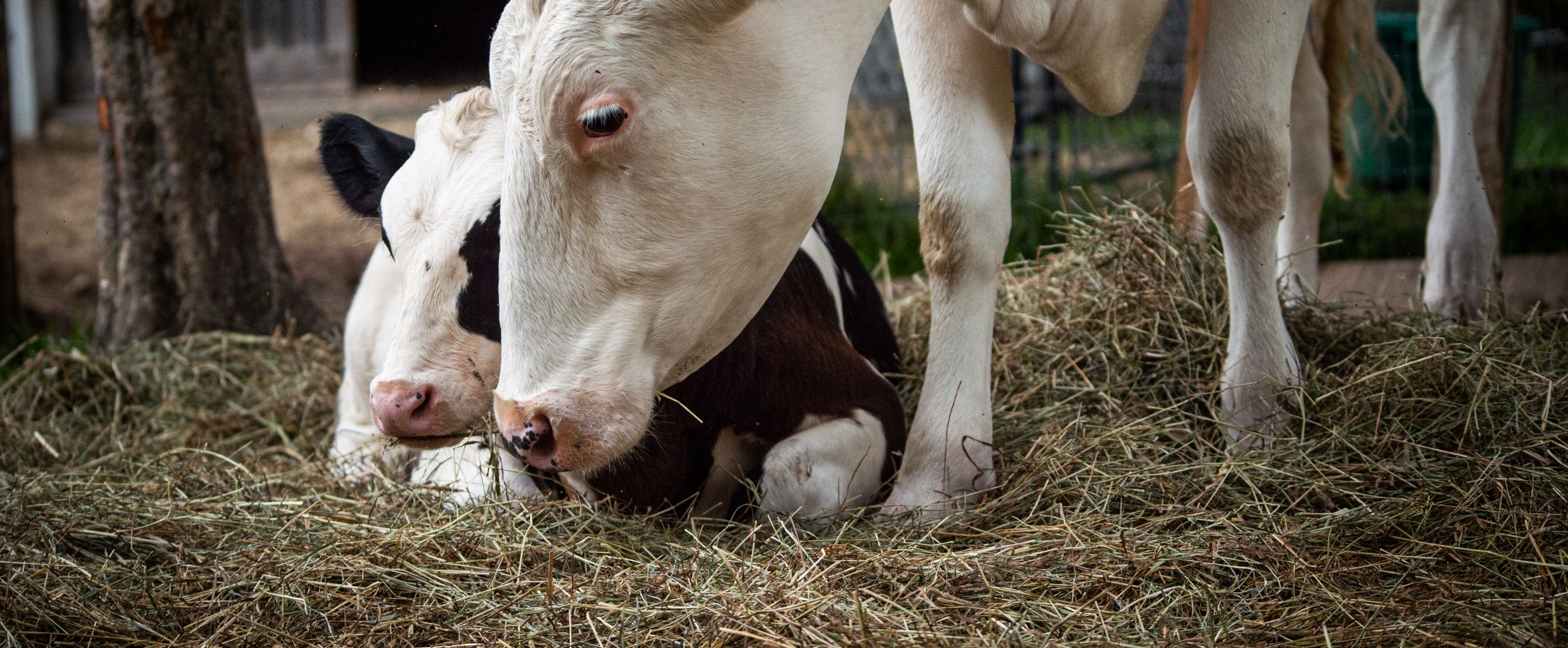
In nature, cow-calf pairs may stay together for up to a year, yet on a typical dairy farm, they’re separated within 24 hours of birth. However, there’s an alternative practice, known as cow-calf-contact systems (CCC), that allows calves to spend more time with cows. By implementing CCC systems, dairy farmers enable cows and calves to form strong emotional bonds, reduce the risk of diseases such as calf diarrhea, and better align their practices with public expectations.
Farmers’ goals and motivation are the main factors affecting the transition from conventional to CCC systems. CCC systems can differ in aspects such as:
- The duration of time farmers keep calves in the system
- The amount of time in a day calves have contact with cows
- Whether calves have contact with their mothers (dams) or a foster cow
While more farms have been practicing CCC systems in Europe over the last 15 years, there are still very few and not a lot is known about them. Thus, researchers in Germany conducted this study on organic dairy farms to investigate variations in CCC systems, farmers’ goals and motivations, and barriers to implementation.
The interdisciplinary research team worked with four experienced farmers to develop a standardized questionnaire that had 11 open and 23 closed questions. The questionnaire was then administered to 19 organic farms between November 2021 and May 2022. To take part, the farms had to have practiced CCC systems for a minimum of two years, participated in milk performance tests based on International Committee for Animal Recording (ICAR) standards, and be willing to share their testing records. The farms ranged in size from 18 to 88 cows, with almost all kept in free stalls and given access to pasture.
Variations In CCC Systems
Ten of the farms had combined dam and foster systems. Four reared calves exclusively on dams, while five used foster cows. Four farms hadn’t fully transitioned to a CCC system due to space limitations during the winter and economic losses from reduced saleable milk.
Farmers selected cows as fosters because they were unsuitable for milking due to old age, increased somatic cell count (an indicator of milk quality), and physical deformities. It was also important for foster cows to have good mothering ability and a stable, persistent milk yield. Some of the farmers used older cows as fosters to save them from slaughter in what they considered a “lap of honor.” For purely foster CCC systems, farmers didn’t milk the foster cows. Smaller farms were more likely to raise calves exclusively on their mothers and to milk them.
The cows and calves had varied levels of contact, ranging from brief contact before milking time to half-day contact to permanent contact, where farmers would assign a foster cow to a group of calves full-time.
Farmers’ Motivations For Practicing CCC Systems
The main motivations for farmers to practice CCC systems were animal-welfare related and included allowing cows and calves to express natural behavior, improved calf health, and reducing the need to transport calves off-farm. Farmers also cited labor and financial factors, such as spending less time feeding the calves and fetching higher milk prices. On average, it took them 3.5 years to fully transition their farms.
Challenges In CCC Systems
Farmers reported cow-calf separation for weaning at around 12 weeks (earlier for male calves) as the main challenge in CCC systems, with all but one farm attempting to do this process gradually over a few weeks rather than abruptly. Barn requirements were also a major concern, although these changes generally incurred minimal costs as the farmers often made the modifications themselves.
Other concerns were ensuring adequate milk intake by the calves (colostrum in particular), monitoring the animals, and having less milk available for sale. However, three farms were able to compensate for less saleable milk by setting higher prices through farming associations or directly to consumers. In some cases, reduced veterinary costs due to healthier calves also enhanced profitability.
The Impact Of CCC Systems
Calves reared under CCC systems were reported as exhibiting more positive behaviors, such as less sucking on each other. Farmers also described them as being more active and lively, more sociable, and calmer and more relaxed. On eight farms, the milkability of cows (how quickly and easily they can be milked) remained the same, while it worsened on nine farms. Most farmers believed the cows had improved udder health, although their milk tests didn’t reveal any differences in somatic cell count.
Despite their seemingly obvious benefits to cow welfare, most dairy farmers haven’t adopted CCC systems, and where they exist, they’re highly varied. Thus, more research is needed to understand these systems and whether they can be adopted on a broader scale. In the meantime, animal advocates can play a role in sensitizing the public to the practice of separating calves from their mothers shortly after birth and its welfare implications. This, in turn, could increase public support for alternative, welfare-focused production methods like CCC systems, and raise public pressure to reform conventional farming standards.
https://doi.org/10.1016/j.animal.2025.101568

Citations:
Hautzinger, T., Rauch, E., Kantwerk, J., Weindl, P., Busch, G., & Zeiler, E. (2025). Farmers’ experiences of implementing cow-calf-contact systems on organic dairy farms. Animal, 19(7), 101568. https://doi.org/10.1016/j.animal.2025.101568