Keeping The Public From Feeding Wild Animals Requires Ongoing Work


Visitors feeding wildlife in urban parks creates serious problems for both animals and people, increasing the risk of disease spread, food-based aggression, and traffic accidents. Despite these dangers, wild animal feeding continues to grow in popularity, likely boosted by social media and increased interest in urban wildlife due to the COVID-19 pandemic.
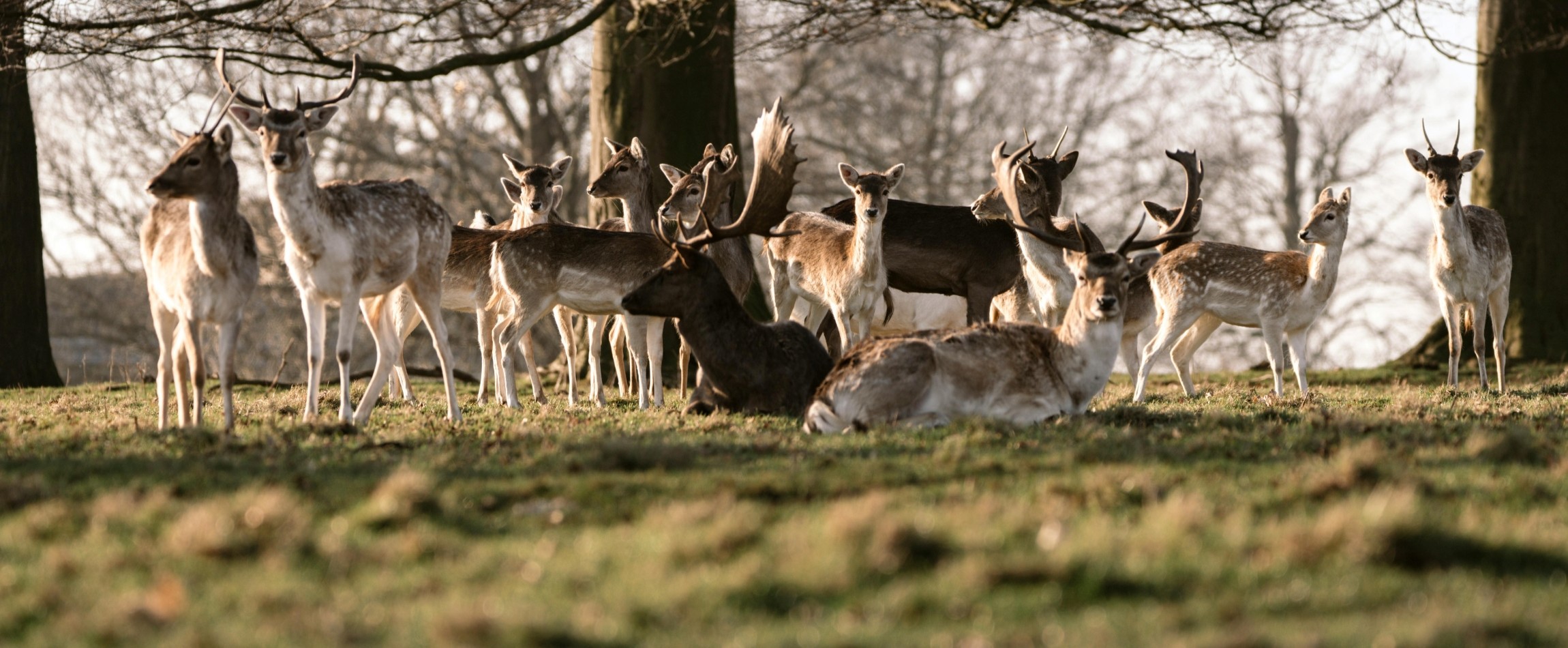
Researchers studied seven years of visitor behavior at Phoenix Park in Dublin, Ireland. Home to around 600 fallow deer, the park attracts an estimated 10 million visitors annually. Over time, the deer have developed new begging behaviors, approaching visitors for food even when people have nothing to offer. Local rangers report that before the late 2000s, none of the deer would tolerate being approached by people. However, about 25% of the population now consistently begs from humans.
The research team tested three different management campaigns between 2018 and 2024 to reduce feeding interactions. Each campaign used different strategies and occurred under different conditions related to the pandemic.
The first campaign in 2019 used only internal controls like road signs, posters, and increased ranger patrols. Signs were placed in high-traffic areas and featured simple, educational messages about appropriate ways to interact with deer. Local businesses also received information leaflets and posters to help spread the message. This campaign successfully reduced feeding levels compared to the 2018 baseline.
COVID-19 disrupted these efforts in 2020. Travel restrictions meant that only local residents could visit the park, and rangers focused on enforcing pandemic safety rules rather than monitoring feeding. Moreover, the campaign signs looked similar to pandemic health messaging, potentially causing visitors to tune them out — a phenomenon known as “sign blindness.”
The second campaign in 2021 focused on social media advertising and targeted only local residents as international travel was still restricted. The campaign included two parts: a winter component with letterboxes for children to send letters to “Santa’s reindeer” instead of feeding them, and a summer boost with paid social media ads on Facebook and Instagram. This campaign also initially reduced feeding levels. After both parts ended, however, feeding levels bounced back. In fact, by 2022, feeding had increased beyond the original 2018 baseline. Feeding remained high in 2023 despite existing signage.
The research team then tested a third major campaign in 2024 which combined the most successful approaches used earlier, namely signage and social media. This campaign received seven times more funding than previous efforts and included coverage by two national television news outlets, four radio stations, five newspapers, and a viral video featuring a national celebrity. Despite this significant investment, the campaign showed no effect on feeding levels.
Two independent data collection methods were used to track the park’s deer population and feeding interactions over the study period. The researchers monitored deer groups during summer weekends from 2018 to 2024, recording 432 feeding observations across seven years. A second survey ran every two weeks year-round from 2021 to 2024, tracking 1,035 deer groups to identify seasonal feeding patterns.
Results showed that more people fed the deer when more visitors were present, during afternoon hours, on Saturdays and Sundays, and in areas where male deer gathered. Male deer were fed more than females.
The researchers identified several reasons for why the management campaigns failed. Firstly, visitors may have grown used to seeing signs and simply stopped reading them. Secondly, international tourists, who returned after 2022, likely faced language barriers and weren’t reached by local social media campaigns. Thirdly, some popular social media pages with hundreds of thousands of followers actually encouraged feeding the deer, undermining official messaging.
The study recommends a number of improvements for future efforts:
- Include social scientists and marketing experts in campaign design to better understand visitor motivations and create more effective messaging.
- Implement “always-on” campaigns that maintain consistent messaging year-round rather than in short bursts.
- Consider introducing fines or other negative consequences for feeding, though these approaches remain untested.
- Focus on community education to create lasting attitude changes about human-wildlife interactions.
This research represents the longest published study on wild animal feeding management. The findings highlight a critical challenge that without continuous investment and attention, even successful management efforts quickly lose their impact.
https://doi.org/10.1002/pan3.70222

Citations:
Faull, J., Griffin, L. L., Nolan, G., Haigh, A., David, A., Redmond, S., Collins, N., McDonnell, P., Kane, A., & Ciuti, S. (2026). If you leave it, you lose it: Managing human-wildlife feeding interactions requires constant attention, interdisciplinary approaches and long-term monitoring. People and Nature, 8(3), 666–681. https://doi.org/10.1002/pan3.70222