Industrial Animal Farms Contribute To Environmental Injustice


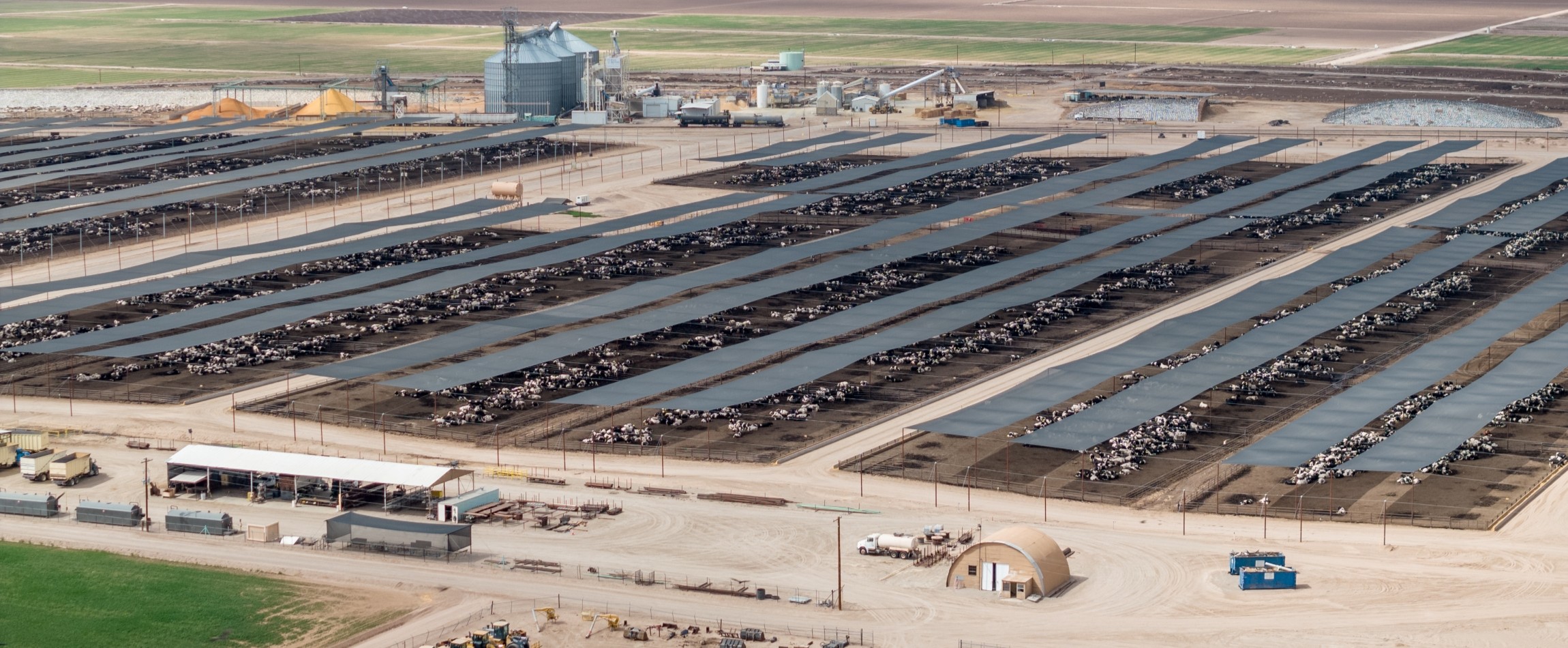
Anyone who has visited or lived near an industrial animal farm can attest to its overwhelming stench. This is an example of what economists call an externality: a side effect of a commercial operation that isn’t incorporated into the costs of the operation. In this case, the cost of the foul odor is paid primarily by members of the surrounding community. At best, it’s a persistent nuisance. But are they also paying the cost with their health? That’s what this study aimed to find out.
Specifically, researchers were interested in the presence of particulate matter known as PM2.5. These tiny particles, smaller than the width of a human hair, can be easily inhaled and are linked to serious health conditions such as asthma, bronchitis, cardiovascular disease, and leukemia. The air pollution produced by the large quantities of dust, manure, and urine on industrial animal farms make them likely sources of PM2.5.
The researchers began by generating a comprehensive list of animal feeding operations in the U.S., focusing on cows and pigs. First, they combined several existing databases and validated each entry with Google satellite imagery. Next, they added to the list by scanning satellite images of meat-producing regions underreported by these databases, using 10 x 10 kilometer grids. In total, they identified 8,763 cow farms and 6,963 pig farms across the country.
The researchers then matched areas with farms to areas without farms using a set of geographic and demographic variables, such as average temperature, average elevation, median household income, and level of education. They ran a statistical test to see whether the average PM2.5 concentration between 2000 and 2016 differed between the matched areas with and without farms.
Air Quality Is Worse Near Industrial Animal Farms
The researchers found that, on average, areas with farms had significantly higher PM2.5 concentrations than the matched areas without farms. Specifically, cow farms raised local PM2.5 levels by 28%, while pig farms raised them by 11%. The researchers note that there are no safe PM2.5 exposure limits, so even small differences may pose meaningful health risks.
To understand who’s exposed to these potential health risks, the researchers used existing data like U.S. census records to characterize the sociodemographic profiles of the communities within a 16-kilometer radius of each farm. They performed a statistical analysis to see what characteristics were most associated with areas with high concentrations of cow and pig farms.
Vulnerable Communities Live Near Industrial Animal Farms
The researchers discovered that farms were generally surrounded by socially and economically disadvantaged communities. For instance, Latino residents and residents without high-school diplomas were more likely to live near cow farms. Further, areas with high concentrations of both cow and pig farms tended to have a higher-than-average number of people without health insurance.
Taken together, these results suggest that people living near industrial animal farms may be at greater risk of exposure to harmful PM2.5 and also less likely to be insured, making them vulnerable should they need medical care after becoming ill from inhaling unhealthy levels of particulate matter.
For cow farms, these high-risk areas include the Central Valley of California, the Texas panhandle, and lower Kansas. The high-risk areas of pig farms are clustered in northern Texas, southern Oklahoma, and North Carolina.
This study only finds an association, not a direct link, between living near a cow or pig farm and potentially getting sick. But it suggests that the externalities imposed on the communities surrounding these operations go beyond mere nuisance. And for advocates, it offers a unique opportunity to craft targeted policy interventions that benefit both the animals they use and the humans they put in harm’s way.
https://doi.org/10.1038/s43247-025-02520-w

Citations:
Chamanara, S., Gounaridis, D., Goldstein, B., & Newell, J. P. (2025). Geography of animal feeding operations and their contribution to fine particulate matter pollution in vulnerable communities in the United States. Communications Earth & Environment, 6, 620. https://doi.org/10.1038/s43247-025-02520-w