
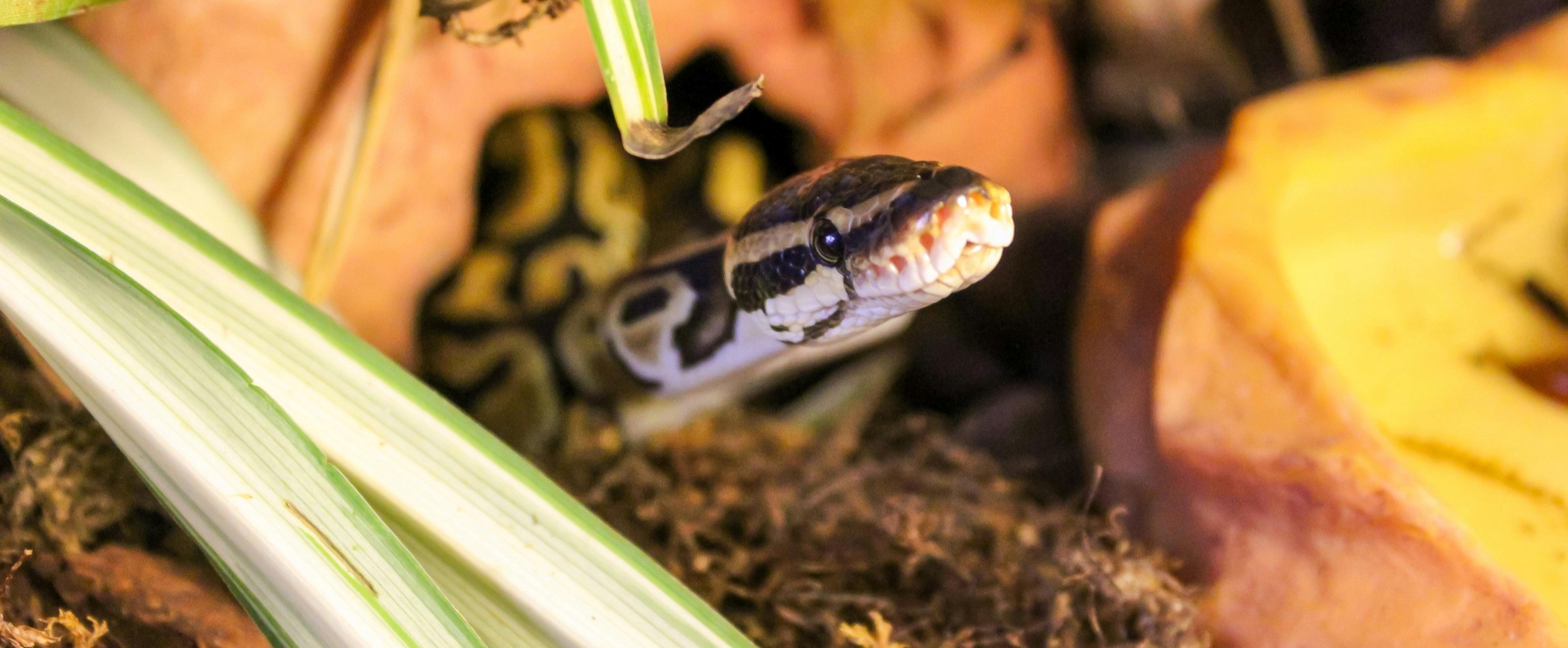
From Folklore To Facts: Advancing Evidence-Based Care For Captive Reptiles


The welfare of captive reptiles is an important but understudied topic. Reptiles are housed across a wide range of settings, including zoos, laboratories, farms, sanctuaries, rehabilitation centers, and private homes, yet the practices used to care for them have historically lacked a strong research-based foundation. Instead, much of reptile husbandry has relied on anecdotal knowledge, intuition, and tradition, often referred to as “folklore husbandry.”
At its core, effective husbandry must be grounded in evidence-based practices, defined as care decisions informed by systematic, empirical research rather than assumption. To explore the current state of such evidence, the authors of this study conducted a scoping review of the scientific literature. They focused on peer-reviewed studies where researchers experimentally modified aspects of captive reptile environments and measured the resulting welfare outcomes.
The review’s findings reveal both encouraging progress and significant gaps. While research on reptile welfare has increased in recent years, the total number of relevant studies remains surprisingly small: only 72 papers (representing 75 studies) published between 1980 and 2025 met the authors’ inclusion criteria. This highlights the limited scientific foundation underlying many commonly accepted care practices.
Nearly half (46.5%) of all studies focused on modifying aspects of the physical environment, such as enclosure size, furnishings, lighting, or substrate. This emphasis reflects the unique biology of reptiles, who are highly dependent on their surroundings for regulating their body temperature, energy use, and other essential physiological processes. Even relatively simple changes, like adding branches to climb or places to hide, have been shown to influence their welfare. However, far fewer studies looked at the effects of human interaction (17%), enrichment (17%), or social contact with other individuals of the same species (15%).
The review also highlights a methodological imbalance in how welfare is assessed. Behavioral measures, such as enclosure use, were by far the most commonly used indicators, accounting for over half (56%) of all welfare metrics. While behavior provides valuable insight into an animal’s internal state, its interpretation in reptiles is complex. They tend to mask signs of injury or illness as an adaptive survival strategy, making it difficult to tell how they’re feeling. Additionally, behaviors that appear positive, like increased activity, may not always reflect improved welfare, particularly without appropriate ecological context.
Physical and physiological measures, such as body condition, growth, and stress hormone levels, were used far less frequently (29% and 15.5%, respectively). However, these could offer important complementary information. Relying on a single category of measurement provides only a partial understanding of welfare. Instead, the authors advocate for a triangulated approach, combining behavioral, physiological, and physical indicators to produce a more accurate and holistic assessment.
Another key insight from the review is the uneven distribution of research across species and settings. The majority of studies focused on squamates (snakes and lizards), who made up approximately 61.5% of all species studied, and were conducted in controlled environments such as laboratories and zoos. Laboratory settings alone accounted for about 43% of studies. In contrast, there was almost no research conducted in the companion animal industry, representing only around 1% of studies, even though reptiles are popular pets. This gap is particularly concerning, as husbandry practices in private settings may vary widely and are often the least regulated. Without empirical research in these contexts, it’s difficult to ensure that common care recommendations actually promote welfare.
Despite these challenges, the review identifies promising directions for future research and practice. Environmental enrichment and increased enclosure complexity show potential for enhancing welfare, although further study is needed to determine which approaches are most effective with different species. Expanding research into underrepresented contexts, such as private ownership and breeding practices, is also critical for ensuring that evidence-based husbandry can be applied broadly and effectively.
In conclusion, this scoping review underscores both the progress and the limitations of current knowledge regarding captive reptile welfare. While the field is growing, it remains constrained by a relatively small body of empirical research and an overreliance on traditional practices. Moving forward, a shift toward rigorous, evidence-based husbandry is essential. By integrating scientific research, species-specific knowledge, and comprehensive welfare assessment methods, caretakers and researchers can work toward improving the lives of reptiles in captivity.
https://doi.org/10.1016/j.applanim.2025.106831

Citations:
Hanson, S. L., Whittaker, A. L., Cooper-Rogers, B., Burghardt, G. M., & Fernandez, E. J. (2025). Putting the evidence into evidence-based husbandry: A scoping review of empirical approaches to improving captive reptile welfare. Applied Animal Behaviour Science, 292, 106831. https://doi.org/10.1016/j.applanim.2025.106831
