Effective Legal Strategies For Defending Animal Activists


For decades, animal rights activists who rescue animals from factory farms have relied on the “necessity defense.” This legal argument suggests that breaking the law is justified if doing so prevents a greater harm, such as the extreme suffering of an animal. However, courtrooms in rural counties are often hostile to these sorts of political arguments. Judges frequently use legal precedents to block the necessity defense from being heard, leaving activists with few ways to explain their actions.
This article introduces “Plan-B” activist defense strategies. These strategies focus on the basic technical elements of a crime, such as the intent of the actor or the value of the property, to win acquittals while still raising public awareness. The article aims to provide a roadmap for defending activists when traditional moral justifications are silenced by the court.
The author analyzed common criminal charges faced by animal rescuers, including trespass, burglary, and larceny. They examined the legal definitions of these crimes and identified ways to challenge them using evidence of factory farm conditions.
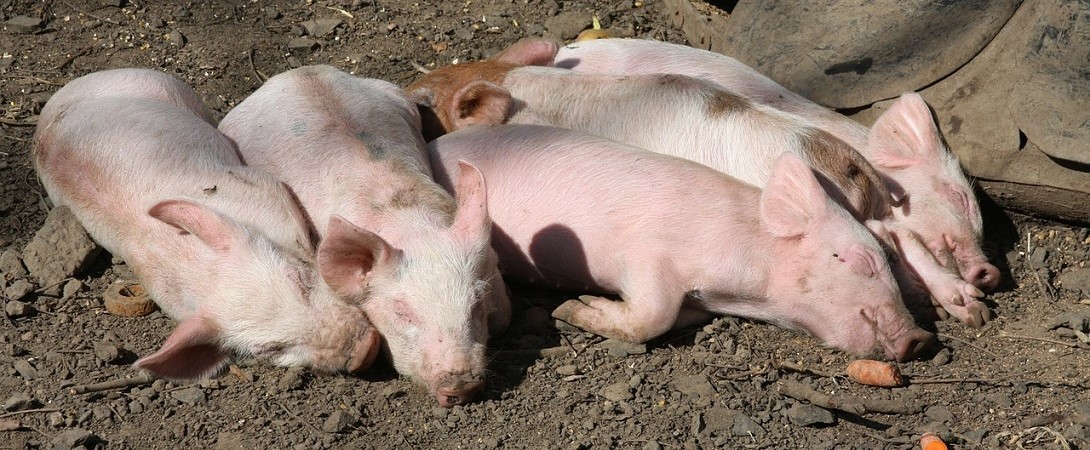
Additionally, the article features a detailed case study of the 2022 Smithfield trial in Utah. Two activists, Wayne Hsiung and Paul Picklesimer, were charged after rescuing two sick piglets, Lily and Lizzie, from a massive pig facility. The author analyzed the trial strategies and a panel discussion with seven of the 12 jurors who participated in the acquittal to understand what influenced their decision.
The Plan-B Defense
The author highlights three main ways that activists can use technical arguments about the elements of an offense to their advantage.
Challenging Monetary Value
Many larceny (theft) laws require the stolen property to have at least some financial value. Rescuers can argue that sick or dying animals are actually a financial loss to a factory farm because they would cost more to treat than they’re worth. This strategy allows activists to bring in veterinarians to provide expert testimony about the animals’ poor health and horrific living conditions.
Redefining Intent
Burglary charges require the state to prove the defendant intended to commit a felony, like theft, when they entered a building. Activists can argue that they didn’t intend to steal property but instead intended to rescue individuals from suffering. They can also show that they only decided to take specific animals after seeing what condition they were in once inside the facility.
Questioning Facility Security
For trespass charges, the law often requires a facility to be clearly enclosed or have warning signs. Lawyers can use this to question why a factory farm is being so secretive. This suggests to the jury that the industry has something to hide from the public.
The Smithfield Trial Success
In the Smithfield trial, the judge blocked the activists from using a necessity defense and suppressed most of their video footage. Despite these hurdles, the activists used Plan-B arguments regarding the value of the piglets and their intent to rescue animals only if conditions inside the facility warranted it. They argued that because Lily and Lizzie were deathly ill, they were of zero value to the corporation, and they made the decision to take the piglets spontaneously.
The jurors later revealed that this was the turning point in the case. They were struck by the sinister nature of the government using FBI agents in armored vehicles to hunt down two sick piglets. The technical focus on monetary value gave the jurors a legal way to vote their conscience. They were impressed by the activists’ transparency and selflessness, leading to a unanimous “not guilty” verdict.
Caveats And Takeaways
The author notes that Plan-B strategies are most effective for “open rescues” — nonviolent actions where activists identify themselves and take only sick animals. These strategies are much harder to use in cases involving property destruction, arson, or the mass release of animals. Furthermore, these defenses rely on a judge allowing at least some evidence regarding animal health and corporate practices.
It’s important to remember that the strategies discussed in this article are for educational purposes and shouldn’t replace professional legal advice. With that in mind, there are a number of key takeaways for advocates:
- Focus on technical elements. When political or moral arguments are blocked, legal “hooks” like the animal’s financial value can be used to challenge theft charges instead.
- Use veterinarians as expert witnesses. Bringing in veterinarians to discuss the animal’s health is an effective way to get evidence of factory farm cruelty into the record.
- Emphasize transparency. Openly taking responsibility for an action can humanize activists to rural jurors and differentiate them from “ordinary criminals.”
- Leverage industry secrecy. Highlighting how a facility hides its practices can make jurors suspicious of the industry and more sympathetic to those trying to inform the public.
This summary was drafted by a large language model (LLM) and closely edited by our Research Library Manager for clarity and accuracy. As per our AI policy, Faunalytics only uses LLMs to summarize very long reports (50+ pages) that are not appropriate to assign to volunteers, as well as studies that contain graphic descriptions of animal cruelty or animal industries. We remain committed to bringing you reliable data, which is why any AI-generated work will always be reviewed by a human.
https://scholarship.law.vanderbilt.edu/vlr/vol78/iss6/7

Citations:
Aviram, H. (2025). Plan-B activist defense: Defending animal-rights activists in courtrooms hostile to political argumentation. Vanderbilt Law Review, 78(6), 1883–1946. https://scholarship.law.vanderbilt.edu/vlr/vol78/iss6/7