
Does Reducing Portion Size Help Cut Meat Consumption?


Reducing meat consumption, especially in high-intake countries like the U.S., is crucial for mitigating climate change, protecting biodiversity, improving public health, and enhancing animal welfare. However, changing dietary habits presents significant challenges. Could subtle changes to food environments, like reducing default meat portion sizes, offer an effective solution without triggering consumer resistance? This question is particularly relevant for high-volume food service settings like campus dining halls, where small changes potentially yield substantial impacts across thousands of meals.
This study tested whether reducing serving spoon sizes could decrease meat consumption in university dining halls without affecting diner satisfaction. Researchers conducted two field experiments at Stanford University dining halls with contrasting results that highlight the nuanced challenges of implementing nudge interventions in real-world settings.
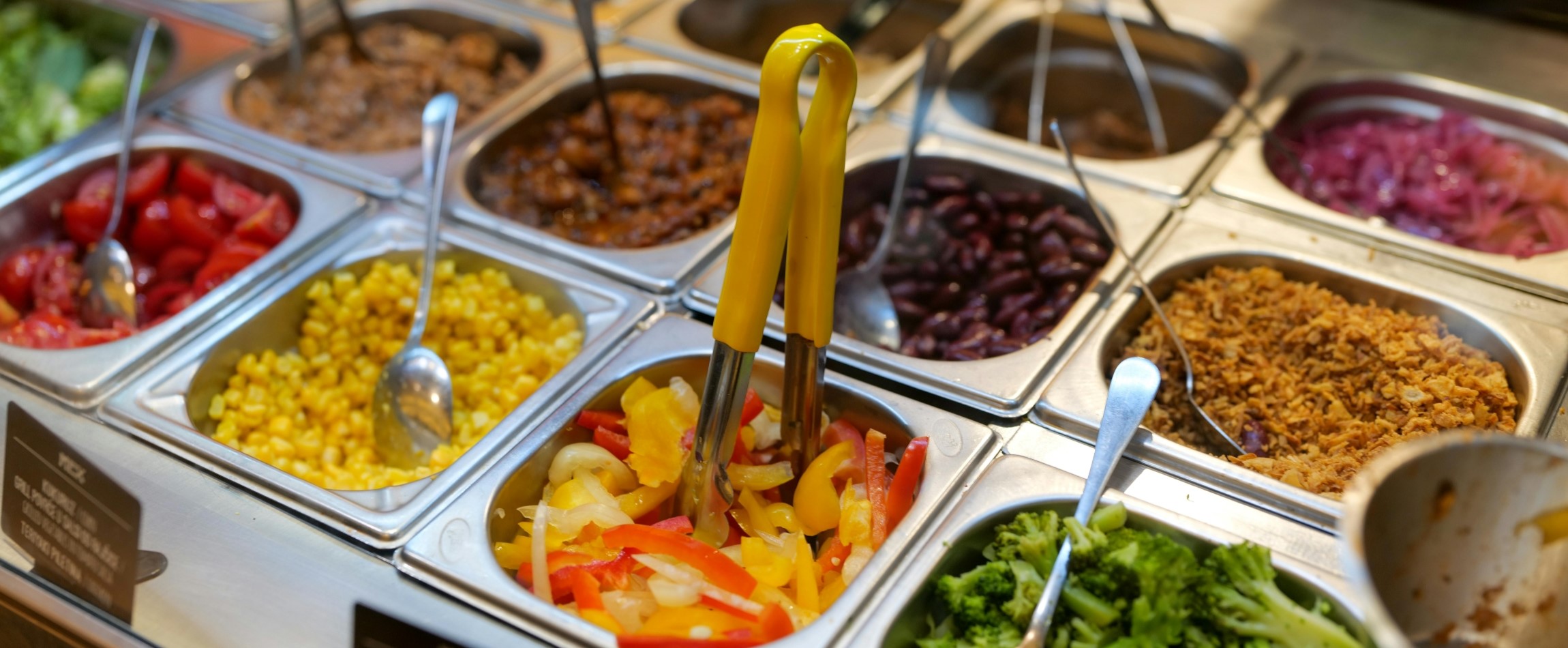
In the first experiment, the researchers implemented a modest 25% reduction in serving spoon size (from 4 oz to 3 oz) for made-to-order burritos served by staff at lunchtime. This showed a promising trend of 18% less meat served, although the results weren’t statistically significant. The reduced portions didn’t negatively impact diner satisfaction, suggesting this moderate change fell within acceptable limits for diners.
The second experiment took a more aggressive approach with a 50% spoon size reduction (from 4 oz to 2 oz) across various lunch menu items such as tuna sandwiches and chicken souvlaki. Again, the dishes were made to order by staff. This larger reduction didn’t decrease meat consumption and significantly reduced diner satisfaction, with participants reporting feeling hungrier and less full. The dramatic size reduction likely triggered “backfiring effects,” with many diners compensating by requesting additional servings.
When combined, the studies didn’t demonstrate a significant overall reduction in meat consumption. The context of food presentation appeared important, as in the first study, the burritos concealed the reduced meat portions once wrapped, while the second study’s more visible portion reductions may have prompted more requests for additional servings. Furthermore, the burritos in the first study were particularly filling regardless of meat content, as diners could also add in plant-based components like rice and beans. This potentially offset satisfaction concerns.
These findings align with the “norm range model,” suggesting moderate portion reductions may successfully decrease consumption while more dramatic reductions prompt compensatory eating. For food service professionals seeking to implement such changes, understanding this balance point is critical for maintaining customer satisfaction while achieving sustainability goals.
The research contributes to growing evidence that choice architecture interventions can help reduce meat consumption, which benefits climate change mitigation, biodiversity protection, public health, and animal welfare. Finding the right approach for specific food contexts appears essential for designing effective meat reduction strategies that consumers will accept. Animal advocates can apply these insights when working with food service providers by recommending moderate portion size reductions (around 25%) for meat, while simultaneously increasing plant-based components to maintain meal satisfaction and volume, focusing particularly on food formats where the reduction is less visually apparent to consumers.
https://doi.org/10.1186/s12889-025-22495-9

Citations:
Voşki, A., Braginsky, M., Zhang, A., Bertoldo, J., Egan, S., Levig, L. A., Mueller Ihrig, M., & Mathur, M. B. (2025). Effect of a portion-size default nudge on meat consumption and diner satisfaction: Controlled experiments in Stanford University dining halls. BMC Public Health, 25, 1434. https://doi.org/10.1186/s12889-025-22495-9
