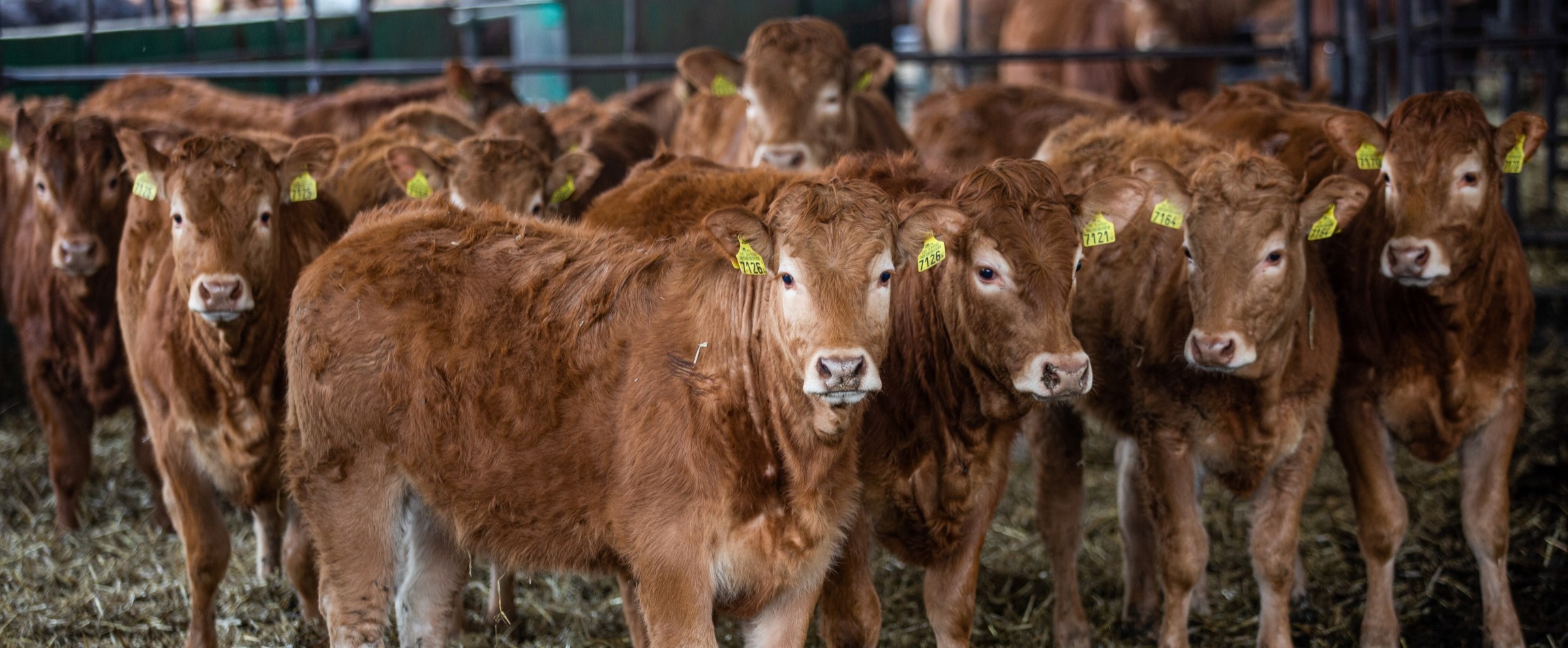
A Scientific Roadmap To Reduce Suffering For Beef Cows


There’s currently no animal welfare legislation in the European Union specific to cows raised for meat. To address this, the European Commission requested a scientific assessment to form a foundation for future laws. In response, the European Food Safety Authority (EFSA) produced this report focused on the welfare of beef cows at all stages of production, including dairy cows no longer being used for milk. The goal was to identify the most relevant welfare consequences — such as pain, fear, and hunger — and recommend practices to prevent or mitigate them.
The assessment relied primarily on peer-reviewed scientific literature and was supported by expert opinion. Additionally, EFSA launched a public call for evidence to gather feedback from diverse stakeholders, including researchers, public authorities, and non-governmental organizations.
EFSA experts used allometric calculations, which relate body weight to the space an animal physically occupies, to estimate minimum requirements for feeding areas. For resting areas, they developed a behavioral model based on the assumption that cows are motivated to lie down at the same time while maintaining a preferred distance from their neighbors.
No Outdoor Access
Most beef cows are fattened under intensive conditions in closed or partially open barns without outdoor access for the entire fattening period. This cramped and monotonous environment can lead to restricted movement, the inability to play, and sensory understimulation. Outdoor access, such as a loafing area or pasture, provides more environmental complexity and allows lower-ranking animals in the herd to withdraw from unwanted interactions.
Not Enough Space
Current commercial space allowances range from 1.8 to 5.5 square meters per animal, depending on age, weight, and flooring type. However, the report found that an increase in space generally improves welfare by allowing for more natural movement and spacing. Based on expert modeling, it’s estimated that cows over 400 kilograms kept in groups of eight need around 13 square meters per animal of total indoor space to allow for simultaneous lying and reduced social stress.
Uncomfortable, Unsafe Floors
Concrete slatted floors are among the most common flooring systems. These are hard and slippery, and increase the risk of lameness, tail-tip injuries, and resting problems. While covering the slats with rubber mats can improve traction, mats aren’t as comfortable as straw bedding. The report strongly recommends well-managed, bedded solid floors for lying areas.
Extreme Breeding For More Meat
One of the most significant welfare concerns identified involves breeding for “hypermuscularity,” often called double-muscling. This trait results from genetic mutations that lead to a massive increase in muscle fibers, primarily in breeds like the Belgian Blue and Piedmontese.
While this increases meat yield, it comes at a high cost to the animals. Double-muscled individuals suffer from high rates of difficult births because the calves are often too large for the mother’s pelvic opening, necessitating elective C-sections in up to 90% of cases for some breeds. These animals are also more susceptible to heat stress, respiratory issues, and fatigue due to having smaller hearts and lungs relative to their huge bodies. The report recommends excluding homozygous double-muscled animals (individuals who’ve inherited the mutation from both parents) from breeding.
Painful Mutilations
The report emphasizes that common procedures like castration (removing or destroying a bull’s testicles), disbudding (destroying horn buds), and dehorning (removing grown horns) are inherently painful.
While it’s often assumed that young calves feel less pain, there’s no conclusive evidence of age-related differences in pain perception. The report suggests avoiding castration if possible and always using a combination of local anesthesia and analgesia (pain relief drugs) regardless of the calf’s age.
Similarly, the report also recommends avoiding disbudding and dehorning. Rearing polled (genetically hornless) cows is the preferred alternative to avoid these procedures entirely. Otherwise, housing, handling, and transport practices should be modified to accommodate horned animals.
Digestive Problems
Fattening cows are often fed high-grain diets to maximize weight gain. This frequently causes subacute rumen acidosis, a metabolic disorder where the rumen becomes too acidic, leading to loss of appetite, diarrhea, dehydration, and even hoof problems. To prevent acidosis, the report recommends feeding less grain and more fiber.
Early Weaning
Natural weaning occurs gradually between seven and 14 months of age, yet calves are often abruptly separated from their mothers at just five to 11 months old. This causes intense distress, including pacing and vocalizing. To reduce trauma, the report recommends using two-stage methods, such as fenceline weaning or nose flaps, which end suckling before total physical separation — though it should be noted that nose flaps can cause injury. Weaning before six months should be avoided.
Knowledge Gaps
EFSA experts identified several gaps where more evidence is needed. For example, there are currently no precise scientific thresholds for the exact amount of dietary fiber needed to prevent metabolic disorders in fattening cows. Furthermore, there’s a lack of broadly agreed-upon thresholds to decide when beef cows are fit for transport versus when they should be humanely killed on farm.
Advocacy Opportunities
This comprehensive assessment provides several actionable targets for advocacy:
- Current space allowances are far below what the science suggests is necessary. Advocates can use the report’s recommendations as a benchmark for campaigning for higher space requirements.
- Because concrete slatted floors are a major source of injury and discomfort, advocating for mandatory straw-bedded resting areas could significantly improve daily life for millions of beef cows.
- The double-muscling phenotype carries severe biological costs, including birth complications and respiratory disorders. Campaigns can focus on ending the selection for this extreme trait.
- Mutilations are still frequently performed without adequate pain relief in some regions. Advocates can call for a phase-out of routine mutilations, and mandatory pain management (local anesthesia plus analgesia) for all cows, regardless of age, in the meantime.
- Pushing for a minimum weaning age of six months can help protect the bond between mothers and their calves, while better preparing calves to cope with the dietary and social changes that occur at this stage of production.
This report provides the scientific evidence needed to move from vague welfare concepts to concrete, legally binding protections for cows raised for meat. By centering an animal’s biological and behavioral needs, advocates can help ensure these individuals live lives that are significantly less defined by pain and restriction.
This summary was drafted by a large language model (LLM) and closely edited by our Research Library Manager for clarity and accuracy. As per our AI policy, Faunalytics only uses LLMs to summarize very long reports (50+ pages) that are not appropriate to assign to volunteers, as well as studies that contain graphic descriptions of animal cruelty or animal industries. We remain committed to bringing you reliable data, which is why any AI-generated work will always be reviewed by a human.
https://doi.org/10.2903/j.efsa.2025.9518

Citations:
EFSA Panel on Animal Health and Welfare. (2025). Welfare of beef cattle. EFSA Journal, 23(7), e9518. https://doi.org/10.2903/j.efsa.2025.9518