
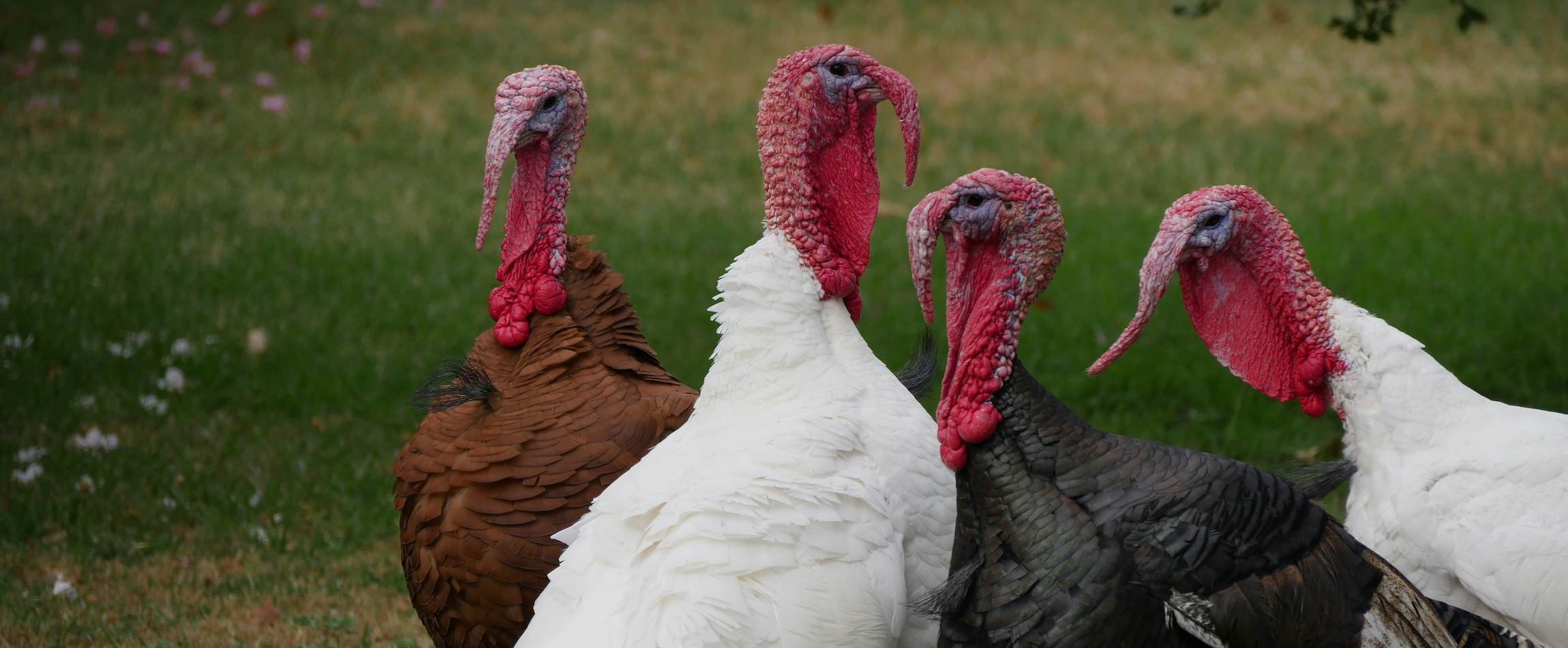
Understanding Global Consumption And Trade Patterns Of Farmed Turkey


While the domestication of farmed turkeys began as early as 1800 BC in Mexico, it wasn’t until the 1940s that high-scale production as we know it today first came into effect. Industry practices like artificial insemination have led to higher productivity and lower costs for farmers and, in turn, for consumers. By 2020, the global production of farmed turkeys reached nearly six million tons — representing over 500 million turkey lives.
The authors of this report claim that meat the success of turkey production may be because their meat has a high nutritional value and a unique flavor profile. Their meat also isn’t restricted by any religions, making it a popular choice for a wide consumer base. This article was written for economic purposes to expand the literature on farmed turkey production, trade, and consumption for market participants and decision-makers globally. The authors examined changes from 2011 to 2021 and analyzed various databases and reports.
In 2021, farmed turkey production was 4% of the global farmed bird production and 2% of all land animals used for food globally. 15 countries accounted for 95% of the total production of farmed turkey in the same year. The U.S. is the largest producer, holding 42% of the market, followed by Brazil. Together, the U.S. and Brazil account for half of the world’s production.
Turkey farming is found primarily in developed countries, as industrialized farming requires sophisticated infrastructure and high levels of corporate governance. However, geopolitical shifts such as the E.U. meat embargo against Russia have spurred significant turkey farming growth. However, they rely on importing day-old chicks from overseas due to a shortage of locally raised farmed turkeys, which drives up production and consumer costs.
Another trend the authors note is that production has declined for certain E.U. countries, including the U.K., France, and Germany, due to stricter animal welfare regulations. As a result, this decline in production has led them to import less expensive farmed turkey from other countries such as Poland and Spain. There, costs of labor are lower and intensive animal farming practices are more widely accepted. More cramped living conditions and less care towards the animals allows for cheaper production costs.
Exports of farmed turkey decreased by 7% in 2021, influenced by the impact of COVID-19 and resulting export restrictions and establishment closures. Export and production numbers can also be affected by the presence of bird flu. When detected in farmed turkey populations, the population is often euthanized.
The number of countries consuming farmed turkey increased between 2011 and 2021, from 138 to 173. Mexico was the largest importer of farmed turkey. Western Europe generally saw a decrease in imports while Eastern and Southern parts of Europe saw an increase.
While farmed birds are the most consumed animal globally, turkey consumption figures remain relatively low compared to farmed chicken. In 2020, the per capita consumption of turkeys was 0.73 kg, compared to 14.4 kg for chickens.
The authors identify several challenges facing the industry. Some of these include social impacts (e.g., animal welfare, labor shortage), environmental impacts (e.g. climate change), economic impacts (e.g. import restrictions), and animal health (e.g. feed quality and antibiotic usage). They highlight the need for the industry to sustainably meet a growing demand for farmed turkey while acknowledging changing consumer preferences towards plant-based products, which may impact demand.
While the authors touch on the various challenges facing the industry, including concern for the treatment of farmed animals and the risk of antibiotic resistance, since this is a pro-industry paper, their main concern is reduced economic opportunities. They believe that farmed turkey will be a promising product in the future, due to ease of preparation, absence of religious restrictions, and nutritional value.
Of course, these reasons may not be very compelling to animal advocates. Advocates can instead focus on exposing the consequences of industrialized farmed turkey while highlighting the benefits of plant-based alternatives. Targeting policy change in countries with rising production can lead to stricter welfare regulation, increased costs, and reduced output. Encouraging consumers to choose more ethical options can make a significant impact too. By addressing policy and consumer choices together, advocates can work towards improving the lives of farmed turkeys and promoting sustainability.
https://doi.org/10.34101/actaagrar/2/12594

Citations:
Kálmán, Ákos, & Szőllősi, L. (2023). Global tendencies in turkey meat production, trade and consumption. Acta Agraria Debreceniensis, 2, 83-89. https://doi.org/10.34101/actaagrar/2/12594


