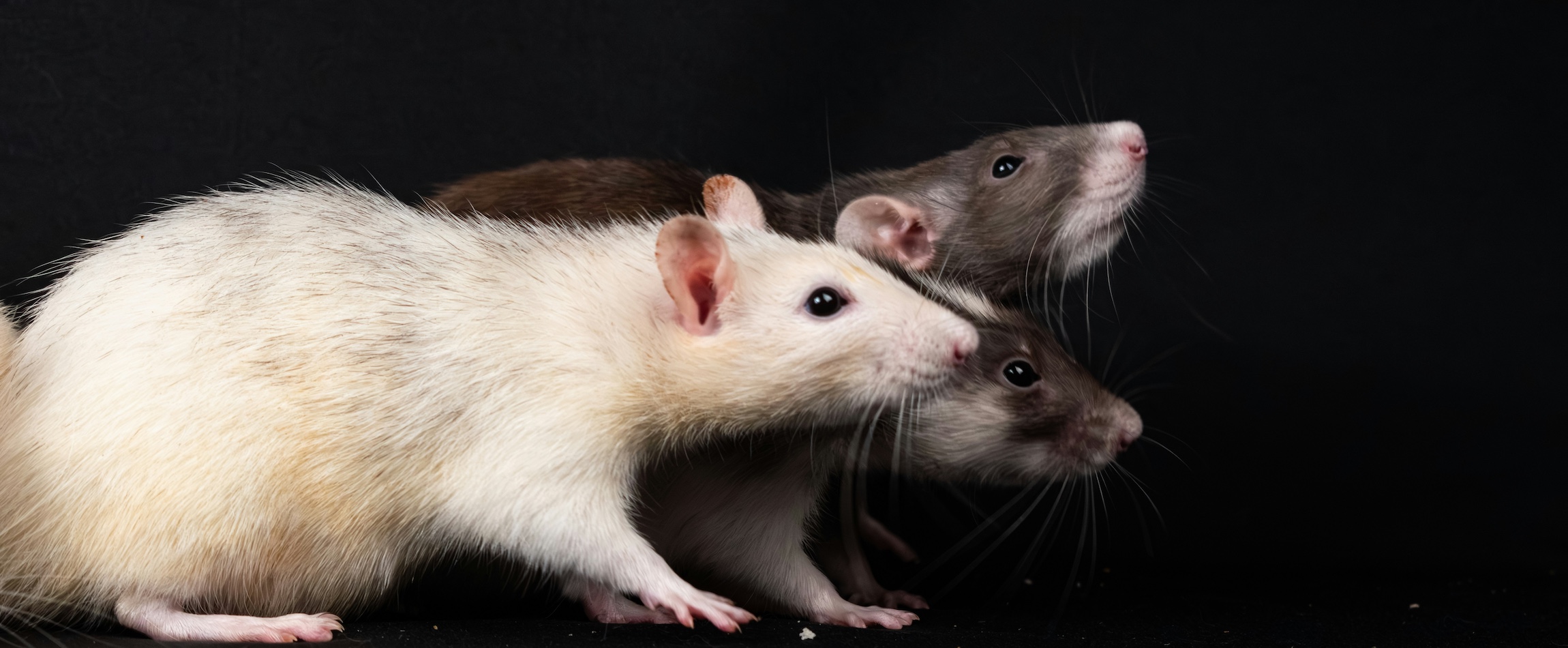
The Cost Of Curiosity: The Research Behind Animal Research Reveals Unnecessary Harm


It has been a long-held belief that animal models are necessary for safe and effective scientific advancement. After all, very few people want to be the first to try an experimental medication whose safety hasn’t been verified. However, biology is complicated, and when we don’t share the same immune system or other biological mechanisms with the animals being tested, animal models lead to low translation rates. For example, dogs have been a cornerstone of medical testing, even though they don’t even have corresponding genes for several human genes. This blog and accompanying fact sheet explore the (generally low) validity and usefulness of animal testing and the (generally high) harm it causes — to the animals, to the environment, and to ourselves.
Animal Models Pass With Flying Colors, But Translation Fails
If we only looked at the results of tests performed on animals, our current medical and scientific landscape would look very promising. In animal models, we’ve solved cancer, cured strokes and sepsis, and successfully treated spinal cord and head injuries. Unfortunately, this picture doesn’t hold up when we look beyond animal testing to human trials.
Only half of all studies that use animal models ever progress to human studies, and even fewer progress to randomized clinical trials. A mere 5% of studies actually result in a safe, effective drug fit for human use. This means that we’re throwing away thousands of animal lives (standard toxicity tests, for example, can use 6,000-12,000 animals), billions of dollars, and years of time (for the few drugs that make it that far, it takes ten years to receive FDA approval) just for the small chance that we get a drug that works.
Depending on animals that don’t share our physiology to test potential drugs is more than just wasteful and cruel to those animals — it doesn’t make sense for us either. We’ve developed more than 100 treatments for sepsis in rodents, none of which have resulted in an effective cure in people. Sepsis is a complicated condition that varies between individual people, much less completely different species. It simply doesn’t make sense to use inbred, genetically similar mice to try to test a solution for a completely different biological system. Similarly, the TGN1412 drug — an experimental monoclonal antibody designed to treat autoimmune diseases and B-cell leukemia by stimulating T-cells — was hugely successful in animal models, even at doses 100 times higher than ever given to humans. Unfortunately, once the drug was administered to people, it caused catastrophic organ damage.
We’ve used animals to try to test for organ damage before it happens, including the damage existing drugs cause to kidneys, but animal models don’t allow us to track real-time molecular effects. Kidney damage from prescription drugs affects 20% of adults and two-thirds of elderly adults. For some drugs, kidney damage can accumulate before the medication can achieve its intended therapeutic effect, defeating the purpose of the drug in the first place.
If some drugs that work in animals don’t work in people, and even some of the ones that do work in people cause kidney and other organ damage before they can reach their therapeutic effect, why are we still using animal models? Unfortunately, the answer may be more a matter of habit rather than scientific validity. When researchers have their work reviewed, sometimes prior funding decisions and credentials are considered a sign of the study quality, rather than reviewing the research on its own merit. When this happens, the researcher’s work is reviewed less critically. It also means that researchers who are used to using animal models are more likely to continue using them without any critical feedback to suggest other, possibly better-suited, methods.
Bad For People, Bad For Animals
If we’re going to insist on using animal models, despite their general inability to predict human physiology, then we must at least make sure they have legal protections and aren’t experiencing undue suffering. Unfortunately, it will probably come as no surprise to most advocates that we’re failing in that field, too. While protections like the Animal Welfare Act (AWA) do exist, they fail to protect 95% of animals used in research. In fact, we can only estimate this percentage in the United States because, while the AWA protects guinea pigs, rabbits, hamsters, primates, pigs, dogs, and cats, it doesn’t include nor count laboratory-bred mice, rats, birds, reptiles, amphibians, crustaceans, or fishes. Given that in the U.K. 99% of animals used in research in 2021 were mice, rats, and fishes, this can hardly be considered meaningful protection.
The welfare issues for animals used in research are multi-fold. With the lack of meaningful legal protections, animals are often subjected to highly stressful, painful, or invasive procedures for potentially prolonged periods of time. Even animals who aren’t forced to endure the study protocol are left to languish in barren environments that increase their mortality and disease severity. For example, 36-42% of all monkeys reported to the USDA between 2021 and 2024 (over 40,000 monkeys) were held in facilities but never used in a study. In 2017, the E.U. held 14 million animals that weren’t used for research. In 2021, 17% of all AWA-covered animals in the U.S. were kept in breeding facilities without being used for research (this number is likely much higher when considering animals who aren’t covered by the AWA). That means for every two animals used in experiments, three were bred but never used.
Of course, the alternative to being a “surplus” animal isn’t good, either. In 2024, nearly 100,000 animals were subjected to the highest level of invasiveness in CCAC-certified institutions. In the U.S., 7% of animals (over 55,000) were subjected to the same. Looking at the second highest level of invasiveness, the numbers rise to 30% in Canada and 24% in the United States.
While the overall numbers are upsetting enough, the situation looks even more dire when we break it down. Between 2021 and 2024, 1% of mice in Canada — tens of thousands of individuals — were subjected to protocols causing extreme pain, and 62-69% of all mice used in Canada experienced moderate to severe distress. While some people may believe it’s worth causing pain and suffering to animals to advance human medicine, that’s not the majority of what’s being done. Most of the mice subjected to these protocols (57-64%) were used for basic science — foundational work not tied to any specific goal or medicine.
Fishes and rats face an unfortunately similar story. Between 2021 and 2023, 6-7% of fishes used in research in Canada experienced severe pain (though the number dropped to 4% in 2024). Once again, the majority of fishes (63-85% of zebrafishes who were used in moderately to severely distressing procedures) were made to suffer for the sake of basic science. More than half of rats used in research in Canada faced moderate to severe pain between 2021 and 2024. 33-44% of these rats were used for fundamental research.
Guinea pigs in Canada were subjected to highly invasive protocols even more often than mice, fishes, or rats, with 13-40% of individuals experiencing the highest level of invasiveness between 2021 and 2023 (though this number dropped to just 3% in 2024). The vast majority of guinea pigs (73-94%) were used for regulatory product testing. In the United States, guinea pigs were the most common animal subjected to the highest pain level, with 14-17% of guinea pigs being used in this category between 2021 and 2024.
The Harm Doesn’t Stop At The Lab Door
Using animals for research isn’t just ineffective — it’s actively harmful. Beyond its effects on animals, the researchers and workers, surrounding populations, and the environment also face serious consequences from the use of animals in science.
Using millions of animals in research also means using a substantial number of supplies. Every animal who dies during research, whether subjected to an experiment or life in a cage, means a body, needles, syringes, bedding, and other supplies that need to be disposed of. Standard disposal methods include incineration, especially for toxic tissues. Incineration on its own produces air pollution that causes chronic health issues for the researchers and workers, as well as causing chronic illness and developmental delays in nearby communities. When the materials being burned are toxic, those toxins are released into the air, making matters even worse.
People working in animal labs are also exposed to waste anesthetic gases, which have been associated with poor long-term mental and physical health. Exposure to these gases can cause headaches, depression, and neurologic and reproductive dysfunction. A significant portion of lab workers experience allergic reactions (11-44%), and 4-22% of symptomatic workers go on to develop occupational asthma.
The environmental footprint of animal research facilities is equally troubling. Animal waste from these facilities can leak into the surrounding area, causing soil and groundwater contamination. This runoff means that not only can public drinking water become unsafe to drink, but it also exacerbates the issue of drugs in public water supplies. On top of the pollution and contamination, the operational demands require an enormous amount of energy. A research lab can use up to ten times more energy than a standard office building, further compounding the ecological toll.
Humans Are The Best Model For Human Biology
If animal models were the only tool at our disposal, we might be stuck. Fortunately, that is not the case. We have many different tools at our disposal that not only don’t harm animals, but are more reliable than animal models. New Approach Methodologies (NAMs) include organoids, organs-on-chips, in vitro methods, and computer models, and are often better and faster than animals when it comes to mimicking human biology and predicting the utility of new drugs.
NAMs are becoming increasingly popular, with publications using NAMs instead of animal models quadrupling between 2006 and 2022. Some of the most talked about NAMs are organoids. Essentially, organoids use stem cells to grow 3-D cell clusters that mimic miniature versions of human organs in a dish. Organoids and spheroids (a simpler version of organoids) have been used successfully to study the kidney damage that can accumulate from prescription drugs. Two tested drugs were found to have toxic effects at concentrations 20 times lower than previously thought. We would never have achieved this important finding with animal models because the mechanism that leads to kidney damage differs significantly between rodents and humans.
In vitro methods, including stem cell technology and tissue engineering, have also led to promising results. Scientists in Singapore developed a human skin model in 2019 that mimics skin’s biological and chemical properties, making it a much better alternative to animal models that don’t share these traits.
Organ on a chip technology can simulate the physiologic environment of human organs by growing human cells on chips with microfluid channels. These channels mimic the chemical signaling that occurs in the human body. They can also be used to simulate mechanical pressures like blood, lung, and bone pressure. We’ve created simulated hearts, kidneys, livers, and lungs so far with this technology. Multiple organs can be included on a single chip, and eventually the goal is to be able to model a full human body on a chip.
Machine learning and AI have made inroads, as well. Machine learning, especially deep learning, has successfully predicted toxicity, analyzed large datasets, and predicted a chemical’s ability to cause genetic mutations with over 90% accuracy. Projects like ONTOX attempt to predict systemic toxicity using AI models built on cell-based assays and data on how a substance moves through the body.
Animal Testing Was Just A Phase
Whatever else can be said about the United States’ current administration, it has turned out to be surprisingly good for laboratory animals. With replacement technology becoming increasingly available and increasingly effective, animal testing has begun to be phased out in not just the U.S., but across the world.
The U.K. and the U.S. have both announced plans to reduce the use of animals in research. In the U.K., animal models will no longer be used to test skin irritation in 2026, and some studies on dogs are scheduled to be eliminated by 2030. In the U.S., RFK Jr. announced plans to wind down federally-funded animal testing, beginning with primates, and the FDA and NIH both have plans to reduce the use of animal models within the next few years.
To further the adoption of NAMs, advocates for animals used in research, along with researchers, animal ethics committees, and animal protection organizations, created a checklist to help researchers find alternatives to animal models while planning their studies:
- What: Researchers may need to be creative with their search terms. Studies using NAMs may not be tagged with terms like “replacement” or “alternative,” so researchers should search for subject-specific terms and specific keywords like “in vitro,” “model,” or “assay.”
- Where: Researchers should explore multiple databases and consider non-traditional information sources like gray literature (e.g. preprints, government documents, or policy papers).
- When: NAMs are developing rapidly, so researchers should conduct regular searches. It’s helpful to track the dates of each search and the publication dates of the papers to make sure they’re keeping up with the latest developments.
- Who: Many places can offer expertise on NAMs. Researchers should reach out to peers, networks, and organizations — including online discussion forums and social media — to get advice on replacement opportunities.
- How: Iterative searches produce better results by trying new combinations of terms and filters. Researchers should record their search methods, including specific search strings.
- Why: It’s important to choose the right method for the research question. Once researchers identify the potential NAMs, they should explore the benefits and drawbacks of each method to justify whether to adopt or reject that model.
Across every measure — scientific, financial, ethical, and environmental — the results point the same way. There’s a strong case for replacing animals in research wherever validated alternatives exist. We have increasingly good technology, support like the above checklist, and legal backing. Using animals is cruel, and in most cases, their use fails to predict human outcomes. Worse than being simply ineffective, the cost of using animals is too high. It costs animals their lives and well-being, it costs taxpayers billions of dollars and decades of wasted time testing drugs that will never work for humans, it costs workers, patients, and surrounding communities their health, and it costs the environment increased contamination and pollution. The transition to scientifically superior, more economical, and ethical NAMs is not just an option, but the necessary path forward for a better scientific and medical future.
An Easy-To-Share Factsheet
This blog is accompanied by a factsheet that condenses the key findings into an easy-to-share format.