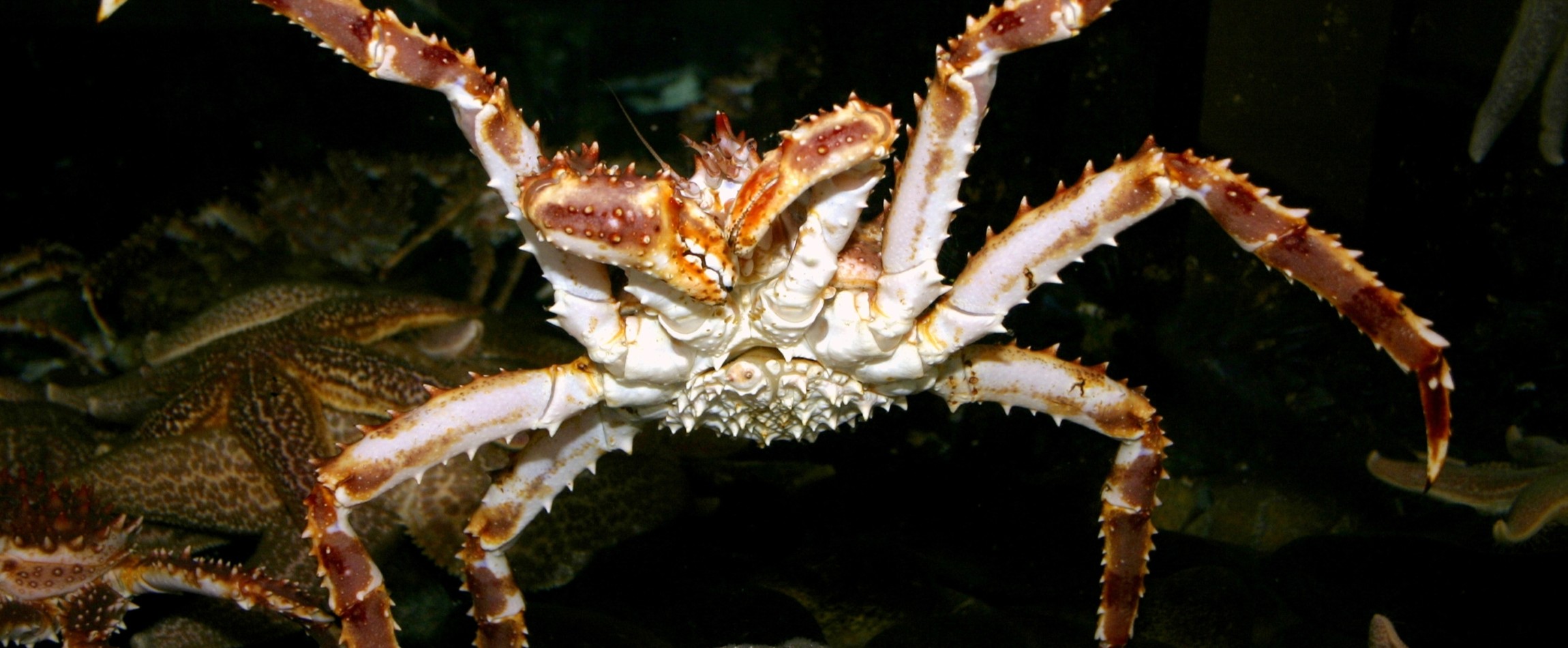
Safari Of Suffering: The Reality Of King Crab Tourism


Wildlife tourism is commonly sold as educational, meaningful, and conservation friendly. It’s often assumed that if an experience is popular and led by experts or professionals, it must be ethical. However, this isn’t always the case, especially when it comes to animals being used directly for food or entertainment (i.e., the operator’s profit).
This study examined how interpretation during Arctic king crab tours in Norway shapes tourists’ perceptions, values, and behaviors toward non-human animals, and assessed whether these practices align with principles of wildlife equity.
The authors adopted an ethnographic approach. Ethnography encourages researchers to engage emotionally and physically, through conversation and observation, within the setting under investigation. In this case, the authors participated directly in king crab safaris alongside other tourists. This allowed them to observe interactions firsthand, including how guides handled the crabs, how tourists responded, and the narrative that was shared throughout the tour.
Throughout the authors’ experiences on the king crab tours, they kept a set of detailed records via written notes, photos, and video clips. The documentation of these encounters consisted of daily diaries, including descriptions of the behavioral patterns, reactions, and engagements observed. This material aided in identifying the nuances in storytelling, practice, and other interpretative tactics used by guides during these experiences. The authors also completed several informal, unrecorded interviews with tourists, guides, and other individuals involved in organizing or facilitating the interactions.
On the tours, crabs were removed from their cages, handled extensively, placed on their backs, passed around for photos, and kept out of water for long periods. Some crabs visibly struggled or grew weak, but this was never presented as suffering. Instead, tourists were encouraged to touch them, pose with them, and even scoop eggs from female crabs.
The crabs’ killing was carried out in front of tourists, but treated as a routine and unremarkable task. Anyone feeling uneasy was told simply to look away rather than being invited to reflect. Afterwards, tourists participated in preparing and eating the crab, which reinforced a strong sense of achievement and satisfaction.
The study found that king crab tours consistently downplayed the animals’ suffering through upbeat storytelling and carefully staged activities. Guides focused on the excitement of participating in a nature-based adventure and pride in preparing a “well-earned” meal. They often portrayed the crabs as invasive, dangerous, or destructive. This narrative made it easier for tourists to see the animals as problems or objects rather than as living beings, and squelched any inclination for empathy toward the crabs.
The authors characterize this as a form of dark animal tourism: an experience built around suffering or death and, in this case, one masked by humor, excitement, and the projection of a mundane routine. Most tourists seemed unaware of the ethical implications of their participation.
A limitation of this study is that it was conducted in one country and focused on only one type of tour. Further exploration of tour guide narratives around animal experiences, especially ones that involve handling, suffering, and death, are needed. In-depth interviews with visitors to understand to what degree the tour desensitized them would also provide a fuller picture.
The study’s findings can be used to argue for stronger ethical standards in wildlife tourism. This includes eliminating animal handling, viewing animals at a distance in their natural environments, and adopting interpretation practices that emphasize animals’ uniqueness by acknowledging their sentience, cognitive abilities, and emotional and social lives.
Storytelling is a powerful tool. Tour guides aren’t just simply sharing information; they’re shaping values, emotions, and boundaries. When they frame animal suffering as “normal” or “entertaining,” people stop questioning it. This case presents an opportunity for animal advocates to work with guides who offer animal experiences to minimize or eliminate harmful behaviors, and craft a scientifically accurate portrayal of animal minds and lives.
https://doi.org/10.1080/14616688.2025.2494687

Citations:
Hoarau-Heemstra, H., Pashkevich, A., & Kline, C. (2025). Practice, performance and perversion: Dark interpretation in Arctic King Crab tourism. Tourism Geographies, 27(2), 234–254. https://doi.org/10.1080/14616688.2025.2494687