India’s Exotic Pet Trade Has Outpaced Its Laws


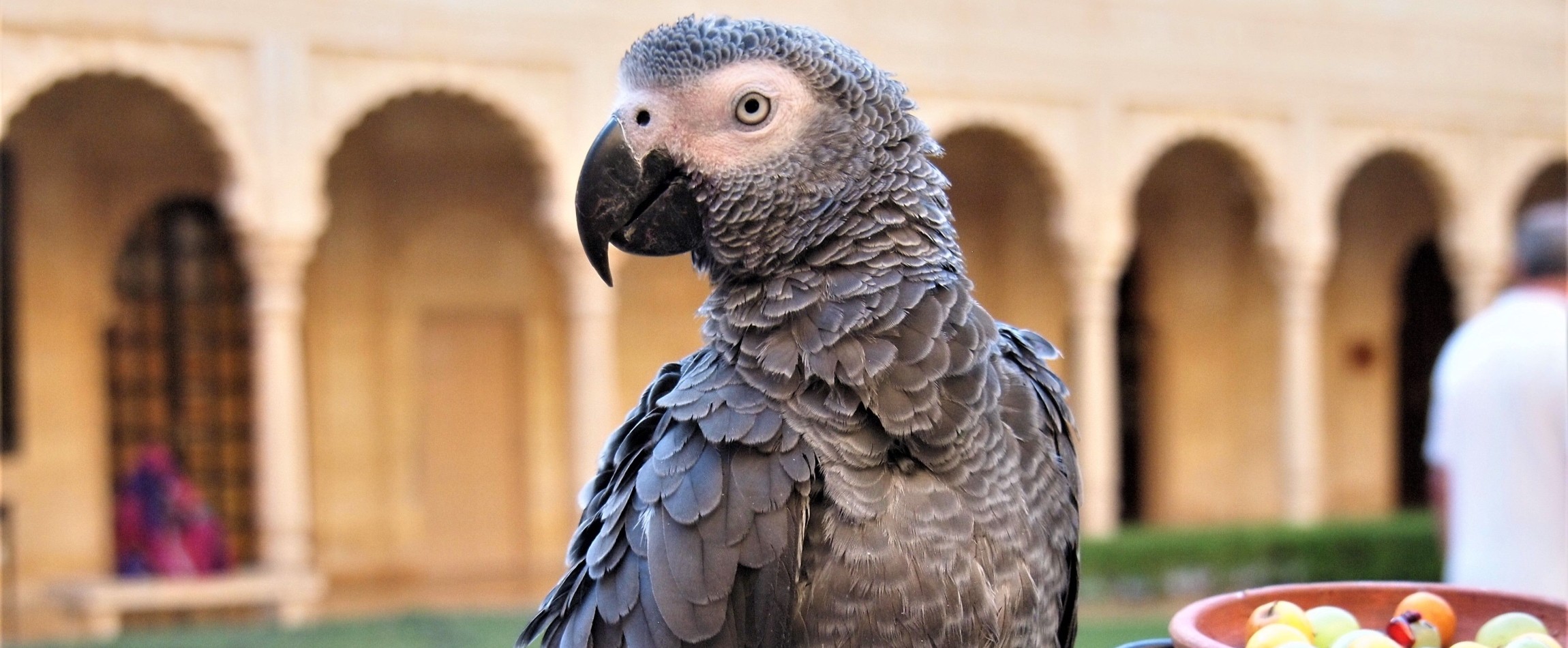
India’s trade in exotic animals has grown into a sizable commercial industry. This report from Humane World for Animals India cites industry estimates putting the market’s 2024 value at US$42.6 million and forecasting it will reach US$75.8 million by 2030. Under a voluntary disclosure program launched in 2020, more than 40,000 people across 30 states and union territories had come forward by February 2021 to register exotic pets they were already keeping. The authors caution that this figure almost certainly understates real ownership levels. Green iguanas, sulcata tortoises, ball pythons, African grey parrots, and blue-and-gold macaws are among the most commonly traded species. Small mammals such as pygmy marmosets and sugar gliders are increasingly popular too, alongside tarantulas and other invertebrates.
The report assesses how well India’s laws protect animals, public health, and ecosystems from the risks this trade creates. Rather than collecting new data, the authors reviewed existing legislation, government rules, published research, and Indian media coverage of specific seizures and enforcement actions. Finally, to address the legal and policy gaps uncovered in the analysis, the report proposes reforms across five areas: legislative and regulatory measures, institutional capacity, disease surveillance and biosecurity, public awareness, and research.
Harms Of The Trade
The authors document four interconnected consequences of this weakly regulated industry.
Disease Risk
Reptiles can carry Salmonella, birds can spread avian influenza and parrot fever, and primates can transmit hepatitis and tuberculosis, just to name a few examples. Because no one is systematically tracking disease in India’s exotic pet population, the report warns that these could go unnoticed until there’s an outbreak in humans.
Ecological Harm
Escaped, abandoned, or released exotic animals have already established themselves in Indian ecosystems. Red-eared sliders, for instance, are a turtle species the International Union for Conservation of Nature ranks among the world’s 100 worst invasive species. They’ve been recorded in nine Indian states, and even documented preying on two different native turtle species.
Organizational Strain
Seized exotic animals can overwhelm zoos and rescue centers that may not have the resources, expertise, and veterinary support necessary to care for them long term. Between July 2019 and September 2022, for example, Aizawl Zoological Park in Mizoram absorbed 910 seized animals. By December 2022, more than two-thirds of them had died, leaving only 274 survivors.
Animal Suffering
The report notes that roughly three exotic animals die for each one who survives to be sold. Deprived of food and water for days, exotic animals are often sedated and smuggled into the country in suitcases and plastic bottles. In a January 2026 seizure, for instance, seven of eight sugar gliders, four of 11 iguanas, and one of two squirrel monkeys arriving at Bengaluru airport were found dead.
Laws With Big Gaps
The Wild Life (Protection) Act is India’s central law on wild animals. First passed in 1972, it was amended in 2022 to align with the Convention on International Trade in Endangered Species of Wild Fauna and Flora (CITES). CITES-listed species, including popular exotic pets like iguanas and ball pythons, must now be registered. Breeders of the most endangered species (from CITES Appendix I) must also be licensed.
But the authors find this reform still leaves major gaps. Many commonly kept exotic animals aren’t listed under CITES at all, and these face far weaker oversight. Importers of non-CITES-listed species must obtain a license, but beyond basic housing, health, and documentation standards for pet shops, nothing tracks these species’ origins or supply chains once they’re in the country.
Furthermore, a 2022 provision that would let the government regulate invasive species has never been used. A 2023 rule requires twice-yearly veterinary checkups for CITES-listed exotic pets, but has no provisions for routine zoonotic pathogen screening or mandatory zoonotic disease outbreak reporting. There are no national care standards for privately kept exotic animals, and no standard protocol for euthanizing confiscated ones. There’s also no rule against keeping animals dangerous enough to injure people. Venomous snakes, non-human primates, and big cats are all legal to privately own. And online sellers can claim to hold valid permits with little chance those claims will be checked.
Key Opportunities For Advocates
This is a legal and policy analysis, and its scope has clear boundaries the authors acknowledge. The analysis centers on national, central-government law; the authors note that individual states have pursued their own additional rules. Coverage is concentrated on land-dwelling and semi-aquatic species. The report touches on marine and other aquatic exotic animals only in passing. The authors also chose not to cover animals moved between zoos or kept for research purposes. Some of its most striking figures come from outside industry or academic sources rather than the authors’ own analysis. This includes the market-size figures and the mortality-ratio estimate mentioned above.
Advocates can point to this report to support the comprehensive reforms it recommends. These include:
- Expanding regulatory oversight to non-CITES-listed species
- Banning private ownership of primates and other dangerous or ill-suited species
- Requiring online platforms to verify sellers’ permits
- Passing standalone legislation for invasive species
- Expanding veterinary education and facilities dedicated to exotic species
- Supporting research on zoonotic disease and invasive species risk assessments
- Developing a national surrender policy with intake mechanisms and approved placement protocols
- Publishing national care guidelines for exotic pet guardians
- Launching targeted public campaigns on the risks of exotic pet ownership
However, beyond these recommended reforms, the report may be most useful to advocates as evidence that regulating the exotic pet trade can’t substitute for reducing it. Even where India’s laws are strongest — for CITES-listed species — they govern permits and paperwork, not an animal’s living conditions or well-being. This gap matters: many commonly traded species, from parrots to primates, are long-lived and highly social. Their needs are extremely difficult to meet in a private home, no matter how devoted their guardian is. Ultimately, meaningfully reducing the suffering this trade causes rests on reducing demand for exotic pets overall — in India and around the world.
This summary was drafted by a large language model (LLM) and closely edited by our Research Library Manager for clarity and accuracy. As per our AI policy, Faunalytics only uses LLMs to summarize very long reports (~50+ pages) that are not appropriate to assign to volunteers, studies that contain graphic descriptions of animal cruelty or animal industries, and research on niche topics. We remain committed to bringing you reliable data, which is why any AI-generated work will always be reviewed by a human.

Citations:
Balaji, K., Sotie, S., & Bindumadhav, S. (2026). Safeguarding biodiversity and public health: A legislative and policy analysis of exotic pet trade in India. Humane World for Animals India. https://www.humaneworld.org/sites/default/files/docs/27-june-hwfa.pdf