
Does The Identifiable Victim Effect Extend To Animals?


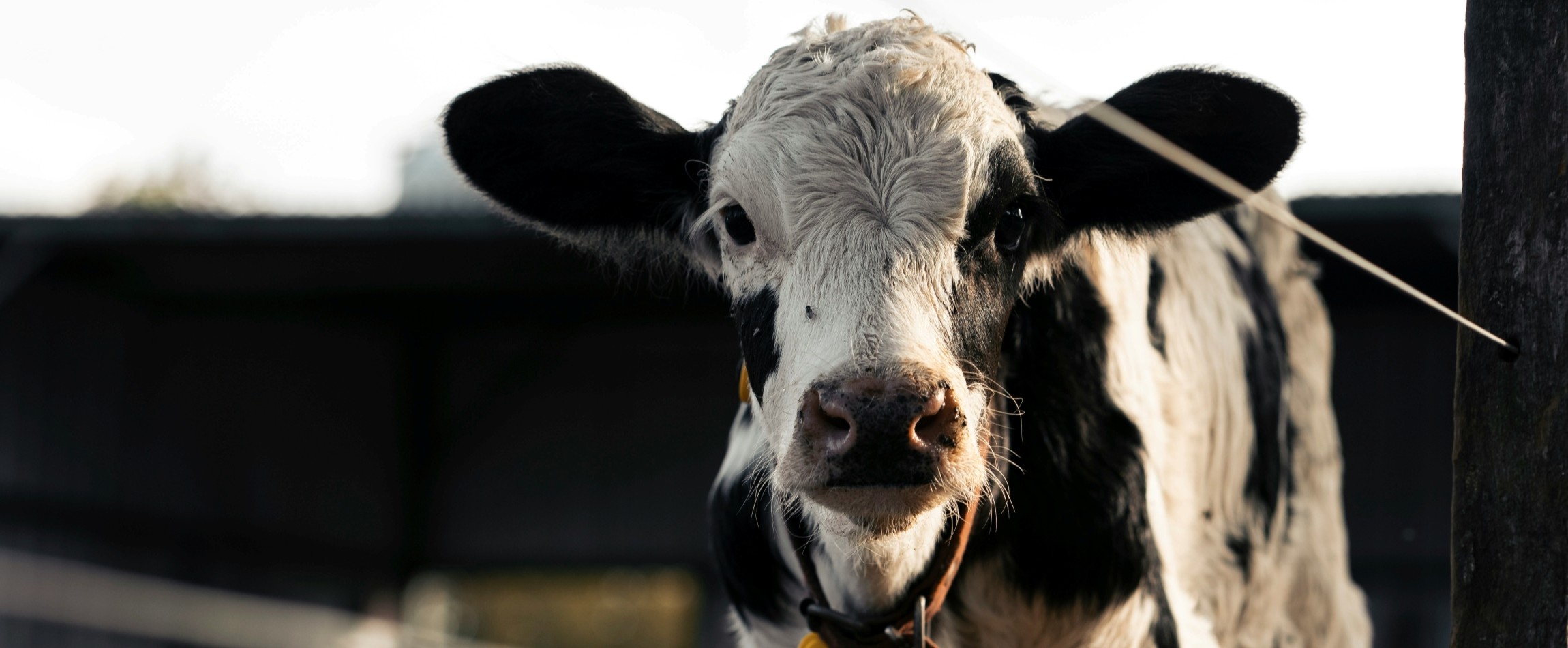
People feel far more moved to help one identifiable victim than an anonymous group, even when the group needs more help. Researchers call this the identifiable victim effect. It helps explain why a photo of a calf named Phoenix once changed government policy. During a U.K. outbreak of foot-and-mouth disease in 2001, officials were slaughtering millions of healthy cows in an effort to stop the spread. Public reaction to Phoenix’s photo led the government to change its policy on killing healthy animals.
Until this study, only two others had tested whether this effect extends to animals. Neither one focused on a group with a personal stake in the victim’s outcome. This study explored whether giving a farmed animal a name and a photo could move omnivores to advocate for that animal. It’s a unique test since eating meat gives omnivores a material interest in, and some responsibility for, farmed animal slaughter.
Across three experiments, researchers recruited 831 U.S. adults online who identified as meat-eaters. In each study, participants read a short story about a calf who had escaped a slaughterhouse and run through city streets before police caught him. Half of participants read about “Lucky,” a one-year-old calf pictured in a photo. The other half read an otherwise identical story about several unnamed calves without a photo. Participants then learned about an effort to save the calf, or calves, from slaughter. Depending on the study, the researchers asked participants to do one of three things:
- Rate how likely they were to sign and share a petition (Experiment 1)
- Actually sign a real petition (Experiment 2)
- Decide whether and how much to donate toward buying the calf’s or calves’ freedom (Experiment 3)
In the third study, the researchers added two more comparison groups: a named group of calves (Domino, Checkers, Patches, and Ink) and a single unnamed calf. This helped them test whether an animal’s name or simply facing one animal instead of several drove the differences. They also swapped Lucky’s name for the more neutral “Spot,” to rule out the chance that his upbeat name, not identifiability, explained the earlier results.
Across all three studies, the single, named calf drew a stronger response than the unnamed calves did. In Experiment 1, participants’ combined likelihood of signing and sharing a petition was significantly higher for Lucky (54%) than for the unnamed calves (42%). This translated into real behavior in Experiment 2. Among participants who read about Lucky, 26% signed a real petition, significantly more than the 13% who read about the unnamed calves. Those who read about Lucky also reported significantly stronger overall support for the petition (74%) than those who read about the unnamed calves (66%).
Experiment 3 separated an animal’s name from the number of animals involved. It found that Spot significantly outdid the other three conditions combined, both in how many participants chose to donate and how much they gave. Those conditions were a single unnamed calf, a named group of calves, and an unnamed group of calves. Naming or picturing a whole group didn’t help much. As with earlier research on human victims, the boost in generosity was limited to one identified individual. Even so, the comparison that most directly isolated naming — Spot against a single unnamed calf — didn’t reach statistical significance, though both measures trended the same way.
Why did knowing an animal’s name and seeing a photo matter so much? In Experiment 1, participants who read about Lucky reported somewhat more sympathy than those who read about the unnamed calves. That extra sympathy helped explain their greater willingness to act. This pattern didn’t clearly reappear in the second study, possibly because those participants acted (by signing a petition) before reporting their feelings, which may have reduced the intensity of their sympathy. In Experiment 3, a different emotional pathway emerged. Participants who read about Spot reported feeling more torn about eating meat, and that ambivalence predicted larger donations.
The researchers also found four personal traits that shaped responses to a named individual animal, in two opposite patterns. Participants who were generally concerned about others’ well-being, or who felt strongly connected to nature and the environment, responded more strongly than others. Meanwhile, participants who already scored high in empathy, or felt a strong bond with animals, were highly supportive of the calves no matter how they were described. This pattern suggests a name and a face may matter most for reaching people who aren’t already highly engaged with animals.
All three studies relied on convenience samples recruited through an online crowdsourcing platform. Unusually large shares of participants reported being vegetarian or vegan (24%, 48%, and 43% across the three studies), compared with roughly 8% in the general U.S. population. While the researchers excluded these participants from their main analyses to focus on self-identified meat-eaters, they note the key findings held even when veg*ns were included. They also point out that treating diet as a simple omnivore-or-not category oversimplifies real eating habits. Many people cut back on meat without fully giving it up.
Several of the findings about emotions and personal traits, including the sympathy and ambivalence results, came from exploratory analyses rather than the studies’ core hypotheses. The researchers call for confirmation in future work.
These findings suggest that even people who eat meat can be moved to advocate for a farmed animal’s welfare. What matters is presenting that animal as a specific, named individual, not one of an anonymous many. This supports a case for leading advocacy appeals with an individual animal’s story rather than statistics about the scale of animal suffering. The boost in support showed up most clearly among people who score lower in empathy or feel less connected to animals. A name and a face may be a particularly useful way to expand support beyond those already engaged.
Notably, ambivalence about eating meat was tied to more generous giving in the third study. This raises a possibility the researchers didn’t test directly. Appeals featuring one identifiable animal might work partly by surfacing the tension between caring about that animal and still eating others like them. Because this evidence is exploratory, and some comparisons didn’t reach significance, no single campaign example is guaranteed to work. Still, the overall pattern makes a solid case for the power of a name and a face in animal advocacy messaging.
This summary was drafted by a large language model (LLM) and closely edited by our Research Library Manager for clarity and accuracy. As per our AI policy, Faunalytics only uses LLMs to summarize very long reports (~50+ pages) that are not appropriate to assign to volunteers, studies that contain graphic descriptions of animal cruelty or animal industries, and research on niche topics. We remain committed to bringing you reliable data, which is why any AI-generated work will always be reviewed by a human.
https://doi.org/10.1016/j.jenvp.2023.102193

Citations:
Cohen Ben-Arye, R., & Halali, E. (2024). Giving farm animals a name and a face: Eliciting animal advocacy among omnivores using the identifiable victim effect. Journal of Environmental Psychology, 93, 102193. https://doi.org/10.1016/j.jenvp.2023.102193
