
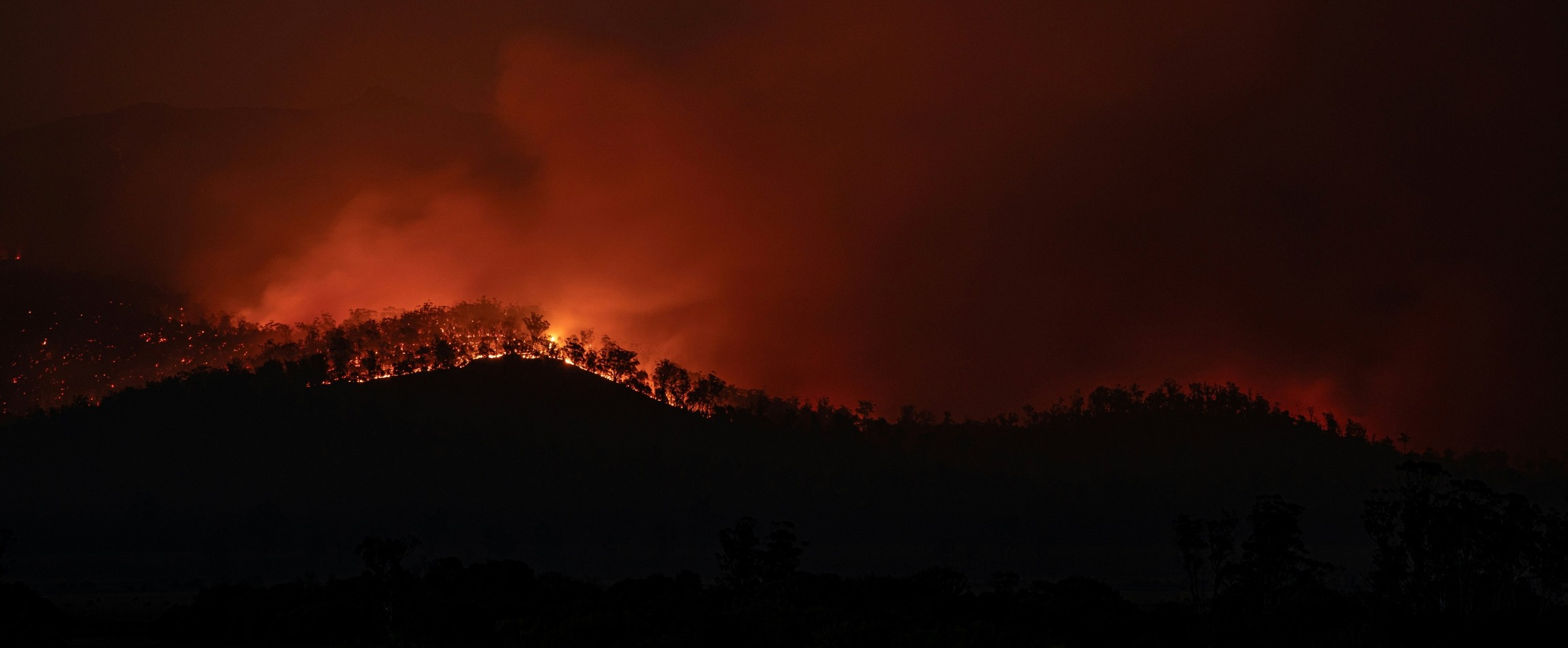
Caring For Animals During Australia’s “Black Summer” Bushfires


Disaster preparation, response, and management tend to be very human-centric, with animals often left out of official guidelines. This study examined informal community efforts in caring for animals during the 2019/2020 “Black Summer” bushfires in Australia. It’s estimated that three billion animals were killed, injured, or displaced by the fires, a devastating event that could be considered “normal” by 2040 if carbon emissions continue to increase as projected.
The study’s authors had three main purposes:
- To understand the community’s actions during and after the fires;
- To examine the interplay between community efforts and formal systems of disaster management; and
- To make recommendations for future disaster policy and practice.
Between August 2022 and June 2023, the authors conducted 56 semi-structured interviews with stakeholders involved in animal rescue efforts in the Shoalhaven area of New South Wales. Nineteen interviewees were community members, 18 were experienced wild animal carers, 12 were people who spontaneously volunteered to help during the fires, 10 were government employees, researchers, or other experts such as veterinarians, and four were farmers. Demographic information was not requested from interviewees, but the authors note that two-thirds of the community members were women.
Themes arising from the semi-structured interviews were then used to develop a series of four workshops held during May and June 2023 with Shoalhaven community members. During the workshops, participants brainstormed responses to three key topics: what had and hadn’t worked well for animals during the fires and what issues required attention moving forward. Again, while demographic data wasn’t collected, roughly two-thirds of the workshop participants were women.
No Government Help For Wild Animals
Animals helped by participants during the fires included domesticated animals such as horses, alpacas, donkeys, chickens, dogs, cats, guinea pigs, rabbits, and cows, but also wild animals like possums, wombats, kangaroos, and wallabies.
Most participants had never heard of the New South Wales Animals in Disasters Management Plan, which offered official government guidance on preparing animals for emergencies. However, the plan was limited to companion and farmed animals and placed responsibility on individuals, not communities. Thus, there was no formal provision for wild animals and no advice for community-level actions.
Despite this lack of support, communities mobilized rapidly. People created informal rescue networks for wild animals via Facebook, WhatsApp, and local in-person meetings to coordinate water and food stations, evacuations, and medical care. They also divided up roles amongst themselves, such as sourcing supplies, transportation, and tracking station locations.
Government Got In The Way Of Rescue Efforts
However, people encountered numerous obstacles when organizing their own animal rescues. Roadblocks created land access issues, while biosecurity rules, such as “PigPass” with its strict requirements for moving pigs, prevented animal transport. Participants overwhelmingly agreed that government actions slowed down animal rescue efforts, and some felt forced to choose between breaking the law and saving animals — which only added to the stress of the experience.
Conflicting information and information gaps, often from official sources, were also a common thread throughout the interviews and workshops.
How Helping Hurt
During the disaster, many were forced to decide which animals to protect first — or at all. People were unaware of available shelters that would take animals and, in the case of wild animals specifically, unsure of how to actually provide proper care. Even after the fires ended, community members were left to care for animals on their own, and often had to watch them suffer or die. At the same time, their rescue efforts often went unrecognized or were even dismissed by official agencies. These experiences, together with the barriers and stigma around accessing mental health services, increased the burden of mental health challenges for many involved.
This study has several limitations, including the absence of demographic data and the small number of farmers interviewed. Additionally, the results may not apply to other locations in Australia due to differences in ecological and policy contexts.
Despite these limitations, the study offers advocates some insight into how animals could be considered in disaster preparation, response, and management. Based on their findings, the authors recommend integrating animal welfare groups, wild animals carers, and veterinarians into emergency planning. Emergency protocols should consider animal needs, including establishing animal-friendly evacuation centers and revising transport and property access restrictions that may hinder animal safety during disasters. There’s also a need for community training on how to assist animals before, during, and after a disaster. Information on how to care for specific animals should be made accessible to everyone — for example, by being presented in different formats and languages. Finally, governments should fund and facilitate these efforts in recognition of the deep connection between people and the animals in their communities, whether wild or domesticated.
https://doi.org/10.1007/s13753-025-00623-8

Citations:
Sturman, A., Celermajer, D., MacDonald, F., Verlie, B., Heenan, N., & Schlosberg, D. (2025). Community efforts to care for animals during climate disasters: Experiences and recommendations from an Australian bushfire affected region. International Journal of Disaster Risk Science, 16, 190–200. https://doi.org/10.1007/s13753-025-00623-8
