
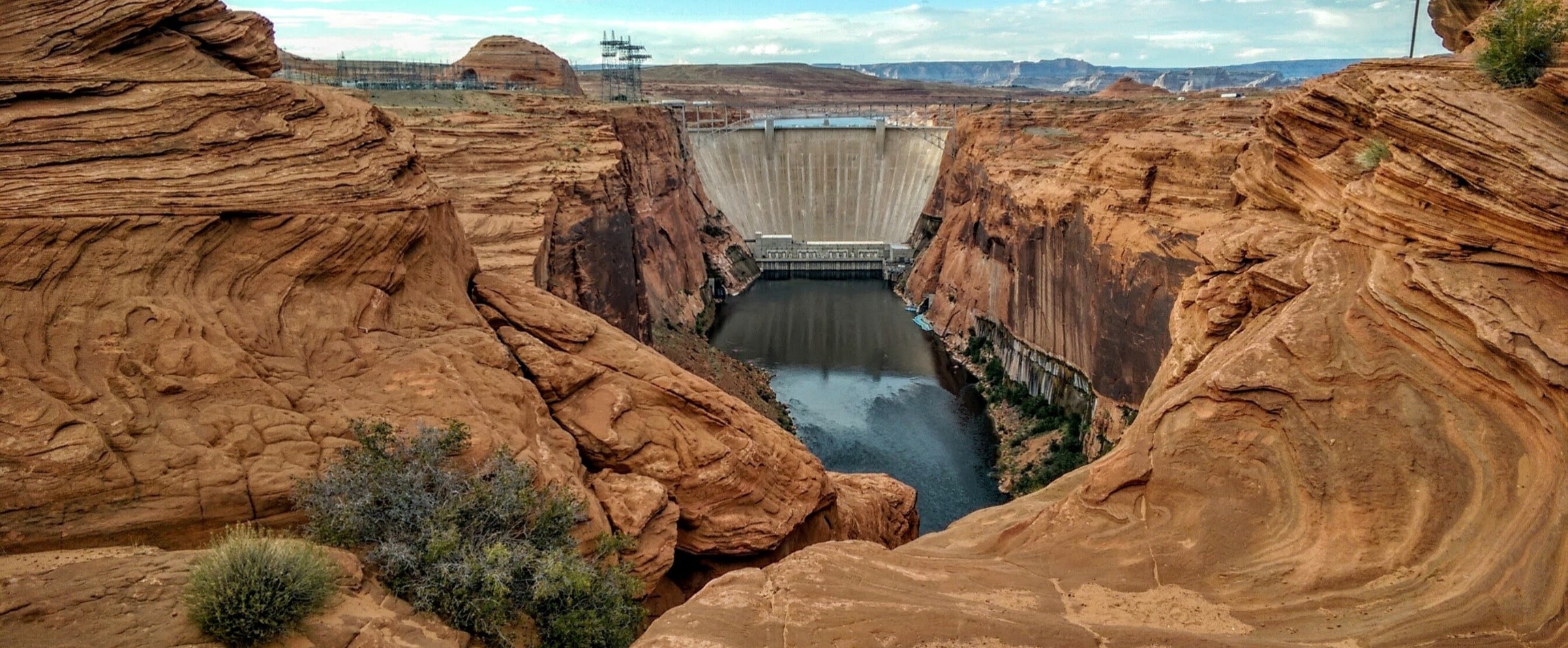
Animal Agriculture’s Role In The Colorado River Crisis


The Colorado River has been overdrawn for the past 60 years, with its water running out before reaching Mexico. The river supports over 40 million people and five million acres of cropland, but it’s been used up so much that major reservoirs like Lake Mead and Lake Powell are nearly empty.
Past estimates of water use have been incomplete because of legal issues, like the 1922 Colorado River Compact, which didn’t account for water from the Gila River or water used in Mexico. This study fills those gaps by giving a full picture of how the river’s water was used from 2000 to 2019. Even though the U.S. and Mexico have made deals to reduce water use, it hasn’t been enough to balance water supply and demand in the 21st century. With these deals ending in 2026, the authors argue that better management of the river’s water and comprehensive water budget accounting are urgently needed.
The study tracks Colorado River water use by analyzing consumption by sector and crop type. It examines how water is used across agricultural, municipal, commercial, and industrial sectors and accounts for water lost to evaporation and plants. Data was collected from government reports, including those from the U.S. Bureau of Reclamation, as well as from local agencies and research institutions, to map water use across the basin. Previously overlooked areas like the Gila River and Mexico were incorporated. Reservoir evaporation and riparian plant water use were estimated using modeling techniques. Crop-specific water consumption was modeled using advanced tools, which estimated water needs for 13 major crops based on climate and soil data.
Results showed that irrigated agriculture is the biggest consumer of Colorado River water, accounting for 52% of the total and 74% of direct human use. Most notably, cattle-feed crops like alfalfa and grass hay are responsible for:
- 32% of all water consumed
- 46% of all direct water consumption
- 62% of all agricultural water consumed
In the Upper Basin alone, cattle-feed crops use up three times as much water as municipal, commercial, and industrial uses combined.
Despite its heavy water use, demand for alfalfa is rising in the growing dairy and beef industries. Alfalfa’s resilience under drought conditions, ability to fix nitrogen in the soil and reduce fertilizer costs, and low labor costs from mechanical harvesting make it highly appealing to produce.
The study also showed that nearly one-fifth (19%) of the Colorado River’s water is used by plants along river courses, while 11% is lost to evaporation from reservoirs. The authors highlight the need for better water management and a 22 to 29% reduction in water use to help keep reservoir levels stable, especially as climate change makes water shortages worse.
There are several limitations to the study, such as differences in how water use is measured across various sources and the change of methods for estimating things like crop water over time, which could impact the results. Additionally, the study doesn’t account for deeper groundwater use, especially in Mexico and the Gila River Basin, meaning total water consumption might be underestimated. Lastly, although the study gives a detailed breakdown of water use, it doesn’t fully account for some indirect losses, like water that seeps into the banks around reservoirs.
The research revealed that most of the Colorado River’s water is used by agriculture, especially for growing cattle-feed crops like alfalfa. It also found that a lot of water is lost indirectly through evaporation and plants along the river. While recent policies have helped reduce water use in some areas, the authors state that much bigger cuts are needed to keep the river and its reservoirs stable — not to mention what reductions might be needed in the face of climate change. This updated analysis gives a clearer view of where the water is really going, which is essential for planning better ways to manage it in the future. It’s also helpful to advocates working to raise awareness of the diverse negative impacts of animal agriculture.
https://doi.org/10.1038/s43247-024-01291-0

Citations:
Richter, B. D., Lamsal, G., Marston, L., Dhakal, S., Sangha, L. S., Rushforth, R. R., Wei, D., Ruddell, B. L., Davis, K. F., Hernandez-Cruz, A., Sandoval-Solis, S., & Schmidt, J. C. (2024). New water accounting reveals why the Colorado River no longer reaches the sea. Communications Earth & Environment, 5, 134. https://doi.org/10.1038/s43247-024-01291-0
