Ag-Gag Politics: How Governments Justify Secrecy In Agriculture


Modern industrial farming produces meat, eggs, and dairy on a massive scale. To meet ever-growing demand for low-cost animal products, this system heavily relies on factory farms, which confine high populations of animals into tight, controlled living spaces. While efficient at producing food, factory farming is unsustainable and fraught with issues such as pollution, greenhouse gas emissions, deforestation, zoonotic diseases, and widespread avoidable animal suffering.
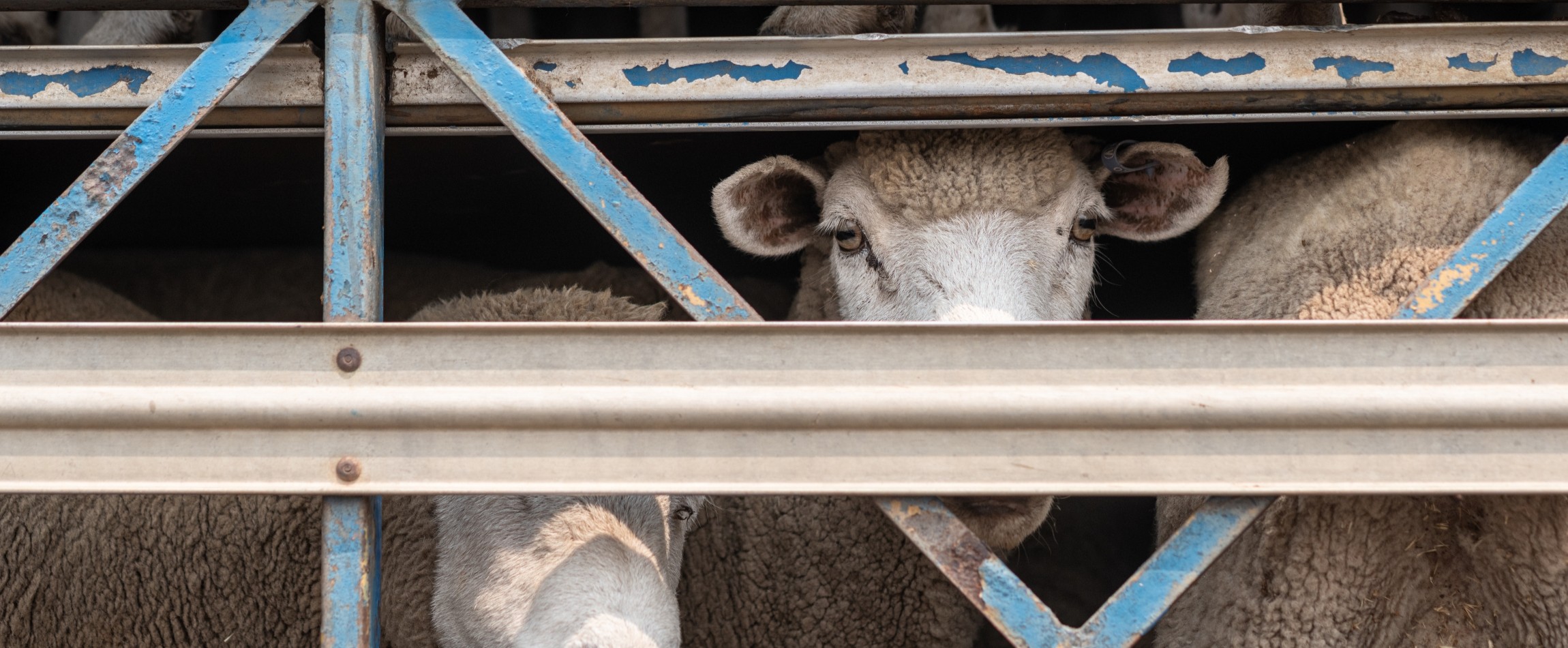
Most of these realities remain hidden. Few people see how their food is produced because laws and restricted access keep it out of public view. Factory farms don’t just rely on fences to block the public; they also benefit from agricultural gag legislation, commonly known as “ag-gag laws.” These laws criminalize activities such as unauthorized recordings, whistleblowing, and protests near farms and slaughterhouses, often imposing severe penalties, including fines of up to $200,000 and jail time. By targeting those who expose unethical practices, ag-gag laws shelter corporations from public accountability.
Since 2019, several Canadian provinces have passed ag-gag laws, sparking widespread criticism. This study examines how Canadian officials have justified these laws as serving public interest and explores the agricultural lobby’s influence in their creation.
Why Do Ag-Gag Laws Exist?
Activists using hidden cameras have exposed horrific conditions on factory farms, including animals being beaten, deprived of water, forced to live in squalid conditions, and subjected to surgical procedures without anesthesia or pain relief. Some farms faced legal consequences after these exposés, but the agricultural industry responded by lobbying for laws to make farms hyper-private spaces.
In Canada, ag-gag laws take several forms, including:
- Banning unauthorized recordings on farms;
- Prohibiting employment obtained under false pretenses to document abuse; and
- Restricting protests near animal transportation vehicles.
Comparable bills exist in the U.S. and Australia, displaying a global trend of agricultural industries shaping government policies that prevent external supervision of their practices.
How Governments Defend Ag-Gag Laws
Researchers analyzed Freedom of Information (FOI) requests and provincial legislature debate transcripts from 2019 to 2021 across four provinces that recently adopted ag-gag laws: Alberta, Manitoba, Ontario, and Prince Edward Island.
FOI disclosures, including meeting notes, emails, and stakeholder consultations, revealed a close collaboration between government officials and industry groups like the Canadian Federation of Agriculture to draft the laws. Legislative debates demonstrated how officials publicly justified them.
Thematic analysis identified three primary arguments governments use:
- Protecting farmers and rural private property: Governments claim farmers need protection from activists, whom they depict as “radical extremists” threatening farmers’ livelihoods and families. In some cases, consultation participants referred to activists as “domestic terrorists,” despite no evidence of harm caused by activists in Canada. This narrative, the authors suggest, is a way to divert attention from the systemic issues in industrial animal agriculture to discredit and vilify whistleblowers.
- Securing business and infrastructure: Officials often equate farms and slaughterhouses to essential infrastructure, like power plants, that require protection to ensure stability. They argue that protests and undercover investigations disrupt operations, hurt economic stability, and threaten food security. But this logic has been used to justify extending similar protections to other controversial industries. For example, Manitoba’s failed Bill 57 attempted to deter Indigenous and environmental protests by classifying railways and fossil fuel sites as critical infrastructure.
- Preventing public health crises: The most common justification for ag-gag laws is that activists could spread disease to animals, risking public health and food security. Officials claim trespassing on farms introduces dangerous pathogens, but the researchers found no evidence of activists spreading diseases in Canada. Instead, researchers point to factory farming itself as the greater threat to public health. High-density confinement, poor sanitation, and routine antibiotic use are well-documented breeding grounds for disease outbreaks.
Thus, while governments publicly claim these laws protect farmers and the public, the evidence suggests they primarily benefit corporations by keeping their practices concealed.
To interpret these findings, the authors applied three sociological frameworks to explain why ag-gag bills exist and how they fit into the relationship between governments, industries, and civil society:
- Politics of sight: Controlling what people see manipulates public perception and action. Veiling the animal suffering and environmental damage caused by industrial farming silences the societal response that could demand industry reform.
- Agricultural exceptionalism: The agricultural industry is uniquely protected compared to other sectors. Governments exploit society’s portrayal of farmers as noble providers who deserve special protections. This romantic image allows agricultural facilities and operations to avoid the transparency and regulations faced by other industries. Ag-gag laws treat farms as hyper-private spaces exempt from public oversight.
- The civilizing process: Societies become less tolerant of cruelty and violence over time. By masking the violence and cruelty of factory farming, ag-gag laws impede moral progress to enable harmful practices.
The study focused on four Canadian provinces, which the authors acknowledge limits the generalizability of their findings to government-industry relationships in other sectors, provinces, or countries with similar laws. Additionally, many of the disclosures they received were heavily redacted, meaning they provide only a snapshot of the communications that occurred between officials and industry actors. The amount and quality of data also varied between provinces. For example, Ontario provided over 3,300 pages of disclosures compared to Alberta’s 123 pages.
Despite these limitations, the patterns of government-industry collaboration and the use of public safety arguments to justify ag-gag laws remain clear.
As the authors assert, ag-gag bills are not about protecting farmers or food production — they are tools designed to keep the public in the dark about the cruelty and suffering in industrial farming. The authors explain that these corrosive laws dismantle trust in institutions, weaken democratic pillars like transparency and accountability, and safeguard corporate interests at the expense of principled governance. By silencing whistleblowers and criminalizing investigations, they obstruct progress toward a more ethical and sustainable food system.
Public pressure has already led to the repeal of some ag-gag laws, and growing awareness can build on that momentum. Animal advocates can challenge the secrecy and systemic harm these laws perpetuate by supporting organizations fighting them, contacting representatives to voice opposition, pushing for stronger animal welfare regulations, and promoting ethical consumer choices, such as reducing or responsibly sourcing animal products.
https://doi.org/10.1111/cars.12489

Citations:
Weiler, A. M., & Zavitz, T. (2025). Nothing to hide: How governments justify the adoption of ag-gag laws. Canadian Review of Sociology, 62(1), 75–98. https://doi.org/10.1111/cars.12489