
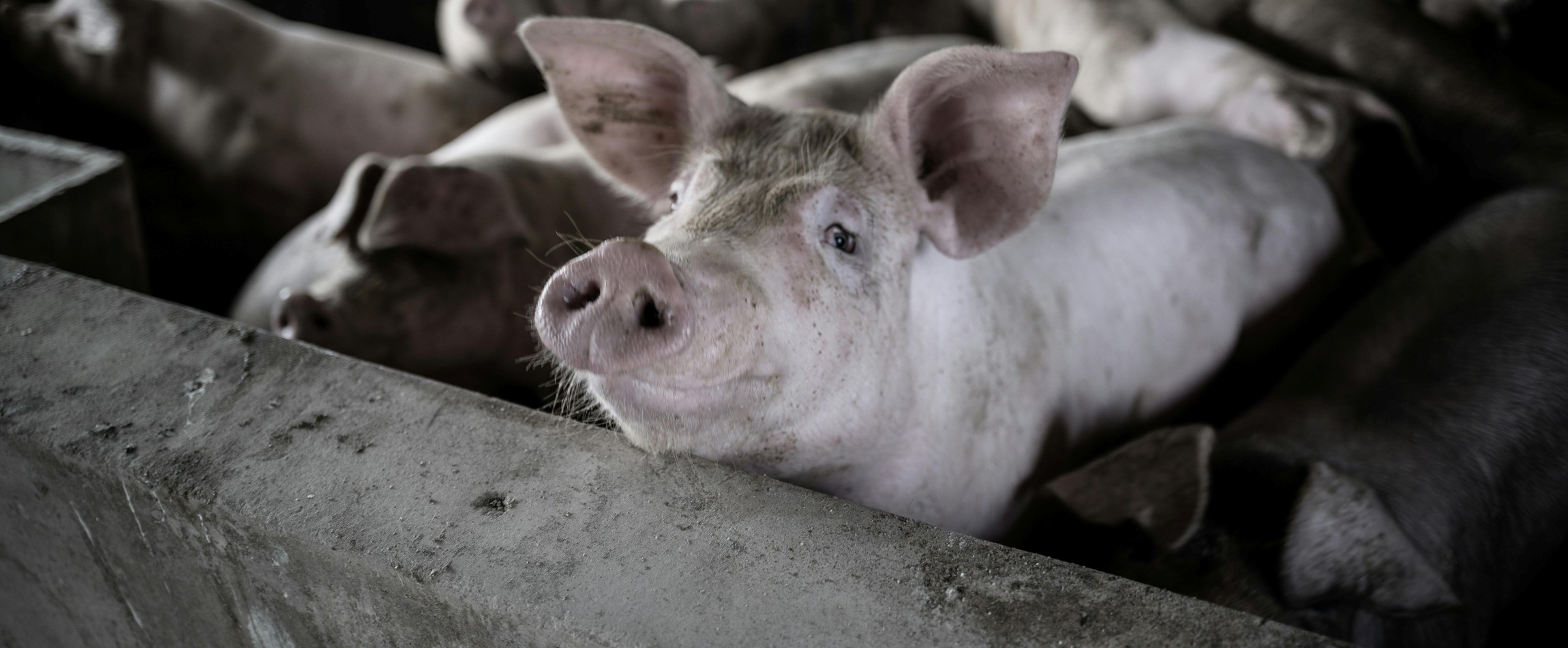
How Barren Environments Amplify Pain In Captive Animals


Pain isn’t simply proportional to physical injury. What an animal can do — move freely, forage, rest undisturbed, interact with others — shapes how much pain they actually experience. Yet most welfare assessments, dosing protocols, and certification schemes treat pain as if it were a fixed response: an inflamed joint is assumed to hurt the same amount whether a hen is confined in a cramped, barren cage or living in a complex, enriched environment. A growing body of evidence suggests this assumption is fundamentally wrong.
This review synthesizes evidence from veterinary science, animal welfare science, and neuroscience to examine how environmental conditions influence pain processing and healing in captive animals. The authors introduce a concept they call the “pain echo chamber,” a barren environment that amplifies pain by disabling natural pain-suppression mechanisms while simultaneously activating the pathways that intensify it.
Rather than presenting new experimental data, the authors draw on an extensive body of existing literature — from studies of farmed chickens, sheep, pigs, cows, and salmons, to rodent models, to human clinical research. First, they outline the neurobiological mechanisms that modulate pain: spinal (bottom-up) pathways, descending brain (top-down) pathways, neurochemical systems, immune-inflammatory processes, and developmental effects. They then show how common captive conditions act on these mechanisms, systematically disabling pain suppression while engaging pain amplification.
The core finding is that the body has powerful built-in systems for suppressing pain, and these systems often depend on the kinds of behavioral opportunities that barren housing removes. When a chicken with arthritis is allowed to eat after food deprivation, pain behaviors like limping and one-legged standing disappear completely — an effect that’s reversed when opioid receptors are chemically blocked. This demonstrates that behavioral engagement activates the body’s own opioid-based analgesic system. In barren environments where foraging, nesting, and exploration aren’t possible, this system simply doesn’t get activated.
Social contact is another key pain-suppressing factor. Positive social interaction triggers the release of oxytocin, which has both analgesic and anxiety-reducing effects. Animals in social isolation lose access to this pathway. Similarly, physical movement — even mild activity — activates spinal “gate control” mechanisms that block pain signals before they reach the brain. Immobility removes this protection and contributes to the build-up of pro-inflammatory chemicals in joints and tissues.
However, the authors also note complexity in the effects of social contact. While positive, stable social bonds reduce pain, forced social housing can sometimes increase stress and aggression, particularly in animals already experiencing severe pain. These nuances underscore that improving welfare requires species-specific consideration, not just a uniform “add enrichment” approach.
Sleep disruption, common in overcrowded settings, increases pain sensitivity by raising pro-inflammatory signaling in the body and impairing the brain’s descending pain-inhibitory systems. And the effects aren’t just immediate: early-life pain and stress leave lasting neurobiological marks. Piglets castrated without pain relief showed increased pain sensitivity weeks later. Calves disbudded without analgesia remained hypersensitive to pain months afterward. Female lambs exposed to painful procedures within the first few days of life showed elevated pain responses when giving birth to their own offspring years later. These changes are mediated in part by epigenetic modifications — molecular changes to gene expression that can persist across generations.
The authors highlight how these conditions converge most severely in females used for breeding. Typically kept longer than animals used for meat, they’re subject to repeated reproductive procedures, chronic feed restriction, and often the harshest confinement, including gestation crates, farrowing crates, and battery cages. Chronic stress in gestating mothers has been shown to alter offspring pain sensitivity through prenatal developmental programming, meaning the pain echo chamber can begin before an animal is even born.
Environmental choice and perceived control also shape pain in ways the review documents carefully. In humans, having control over when pain relief is initiated consistently reduces pain ratings. In animals, research has focused more on what happens when control is absent: prolonged exposure to inescapable stressors such as confinement and social instability is associated with heightened pain sensitivity and slower recovery from injury. In contrast, environmental choice gives animals behavioral tools for managing their own painful or inflammatory states. Fishes exposed to infection, for example, will actively seek warmer water to induce a fever response, a form of self-medication that requires thermal choice to be possible. When captive conditions remove these options entirely, animals lose both the behavioral and neurochemical means of responding to pain.
This review has direct implications for advocacy work at multiple levels. It challenges the scientific foundations of current welfare certification and regulatory frameworks, which routinely assign identical pain severity scores to identical conditions regardless of housing. The neurobiological mechanisms documented here give advocates a powerful, empirically grounded argument that existing frameworks systematically underestimate suffering in intensive farming systems. However, it should be noted that how much pain is amplified in different species and housing systems has yet to be quantified.
The findings also point toward concrete, achievable interventions. The authors note that many of the epigenetic changes driving heightened pain sensitivity are reversible with environmental improvement. This means that enrichment doesn’t only prevent future harm; it may also actively undo molecular changes in animals currently housed in impoverished conditions. Movement, behavioral engagement, stable social contact, meaningful choices, and adequate rest are vital for the body’s own analgesic systems to work effectively. According to the research synthesized here, providing these conditions is a prerequisite for basic pain management — and the transition from barren to enriched housing systems is both an ethical obligation and a scientific necessity.
This summary was drafted by a large language model (LLM) and closely edited by our Research Library Manager for clarity and accuracy. As per our AI policy, Faunalytics only uses LLMs to summarize very long reports (50+ pages) that are not appropriate to assign to volunteers, as well as studies that contain graphic descriptions of animal cruelty or animal industries. We remain committed to bringing you reliable data, which is why any AI-generated work will always be reviewed by a human.
https://doi.org/10.3389/fanim.2026.1736142

Citations:
Schuck-Paim, C., Alonso, W. J., Hartcher, K., Chiang, C., Pereira, P. A., Veit, W., Mendl, M., Nicol, C. J., & Lecorps, B. (2026). The pain echo chamber: How barren environments amplify pain in captive animals. Frontiers in Animal Science, 7, 1736142. https://doi.org/10.3389/fanim.2026.1736142
