
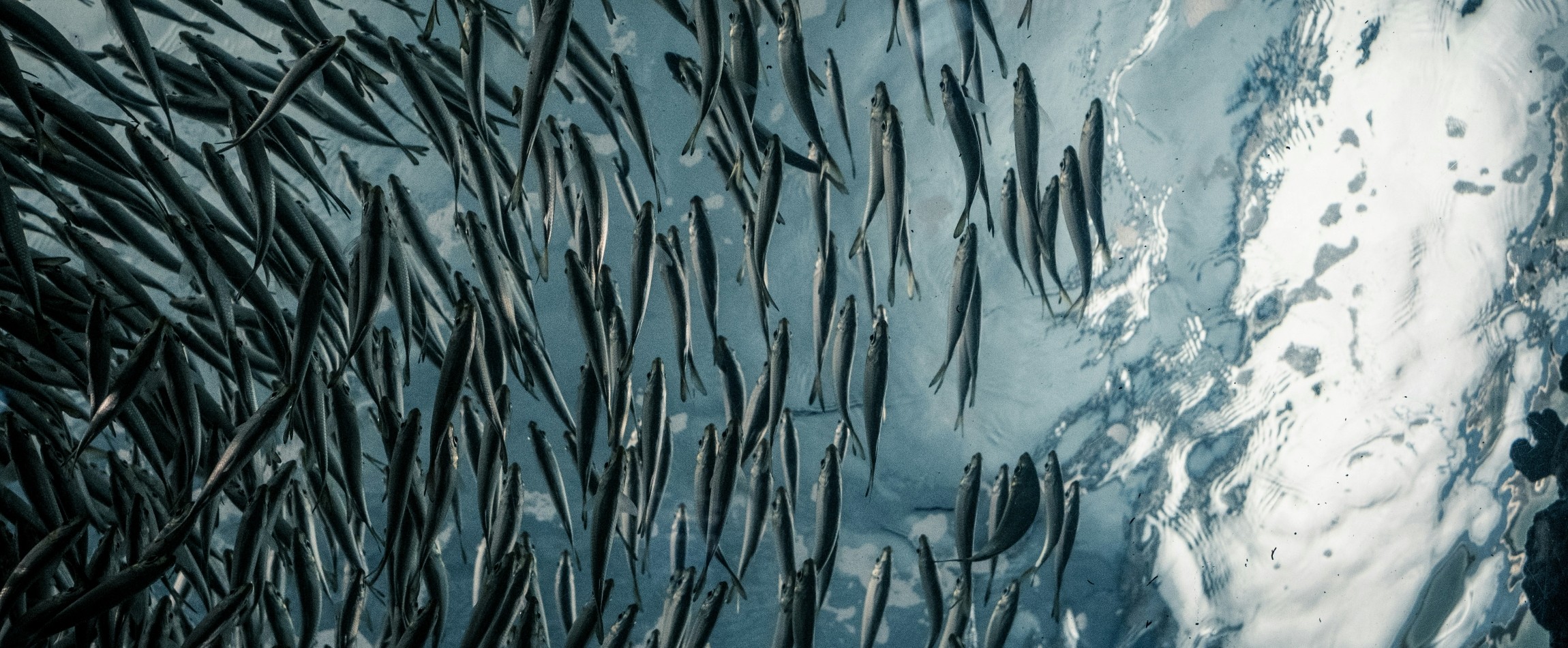
Wild Fishes Are Caught By The Trillions Every Year


To understand the extent of a welfare issue, such as those found in wild capture fisheries, it’s crucial to know how many animals are affected. However, in spite of the growing consensus around fish sentience, the Food and Agriculture Organization of the United Nations (FAO) still only reports their global capture in tonnage. Thus, a pair of researchers set out to convert this data to estimate the number of individual fishes caught worldwide between 2000 and 2019.
The researchers used fish weights gathered from online sources to calculate Estimated Mean Weights (EMWs) and Generic Estimated Mean Weights (GEMWs). They determined EMWs for as many species as they could find suitable data for and used GEMWs where direct data wasn’t available. For example, if a particular fish had no weight information on record, the researchers went with data from a closely related fish instead. Then, for each species, they divided the FAO’s total annual capture tonnage by the EMW or GEMW to arrive at a figure for how many individuals were caught per year.
From their calculations, the researchers determined that between 1.1 and 2.2 trillion fishes, representing 1,725 species, were caught annually from 2000 to 2019. This translates to a staggering 22 to 44 trillion individuals over the 20-year study period.
Most fishes were caught in the Pacific Ocean (56%), followed by the Atlantic Ocean (18%), inland waters such as lakes, rivers, streams, and canals (12%), the Indian Ocean (10%), and the Mediterranean and Black Seas (3%). On a per-continent basis, Asia accounted for the majority (43%), followed by the Americas (34%), Europe (13%), Africa (10%), and Oceania (0.3%).
Peru was responsible for nearly a quarter (24%) of the global catch, with China (11%) and Chile (7%) rounding out the top three countries. Peruvian anchoveta, the main species captured by Peru and Chile, made up 28% of the total estimate — a striking figure as anchovies are such small fishes.
To put the scale of global fish capture in perspective: In 2019 alone, wild-caught fishes represented 87.5% of all vertebrate animals killed for food. In comparison, farmed fishes accounted for 7.5%, farmed birds for 4.7%, and farmed mammals for 0.2%.
What Was Left Out?
It’s worth noting that the study only focused on fishes and didn’t include other “seafood” animals such as decapod crustaceans (e.g., crabs, lobsters, shrimps) or cephalopod mollusks (e.g., octopuses, squids, cuttlefishes). Moreover, the FAO data the researchers relied on only used recorded catches. This excludes:
- Fishes caught by illegal, unreported, or unregulated fisheries
- Fishes who were released back into the water
- Fishes who died after escaping or trying to avoid fishing nets
- Fishes captured by lost or discarded fishing gear (“ghost fishing”)
Thus, the actual number of individuals killed — already difficult to comprehend — is likely even higher.
What Should Happen Next?
The researchers emphasize the evidence of sentience in fishes and the dire conditions they suffer during capture. These range from injuries caused by abrupt changes in pressure to long times spent out of the water before death. They make a number of recommendations:
- Report fish numbers or at least mean capture weights so that more accurate fish numbers can be calculated.
- Lower capture numbers by establishing more precautionary catch limits, reducing incidental catch (fishes caught unintentionally but retained rather than returned to the water), and using artificial baits instead of actual fishes.
- Be cautious about calls for people to eat smaller fish species lower down the food chain, as this would likely mean an increase in fishes caught.
- Increase legal protection for wild fishes, especially in countries with high capture numbers.
- Support certification schemes that go beyond sustainability to consider animal welfare.
- Develop more humane methods of capture and slaughter.
The insights from this study demonstrate that wild capture fisheries are more than just a conservation or food system issue: they’re a major ethical concern. The data can be used by advocates and policymakers alike to push for better practices and regulations to improve fish welfare.
https://doi.org/10.1017/awf.2024.7

Citations:
Mood, A., & Brooke, P. (2024). Estimating global numbers of fishes caught from the wild annually from 2000 to 2019. Animal Welfare, 33, e6. https://doi.org/10.1017/awf.2024.7
