
Why The Forced Swim Test Is Losing Ground


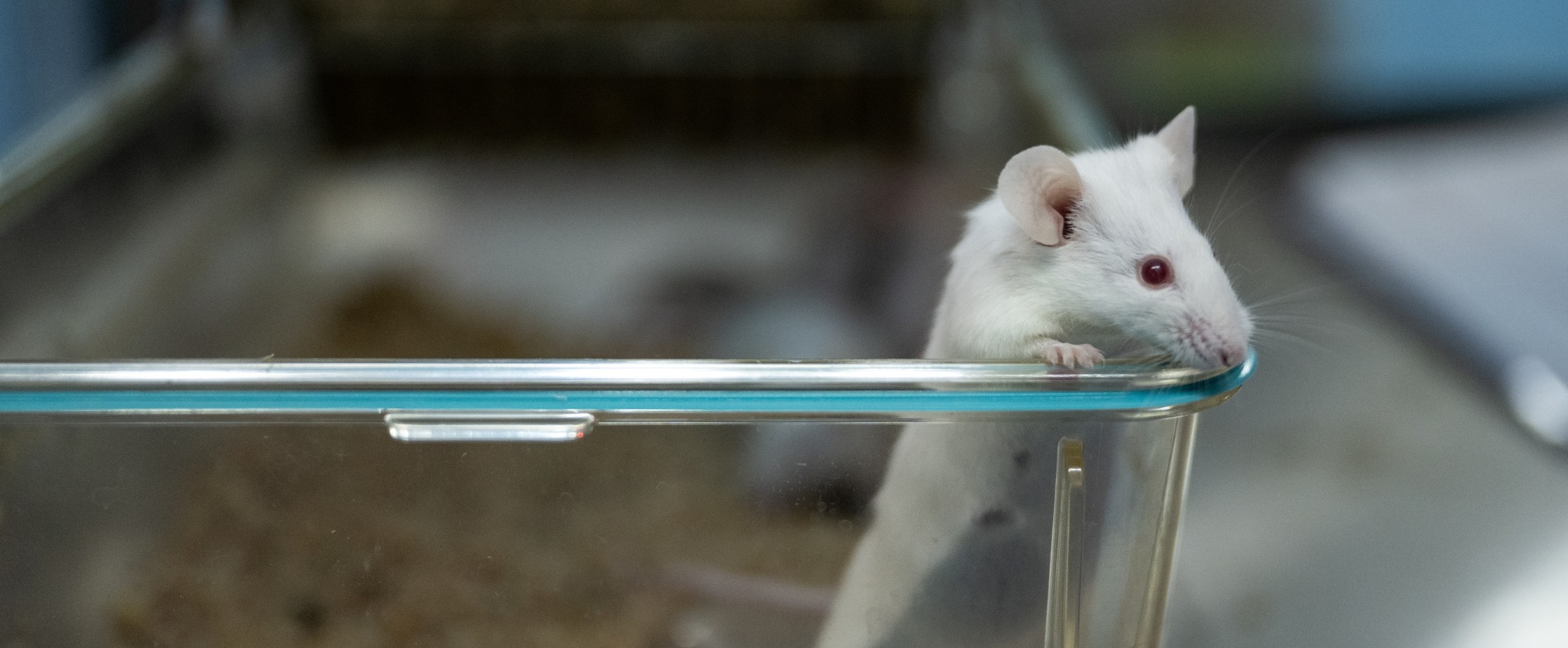
Major depressive disorder is highly prevalent, and many people treated with today’s antidepressants still don’t get full relief from their symptoms. To find better treatments, drug developers have long relied on a rodent test called the forced swim test. Researchers place rats or mice, who can’t escape, into a container of water. After initial attempts to get out, the animals become still and float. Scientists have interpreted this stillness as “behavioral despair,” a state of hopelessness thought to mirror human depression, and used a drug’s ability to shorten it as a sign of antidepressant potential. Developed in the 1970s, the test has been a standard tool in drug screening. But growing scientific doubts about what immobility actually measures, combined with mounting concern for the animals’ welfare, have pushed regulators, universities, and pharmaceutical companies around the world to restrict or abandon the test altogether.
This review examines why the forced swim test is being phased out, tracing the scientific critiques of its validity, the ethical concerns driving policy change, and the alternative approaches emerging to replace it.
Rather than reporting new experiments, the review draws together previously published research, regulatory guidance, and industry statements to build a picture of how thinking about the test has shifted. It looks at the test’s scientific basis and reliability, the physical and psychological toll on the animals involved, the regulatory bans and restrictions adopted across multiple countries, and the animal-free alternatives now being developed.
The Science Doesn’t Hold Up
The test’s core assumption — that immobility reflects despair — has come under serious scientific scrutiny. Many researchers now believe floating may instead be a learned, energy-saving coping strategy in an inescapable situation rather than a sign of hopelessness.
The test also has a poor track record for predicting whether a drug will actually help people: one analysis found that only 28% of compounds that showed promise in the forced swim test advanced to human trials, with very little connection between test performance and whether a drug actually worked in patients. The test performs even worse for newer drugs with different mechanisms of action than for older drugs that act on brain chemicals like serotonin. Results also vary widely between rodent strains, labs, and testing conditions, further undermining confidence in its findings.
A Toll On The Animals
Beyond questions of scientific validity, the review outlines a range of animal welfare harms the test can cause. Being forced into water they can’t escape triggers a stress response, raising heart rate, body temperature, and stress hormones. Even when water temperatures are controlled, animals can become hypothermic. They may also experience oxygen deprivation when they struggle or panic.
Repeated testing produces longer-lasting harm, including increased anxiety and changes in brain regions tied to memory and mood. Some evidence even suggests the experience leaves animals with lasting changes in how they learn and make decisions, pointing to a kind of psychological injury beyond the test itself.
Regulators And Companies Respond
These concerns have translated into concrete policy change. The U.K. now requires strong scientific justification before approving the forced swim test, and the E.U. classifies it as a moderately severe procedure under its animal research rules. Norway has banned new trials of the test in academic settings outright since 2019. Germany rarely authorizes the test without strong justification, and its main research funder now steers money toward non-animal alternatives instead.
In the U.S., the National Institutes of Health has flagged funding applications that rely heavily on the test for extra scrutiny, and universities including Harvard, the University of California, San Francisco, and Johns Hopkins have voluntarily phased it out of their training and basic research. More than a dozen pharmaceutical companies, including AstraZeneca, Pfizer, Bayer, and Johnson & Johnson, have publicly committed to ending its use.
Advocacy played a direct role: a PETA campaign launched in 2018 helped persuade 14 companies to end the practice. Public opinion has moved too. Surveys show 70% of Britons support ending animal experiments by 2035, and 72% of E.U. adults want legally binding targets to phase out animal testing.
What’s Replacing It
Researchers are turning to less invasive behavioral tests and to methods that don’t use animals at all. Behavioral alternatives include:
- The sucrose preference test, which measures whether stressed rodents lose interest in a sweet treat as a sign of anhedonia, or the inability to feel pleasure (a core symptom of depression); and
- The nest-building test, which uses a mouse’s ability to build an adequate nest as an indicator of overall well-being.
Non-animal approaches are also advancing: these include neurons grown from human stem cells, organ-on-a-chip systems that mimic human tissue in miniature, and computational and AI tools that analyze existing data to help predict which type of antidepressant is likely to work. These fit the replacement principle of the 3Rs framework, a widely used animal research ethics standard.
None of these fully replicates everything the forced swim test claimed to measure, but together they offer more humane, and potentially more human-relevant, options.
The review notes that this transition faces real obstacles. Regulatory systems built around decades of animal data can be slow to formally validate new methods, and the technology behind approaches like organoids and organs-on-chips can be too costly for smaller labs and institutions in lower-resource settings, risking an uneven shift away from animal testing. Standardizing new protocols across laboratories, training researchers in unfamiliar methods, and overcoming reluctance to abandon well-established tools are also cited as ongoing challenges.
A Few Limitations
As a narrative review rather than a systematic one, the paper doesn’t describe a standardized method for selecting which studies it included, leaving room for selective emphasis. Much of the evidence on public opinion and corporate policy shifts comes from animal advocacy organizations’ own campaign reporting, which reflects their institutional perspective. The review also concentrates on regulatory action in a handful of wealthy countries, including the U.K., Germany, Norway, Australia, and the U.S., and, as the authors themselves note, researchers in lower-income countries may face very different resource realities in adopting alternatives.
What This Means for Advocates
For animal advocates, this review is a reminder that scientific and welfare concerns can shift entrenched practices, even in a field like pharmaceutical research that has long resisted change. The pattern described here, of public campaigns pressuring companies, universities leading by example, and funders following suit, suggests that similar pressure could accelerate change for other long-used but poorly validated animal tests. The specific jurisdictions, universities, and companies named here can serve as direct precedent in local campaigns.
Advocates may also want to keep an eye on equity: as alternatives to animal testing spread, making sure underresourced labs and countries have access to the funding and training needed to adopt them will be key to making this shift lasting and worldwide, rather than limited to wealthy institutions.
Finally, because the case against the forced swim test rests on weak predictive validity as much as animal suffering, it may offer a template for challenging other entrenched animal models whose scientific justification hasn’t kept pace with the evidence.
This summary was drafted by a large language model (LLM) and closely edited by our Research Library Manager for clarity and accuracy. As per our AI policy, Faunalytics only uses LLMs to summarize very long reports (~50+ pages) that are not appropriate to assign to volunteers, studies that contain graphic descriptions of animal cruelty or animal industries, and research on niche topics. We remain committed to bringing you reliable data, which is why any AI-generated work will always be reviewed by a human.
https://doi.org/10.3389/fanim.2026.1692092

Citations:
Barai, P., Pogakula, V., Sandhu, J. S., Parida, A., Krishnadas, N., & Viswanatha, G. L. (2026). Re-evaluating the forced swim test: Ethical, scientific, and regulatory drivers for validated alternatives. Frontiers in Animal Science, 7, 1692092. https://doi.org/10.3389/fanim.2026.1692092
