
Why Are Fireworks Harmful To Wild Animals And What Can Replace Them?


This article is available in French at L’Éthiquerie.
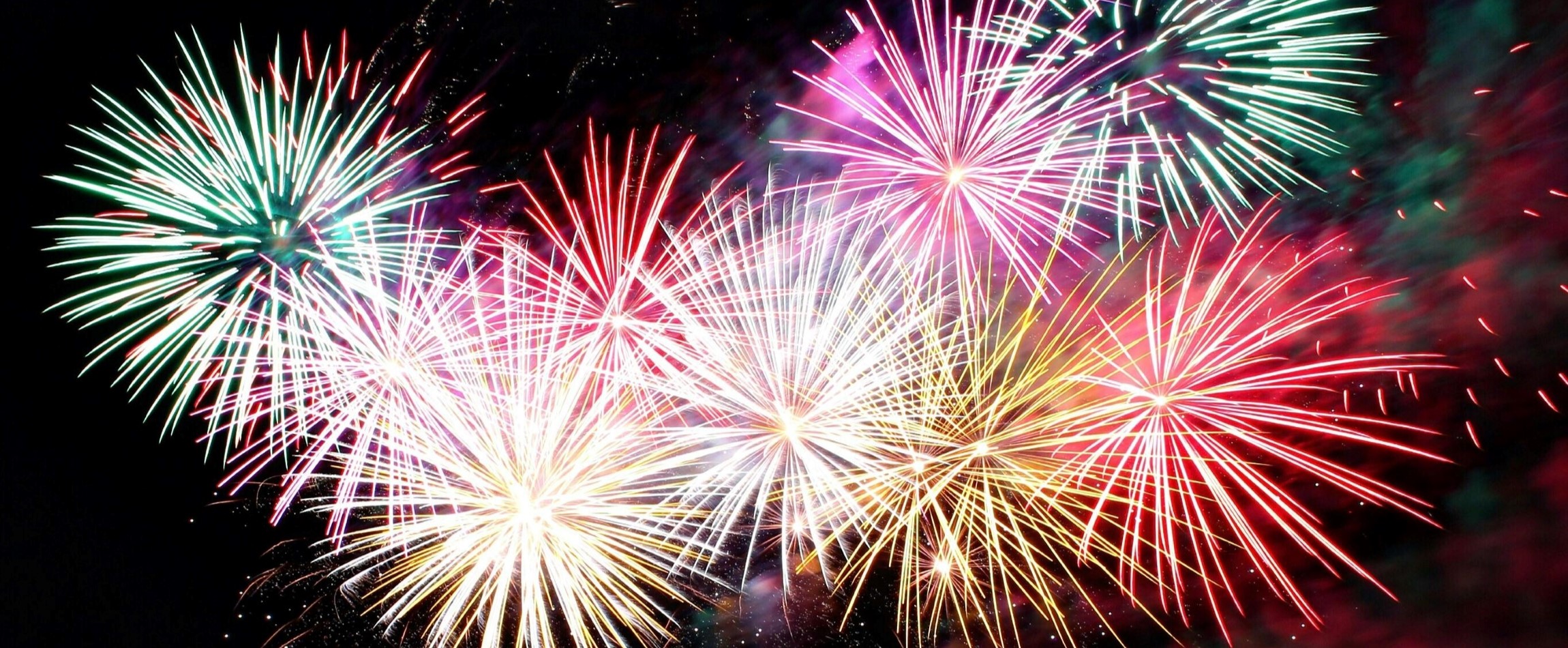
Fireworks are often used for human entertainment, typically in the context of celebration and marking special occasions. Their explosions produce powerful sounds and beautiful colors that are enjoyed at many festive events, from New Year’s Eve to national holidays, as well as smaller celebrations such as birthdays or soccer games.
Unfortunately, conventional fireworks don’t just provide fleeting pleasure to the people who witness them. In addition to potential accidents such as fires or injuries that may affect humans, there are two almost systematic consequences that make fireworks harmful to other animals and to the broader environment.
Suffering Through The Noise
The intensity of the noise generated by firework explosions is extremely high. In general, it exceeds the threshold at which humans risk hearing loss, and it often exceeds the pain threshold. But this intense noise doesn’t just affect humans: animals in the vicinity of fireworks displays suffer greatly. Studies on this subject are not very numerous and focus on birds and companion animals, but they are still sufficient to determine the negative effects of fireworks at distances of up to 10 km from the explosion site.
For companion animals, the sound of fireworks can cause considerable panic and fear, directly observable by the people who take care of them. Whether dogs, cats, horses, birds, or small mammals, the reactions are similar and the animals may scream, flee, hide, and, to a lesser extent, urinate and defecate. These behaviors, observed in a wide range of species, suggest that fireworks cause panic and fear in most animals who can hear them, not just a few isolated species.
The reason for this fear is simple: the noise of fireworks, which is unusually loud and unpredictable for animals, is perceived as a threat. Their fears and related behaviors are responses built up to protect their lives, which they normally do in the presence of predators. Unfortunately, animals can’t follow the human holiday calendar and thus can’t predict nor understand the nature of fireworks, so they can’t even become habituated to them over time.
Although stress and anxiety are already a major source of suffering, the negative consequences don’t stop there, as shown by studies conducted on birds, which to some extent can be generalized to other animals.
First, it is possible that the shock wave produced by the explosion of fireworks directly causes pain in birds.
Then, after the detonation, panicked birds fly away in large numbers to higher altitudes. Some birds flee as far as 500 km away from the fireworks before finding a new roost. Obviously, birds with less developed flying skills, such as juveniles, are at increased risk of fatal accidents, getting lost, and predation.
In the days following a fireworks display, some bird species increase the amount of time they spend foraging, for a period that can exceed 10 days. This increased foraging is necessary to compensate for the fatigue and loss of energy caused by their sudden flight, usually in the middle of the night when they are resting. This fatigue, coupled with stress, anxiety, and other negative reactions, also has the detrimental effect of temporarily reducing their immunocompetence, which is their immune system’s ability to function properly and protect them from pathogens.
Fireworks can’t normally kill birds directly, unless they are fired directly at them. The possibility of animals having heart attacks due to the rapid and intense increase in heart rate is sometimes raised in newspaper coverage, but no studies seem to confirm or refute this hypothesis. On the other hand, in some cases, flying birds may collide with obstacles or other birds, which can be fatal. Therefore, from time to time, the use of fireworks results in a veritable mass slaughter of birds. Documented cases — with many cases likely undocumented — include the thousands of dead passerines in Arkansas in 2011, the hundreds who died the following year in the same state, and more recently the hundreds who died in Rome in 2021. The frequency of these mass deaths is unknown, and the risk factors are not fully understood due to a lack of studies on the subject. However, it seems likely that panic and poor visibility at night increase the risk of collisions.
Secondary Effect: Pollution
In addition to noise, the explosion of fireworks pollutes the air, soil, and water. In fact, concentrations of particulate matter, metals, and other particles such as perchlorate can increase significantly with their use. Suspended particles can remain in the air for weeks and some can cause health problems in humans, such as respiratory or cardiovascular disorders, which is why complaints related to such health problems decrease when fireworks are banned.
Of course, if these pollutants are harmful to human health, it’s safe to assume that animals can suffer from them as well, even though few studies have been conducted on such topics. Worse yet, since animals directly consume polluted plants, breathe polluted air, roam polluted lands, and swim in and drink polluted water, their associated health problems may be even more acute than those of humans.
How Many Individuals Are Negatively Affected By Fireworks?
Despite the frequent use of fireworks, it is difficult to estimate how many are used each year. Given that there is evidence that fireworks affect birds as far as 10 km away, we can reasonably assume that each firework affects at least several hundred animals, and potentially several thousand.
For large celebrations with many scattered shots, such as New Year’s Eve, the victims could reach millions. On New Year’s Eve in the Netherlands alone, several hundred thousand birds fled from fireworks. Although the worst is certainly the moment the fireworks go off and the hours that follow, these birds then have to search for more food to recover their expended energy, for a period that can last for more than 10 days. Of course, if other land animals, aquatic animals, and small animals such as insects also suffer and can be added to the list of those affected, the impact estimates could potentially reach billions of negatively affected individuals.
There’s no denying that the spectacle of fireworks appeals to many people. However, even taking into account these short-lived pleasures, the animals who suffer and sometimes die from the noise and pollution caused by each firework tip the balance heavily and indisputably to the negative.
People who want to have a positive impact on the world by improving the lives of others and who do not want to have a negative impact by causing unnecessary suffering and death should therefore avoid and even discourage the use of fireworks wherever possible.
Solutions & Alternatives
To avoid harming animals, the use of fireworks would have to be limited to areas with no animals within a radius of at least 10 km — which is extremely unlikely, even in dense cities.
Another potential solution would be to use fireworks that do not emit as much noise or pollutants. Quieter fireworks are available on the market. They are often said to emit a noise of about 60 decibels, which is much lower than the noise of conventional fireworks, which often exceed 90 decibels and can peak at 150 and probably more. However, we must remain cautious: there is no certainty that said fireworks are actually quieter, or that such noise wouldn’t harm animals as well. Ideally, this claim should be backed up by evidence and certified by a label.
Regarding pollution, it is possible to make fireworks that are more environmentally friendly, but the majority of fireworks on the market are not. What’s more, assuming we can find them, the same problem arises as with quieter fireworks. Before you use them, you need proof that the environmental promise isn’t just greenwashing — but such proof doesn’t seem to exist at the moment.
To ensure that as few animals as possible are harmed, fireworks need to be both quieter and greener, not just one or the other. Still, if you have to make a choice, buying quieter or greener fireworks is already much better than buying conventional ones.
More ethical alternatives include light drones. These are much quieter and don’t pollute the environment, unless they fall into the wild and are not recovered. However, most models still produce some noise, which increases with the number of drones in flight. The loudest can exceed 100 decibels. So it’s very important to choose the quietest models. Furthermore, care must be taken to ensure that drones and lights do not harm animals for other reasons, which remains a possibility. To be on the safe side, they should always be used in places where there are as few animals as possible.
Light kites may be the most ethical alternative and should be preferred to drones. Because they are slower and quieter than drones, the risk of frightening animals is greatly reduced. Such displays have already taken place, as in Arcachon in 2023.
If there is no alternative available to us (as more ethical options can have a significant financial cost), the use of conventional fireworks should still be avoided. After all, they’re not compulsory when we want to enjoy New Year’s Eve or provide our children an unforgettable birthday. The importance of fireworks in human culture is not set in stone and can change. It’s up to us to find new objects or rituals that allow us to experience joyful moments without causing suffering to others, which will make our celebrations all the more beautiful.

