
Who Really Profits From Wisconsin’s Factory Farm Expansion?


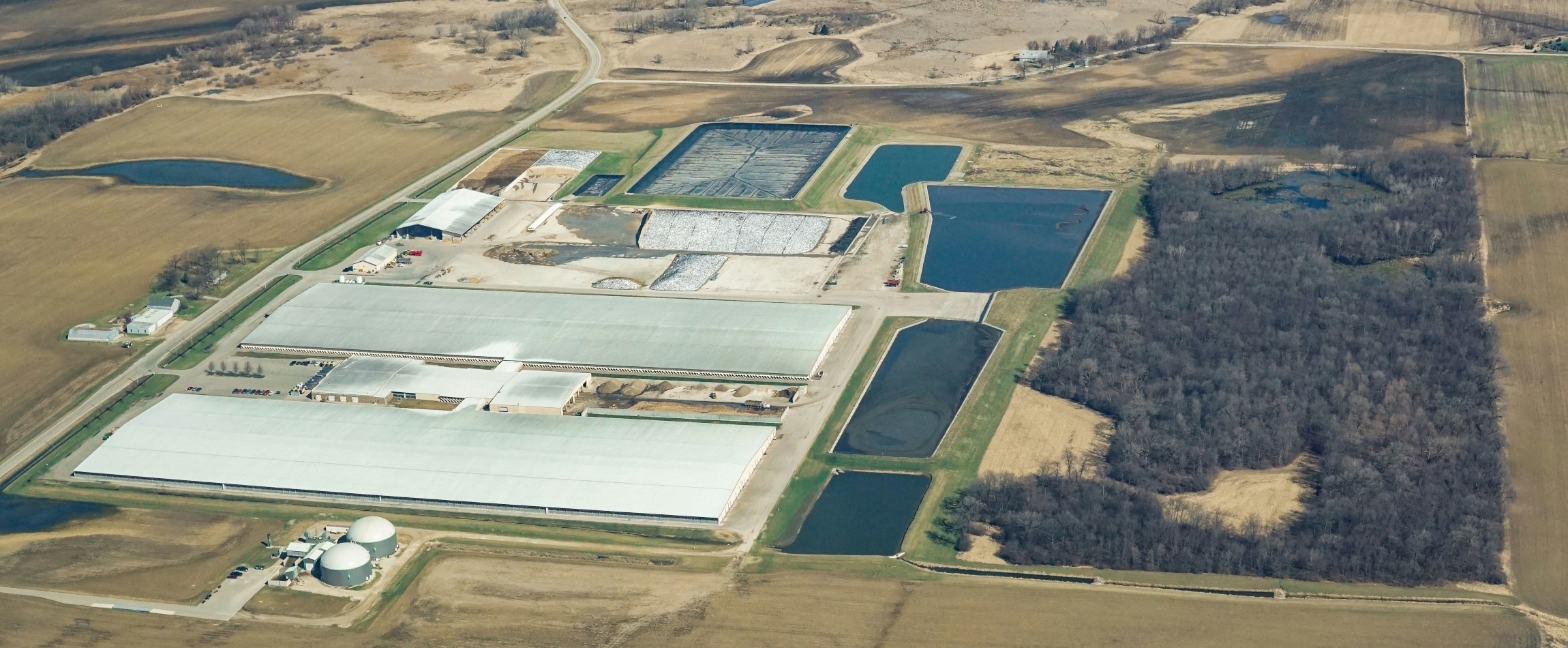
Wisconsin’s animal farming industry is experiencing a push to consolidate, fueled in large part by public financing that most rural communities know nothing about. Globally financed investment groups, aided by local lawyers and government officials, are assembling multi-million-dollar bond deals to fund massive new facilities housing thousands of cows, pigs, and birds. These operations generate vast quantities of liquid waste and air pollution, damage roads, threaten drinking water, and depress property values, yet the financial structures behind them operate largely out of public view.
This community guide was produced by the Sustain Rural Wisconsin Network, a statewide coalition dedicated to preserving the health and economic vitality of rural communities. It aims to help Wisconsin communities understand how factory farm expansions are financed, who profits, and how residents can intervene. It draws on original research, including personal interviews, government, academic, and media sources, and more than 1,200 pages of documents obtained through Wisconsin’s Public Records Law. Three case studies illustrate the process in action.
The guide identifies a small, recurring network of players who drive these deals. Two public authorities, the Wisconsin Economic Development Corporation (WEDC) and the Public Finance Authority (PFA), issue tax-exempt bonds that are sold to institutional investors, with proceeds channeled as low-cost loans to developers. Bond counsels, bond underwriters, and construction and equipment companies each take a cut, with individual deals worth anywhere from $10 million to more than $40 million.
A critical layer of public support stems from how factory farms are classified under federal law. Congress has defined liquid waste from factory farms as “solid waste,” allowing privately owned facilities to qualify for tax-exempt bond financing — meaning investors pay no federal income tax on the interest they earn. This alone can save a developer hundreds of thousands of dollars annually on a single deal.
On top of this, the federal Renewable Fuel Standard and California’s Low Carbon Fuel Standard (which is open to farms anywhere in the country, not just those located in California) create lucrative credit markets for factory farm gas that function as a national subsidy driver. According to a University of Wisconsin-Madison study, nearly 95% of dairy factory farm gas revenue comes from these government credits rather than gas sales. One Wisconsin mega-dairy estimated that gas from each cow is worth $1,360 annually, of which only $100 comes from selling gas. United States Department of Agriculture (USDA) programs, including the Rural Energy for America Program, have provided more funding for factory farm gas in Wisconsin since 2012 than every solar project combined.
The guide’s most important practical finding may be the legal choke points embedded in the bond process. Local government approval is required, but that approval can sometimes come from just one person: a county or town chair, secured through private negotiations. Under the WEDC, however, just 5% of registered electors can petition for a public referendum, which most developers will actively try to avoid. The guide outlines specific steps communities can take, including monitoring public notices, filing records requests, demanding full county or town board votes, circulating petitions, and engaging directly with bonding authorities.
Three case studies show what’s at stake and what’s possible:
- In Pierce County’s Town of Salem, community members discovered that county officials had been negotiating privately for six months to arrange $18 million in PFA financing for a proposed farm expansion that would have housed up to 7,800 cows. Residents pushed back through public records requests, a petition of more than 200 signatures calling on PFA and the underwriter to reject the deal, and direct engagement with PFA. The Town of Salem board chair sided with residents by canceling a public hearing that Breeze Dairy Group needed to close the deal. PFA decided not to move forward in September 2025.
- In Marinette County’s Town of Pound, residents mobilized quickly when they learned of Pagel Ponderosa’s plans to expand a former family dairy into a 3,000-head mega-dairy using a $14.5 million tax-exempt bond. They gathered enough signatures to meet the 5% petition threshold and trigger a public referendum, at which point the developer withdrew its application and switched to PFA as the conduit instead, sidestepping the vote entirely. Though the deal ultimately went through, community members’ follow-up conversations with the county chair produced a lasting structural win: in October 2023, the Marinette County board unanimously voted to require full board approval for similar deals going forward.
- In Oconto County’s Town of Gillett, a $41.6 million deal backed by Australian investment bank Macquarie Capital went through unimpeded. The deal financed a factory farm gas hub at Zahn’s Farms, a 4,500-head operation with plans to expand to 9,000 cows. The WI RNG Hub North project defaulted in both June and December 2025, likely because it failed to generate enough revenue in gas or government credits to cover bond payments. This makes it a cautionary case — an example of what these deals look like when communities don’t intervene, and what the petition and referendum tools described throughout the guide are designed to prevent. (It’s also not unique. In January 2026, the USDA paused loan guarantees for 90 days to investigate a 27% delinquency rate among factory farm gas digesters.)
As an advocacy-oriented guide produced by a coalition opposed to factory farm expansion, it reflects a clear point of view. It draws extensively on primary documents and is rigorous in its sourcing, but it’s not a neutral or peer-reviewed analysis. Many of the legal and regulatory frameworks described are specific to Wisconsin, though the underlying financial dynamics may apply in other states.
For animal advocates, the guide surfaces a crucial insight: factory farm expansion isn’t simply driven by consumer demand. It’s actively engineered by public policy. Federal credits, tax-exempt bonds, and USDA subsidies function as hidden infrastructure that makes large-scale animal agriculture financially viable and rewards the production of more manure from more animals. The financial model depends on scale: more cows mean more government credits, regardless of the welfare costs to these animals or the environmental costs to surrounding communities.
This is actionable information. The bond process has specific legal vulnerabilities, and the case studies show that organized community opposition can succeed. Advocates working on factory farming issues can support rural community coalitions, push for transparency requirements at the local government level, and call for reform of the federal programs that underpin factory farm economics, particularly the misaligned incentives built into California’s Low Carbon Fuel Standard and the federal Renewable Fuel Standard.
This summary was drafted by a large language model (LLM) and closely edited by our Research Library Manager for clarity and accuracy. As per our AI policy, Faunalytics only uses LLMs to summarize very long reports (~50+ pages) that are not appropriate to assign to volunteers, studies that contain graphic descriptions of animal cruelty or animal industries, and research on niche topics. We remain committed to bringing you reliable data, which is why any AI-generated work will always be reviewed by a human.
https://sustainruralwisconsin.org/follow-the-money

Citations:
Sustain Rural Wisconsin Network. (2026). Follow the money: A community guide to factory farm finance. https://sustainruralwisconsin.org/follow-the-money
