The Limited Power Of Farmed Animal Welfare Inspectors


The European Union (E.U.) sets minimum welfare standards for farmed animals. These standards apply as animals are raised, transported, and slaughtered. Inspectors — often veterinarians — are sent out to check that the regulations are being followed. However, their role is more complicated than one might think. Inspectors have to carefully balance consideration for animals with consideration for the livelihoods of the people working with the animals. They also have to accept that they can only enforce minimum standards, even when those standards aren’t enough to give farmed animals good lives.
Each year, 1% of farms receiving E.U. subsidies are subject to inspections. Inspectors report welfare violations, which can lead farms to lose income or even shut down in extreme cases. During these visits, the owner or manager walks the inspector through the farm and allows them to look at the animals, facilities, and records. The inspector pays attention to aspects of the animals’ care like food, water, bedding, lighting, and other housing conditions. Farm inspectors spend most of their time driving between farms and managing paperwork at their desks.
Slaughterhouse inspectors, in contrast, work on site. They spend hours checking animals both before and after slaughter, including as they’re unloaded, put in pens, stunned, and ultimately killed. They look for welfare issues such as poor body condition, injuries, improper stunning, and other signs that minimum standards haven’t been met. Again, inspectors can affect slaughterhouse income by giving fines or even taking away the licenses of individual slaughterhouse workers if needed.
In this study, the author observed and interviewed inspectors responsible for assessing pig welfare across four E.U. member states, including France, Denmark, Poland, and Ireland. Over a six-month period, they visited five farms and six slaughterhouses. They interviewed 20 inspectors and six government employees working in administrative and research roles related to farmed animal welfare. Their results shed light on the tensions that inspectors experience in attempting to safeguard pig welfare on farm and at slaughter.
The author found that most inspectors chose this career for the predictable working hours and better work-life balance, compared to working as a clinical veterinarian. Additionally, most mentioned a moral commitment to protecting animal welfare. When asked what welfare means to them, inspectors described an environment where animals can express natural behavior and be in good physical health. This contrasted sharply with the realities of industrial farming they observed, and some even said it’s not accurate to use the term “welfare” to describe the poor conditions of pigs at slaughterhouses.
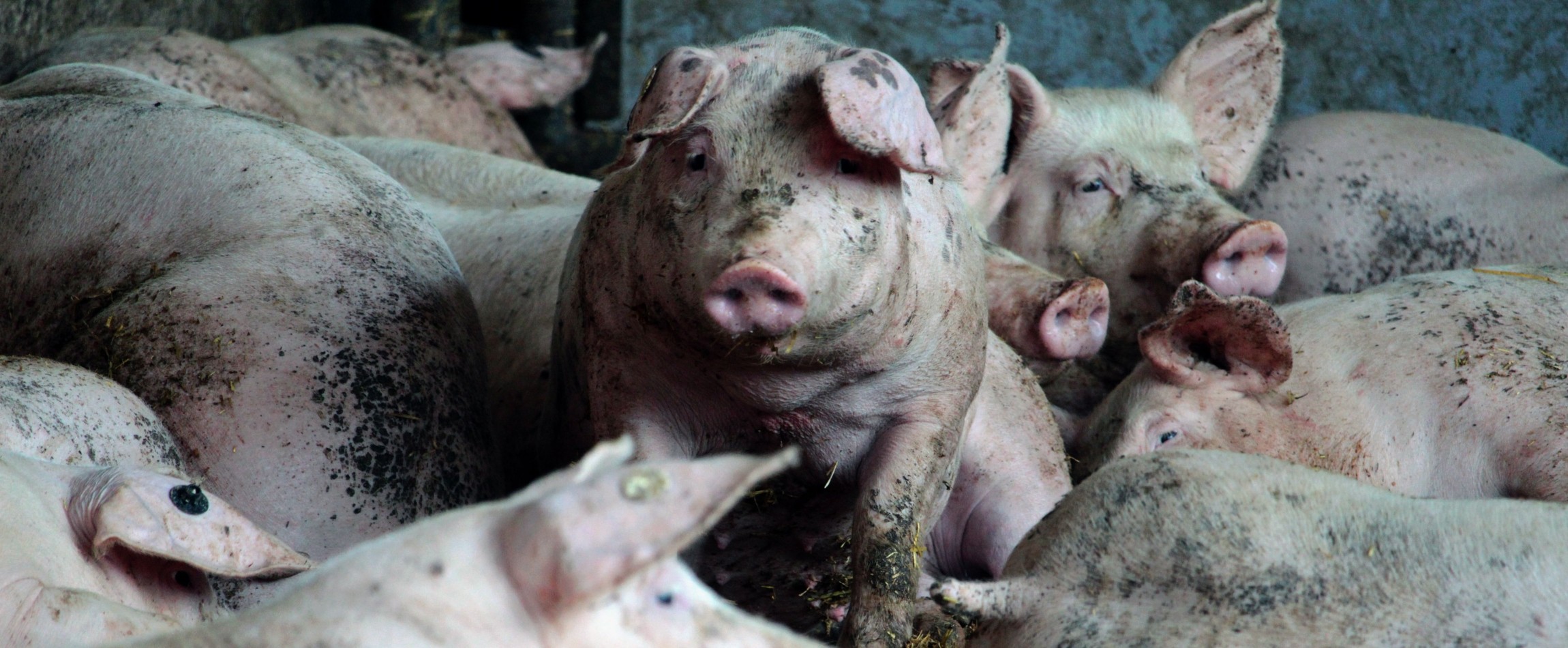
Another theme that arose was the pressure to justify animal welfare in terms of economic benefits rather than for the sake of the animals themselves. One inspector described being stationed at a slaughterhouse in which, on average, one or two pigs died upon arrival and another one or two died in the holding pens each night. To the slaughterhouse, regularly losing a handful of pigs wasn’t worth the cost of improving conditions. In another example, the author and two inspectors saw a sow who was severely underweight and lame, with wounds on her shoulders and hips. When one of the inspectors asked the farmer why he hadn’t euthanized the sow, the farmer responded that he would shoot her in a few days. It was cheaper for him to pay the disposal company to pick up several dead animals at once. Although both inspectors were disturbed by the sow’s suffering, they rationalized that financially penalizing the elderly farmer and his small farm would only make things worse for him and his animals.
The inspectors pointed out how animal welfare regulations are written vaguely. Phrases like “where necessary,” “where appropriate,” and “sufficient” mean that inspectors have to negotiate with farmers and slaughterhouse companies on their interpretations of these words. Several inspectors also noted that even though the laws technically ban tail-docking of piglets, exemptions mean the practice actually continues throughout the European Union.
Overall, inspectors were frustrated with only being able to make small differences at individual farms rather than system-wide changes. Still, they described finding a purpose in protecting animals from the worst abuses, even if protecting them isn’t the same as giving them good welfare.
The author concludes that the veterinary expertise of inspectors can only go so far when their powers are limited by very low and vaguely written welfare standards. They highlight the need to improve farmed animal welfare legislation in the European Union. Animal advocates can partner with veterinarians to push forward petitions and campaigns that try to bring minimum welfare standards in their own countries closer to what veterinarians actually consider “good welfare.” They can also amplify the voices of inspectors by conducting and publishing their own interviews with inspectors, whether on student newspapers at their school or local newspapers in their town. Finally, advocates can ask their representatives to close the loopholes allowed by ambiguous phrases and exemptions in the minimum welfare laws of their own locales.
https://doi.org/10.1111/1467-9655.14306

Citations:
Mc Loughlin, E. (2026). Change the world farm by farm: The moral care of audit and the paradox of animal welfare inspection in Europe. Journal of the Royal Anthropological Institute, 32(1), 55–74. https://doi.org/10.1111/1467-9655.14306