Marine Aquaculture: A Sea Of Problems?


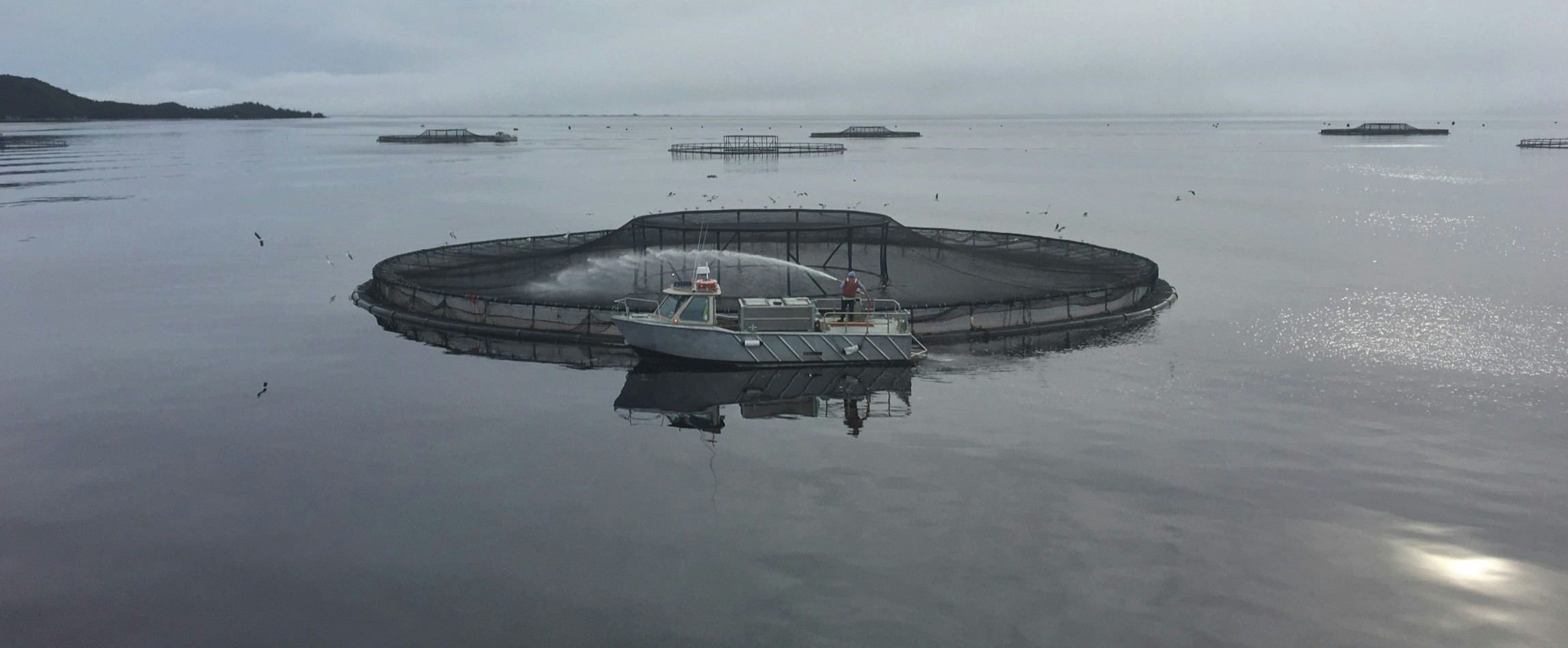
As human populations expand and nutritional demands increase, so does the need for sustainable and secure food production. Intensive farming of fishes and other forms of aquatic life, commonly referred to as aquaculture, has gained considerable traction in recent decades as a means of meeting these demands. It’s estimated that hundreds of billions of aquatic animals were farmed through aquaculture in 2022, and reports suggest this figure will continue to rise. Despite this growth, mariculture — or aquaculture conducted in marine environments — has seen limited implementation thus far. However, scientists and field experts see its potential as a more sustainable alternative to traditional aquaculture and terrestrial animal farming.
While mariculture’s upside has been well documented, its negative impacts have received less attention. This study sought to review the current state of knowledge around the negative ecological impacts of mariculture, referred to as “dewilding.” The authors divided mariculture dewilding into four subcategories:
- Environmental impacts (e.g., pollution)
- Alterations to wild animal communities and welfare (e.g., disease spread from mariculture farms)
- Captivity effects on the animals being farmed (e.g., welfare harms)
- Conceptual changes in how humans view the non-human world (e.g., viewing certain wild animals as pests due to their impact on farming operations)
The authors conducted two searches in two electronic databases for academic journal titles and abstracts containing specific terms related to mariculture and its ecological impacts. These searches returned almost 4,700 papers, which the authors reduced to 777 by removing duplicates, limiting the publishing date to the years 2020 to 2023, and only selecting studies that contained information on the dewilding effects of mariculture.
Next, the authors studied the abstracts of all the papers and documented:
- The dewilding subcategories discussed in the paper;
- Whether the paper intentionally studied dewilding; and
- Who or what was impacted by dewilding in the paper.
The five most-cited papers in each dewilding subcategory were then analyzed in full to determine funding sources, mariculture operation characteristics, specific dewilding impacts, and conclusions drawn.
What Types Of Dewilding Are Being Studied?
The vast majority (91.5%) of articles documented just one type of dewilding. Around 8% documented two types, and less than 1% documented three types.
Captive impacts were documented most often (64% of papers), followed by environmental impacts (23%), wild animal impacts (15%), and conceptual impacts (7%). Of the papers that discussed more than one type of dewilding, environmental and wild animal impacts were the most common pairing, followed by environmental and captive impacts.
Is Dewilding Being Recognized As A Harm?
Most (66%) of the papers that documented captive dewilding did so unintentionally — meaning the impacts were studied, but not as a potential harm. In contrast, all (100%) of the papers documenting environmental dewilding impacts did so intentionally, as did the majority (86%) of articles documenting wild animal impacts. Only 4% of the papers documenting conceptual impacts did so intentionally.
Who’s Being Impacted By Dewilding?
In papers documenting captive impacts, the kingdom animalia was the most frequently studied, followed by bacteria, chromista, plantae, fungi, and protozoa. Articles that looked at wild animal impacts mostly focused on the kingdom animalia as well, followed by bacteria, plantae, chromista, and fungi. For conceptual dewilding papers, the abiotic environment received the most attention, followed by the kingdoms animalia, plantae, and chromista.
What Specific Dewilding Impacts Are Being Studied?
Full-text reviews of the most-cited papers found that pollution was the only impact studied in papers documenting environmental dewilding, with microplastic pollution a particular focus. Papers that examined impacts on wild animals primarily studied their abundance, distribution, and welfare, looking at 20 bacteria and animal species. Articles that investigated captive dewilding recorded impacts on seven bacteria and animal species. Conceptual dewilding papers reported which marine organisms show potential to be farmed and which marine environments are suitable for mariculture.
Implications
The data presented in this study show a growing interest in mariculture, both in academic and industry settings, and highlight the need to consider how human actions will impact the non-human world. Our understanding of aquatic life and ecosystems is far less complete relative to their terrestrial counterparts, emphasizing the importance of additional research into mariculture’s potential dewilding impacts as its implementation as a food source continues to gain support.
https://doi.org/10.1126/sciadv.adn8943

Citations:
Sellars, L., & Franks, B. (2024). How mariculture expansion is dewilding the ocean and its inhabitants. Science Advances, 10(42), eadn8943. https://doi.org/10.1126/sciadv.adn8943