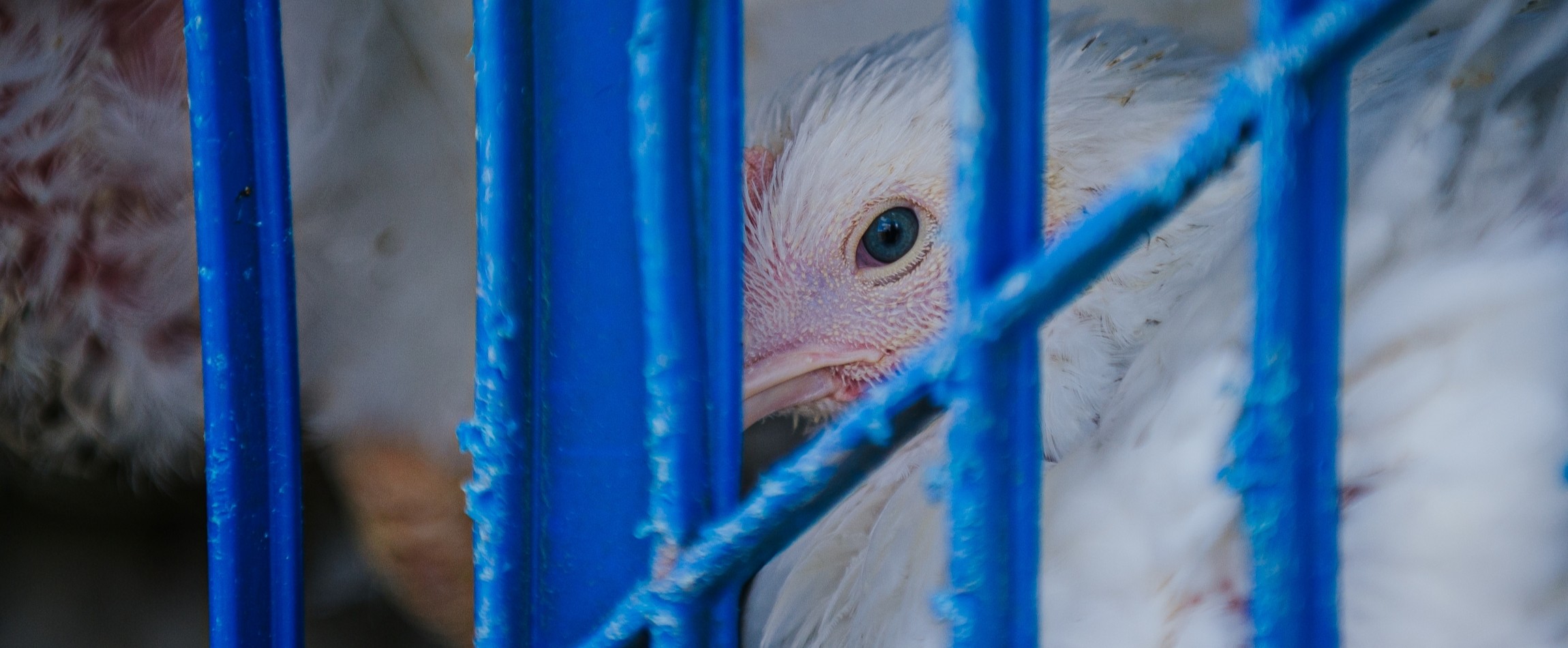
Canada’s Farmed Animal Laws Leave Hundreds Of Millions Behind


Canada raises and kills farmed animals at a staggering scale. In 2024 alone, approximately 863 million land animals were slaughtered for food — more than 2.3 million every single day. Despite this, the country has no comprehensive federal or provincial legislation establishing enforceable welfare standards for animals during their lives on farms. Instead, the treatment of these animals is governed primarily by voluntary, industry-led Codes of Practice developed through the National Farm Animal Care Council (NFACC), a private body that lacks legislative authority, meaningful public accountability, and enforcement powers.
This report, produced jointly by Animal Justice, Humane World for Animals Canada, Mercy For Animals, and the Montreal SPCA, examines how Canada arrived at this situation and proposes a concrete framework for reform.
The report documents the deep gap between what Canadians expect and what the law actually delivers. Polling data cited by the authors show that 94% of Canadians believe animals’ physical and psychological needs should be met, and 68% say animal welfare should take priority over keeping food prices low. Only 21% consider gestation crates for farmed pigs humane, and even fewer (18%) support conventional cages for egg-laying hens. Yet these practices remain entirely legal across the country. In the World Animal Protection Index, which scores animal welfare legislation in 50 countries, Canada received a “D” grade, reflecting the absence of enforceable standards, limited government oversight, and the continued authorization of practices that have been banned in many comparable countries.
The authors’ analysis of Canada’s existing legal framework reveals a system that fails farmed animals at every level.
Federally, the Criminal Code prohibits causing “unnecessary” pain and suffering, but courts have consistently found that pain associated with routine farming practices is legally “necessary” for food production, regardless of severity. Transport and slaughter rules under the Health of Animals Act and the Safe Food for Canadians Act cover only the final stages of an animal’s life and are riddled with vague language that complicates enforcement. Birds, who make up roughly 97% of land animals slaughtered for food, are exempt from a key protection against the suspension of conscious animals, meaning fully conscious chickens and turkeys can be shackled upside down and passed through electrified water baths before slaughter. Fishes have no federal welfare protections at slaughter at all.
At the provincial level, all jurisdictions exempt “generally accepted” agricultural practices from animal protection laws, which means that if a harmful practice is common enough, it’s legally permissible. This reflects a circular standard where what’s acceptable is what’s already done.
The report devotes significant attention to NFACC and its Codes of Practice, which it describes not as a flawed regulatory mechanism but as a structural failure by design. NFACC’s membership is dominated by industry: 87% of its members represent industry-aligned organizations, while only two animal welfare groups participate. Animal welfare organizations are typically limited to one seat on Code development committees of 15 to 18 members. Scientific recommendations from expert advisory panels are non-binding, meaning industry-dominated Code development committees can and do disregard them. The Codes themselves explicitly permit practices banned elsewhere, including cage confinement of egg-laying hens, gestation crates for pigs, tail-docking and beak-trimming without adequate pain relief, and on-farm killing methods such as maceration of live chicks and blunt force trauma to piglets.
Despite characterizing some requirements as “mandatory,” the Codes have no legal force, and missed deadlines carry no consequences. When the pig industry announced in 2020 that it wouldn’t meet a 2024 commitment to phase out continuous gestation crate use, extending the deadline to 2029, there was no accountability mechanism to challenge that decision. NFACC’s own survey data indicate that nearly a third (32%) of Canadian farm operators and workers are unaware the Codes even exist.
The report also documents regulatory capture: the process by which government bodies meant to protect the public interest come to reflect industry priorities instead. A detailed case study of the 2019 overhaul of federal transport regulations shows how industry pressure extended the proposed maximum transport interval for spent hens from 12 hours to 24 hours, despite the government’s own scientific assessments indicating that harm occurs at around eight hours without food, water, or rest.
A second case study examines Canada’s live horse export trade, where internal government communications show economic considerations influencing enforcement decisions, horses were routinely transported beyond legal limits, and deaths documented in Japanese government records were absent from Canadian reporting systems. In both cases, the authors argue, housing trade promotion and animal welfare oversight within the same institution produced a predictable result: enforcement that protects industry rather than animals.
The authors’ proposed reform framework rests on four pillars:
- A federal Animal Welfare Act would establish positive duties of care, recognizing animals as sentient beings and setting enforceable minimum standards for housing, feeding, handling, and on-farm killing, with meaningful penalties scaled to the size of the offending operation. Prohibited practices would include extreme confinement systems, routine painful mutilations, and inhumane killing methods.
- The standard-setting process would be reformed by transitioning NFACC into a legislated body with balanced representation, mandatory public transparency, science-based standards that can’t be overridden by industry consensus, and ministerial approval of final Codes.
- A dedicated governance structure would be created (potentially a Minister of Animal Welfare and/or an independent Commissioner of Animal Welfare reporting directly to Parliament) to separate welfare oversight from the departments whose primary mandate is promoting agricultural competitiveness.
- Enforcement would be strengthened through a specialized federal agency or dedicated unit within an existing agency with authority to conduct unannounced inspections, issue compliance orders, and pursue meaningful prosecutions rather than relying primarily on small administrative fines.
One limitation worth noting is that this report is produced by advocacy organizations with a clear position in favor of legal reform, and its analysis of NFACC’s record draws heavily on investigations and access-to-information requests conducted by one of the signatory groups, Animal Justice. That said, the factual record compiled, including polling data, slaughter statistics, internal government documents, and international comparisons, is extensively footnoted and draws on publicly available sources.
The picture this report paints is difficult to ignore. Millions of farmed pigs are currently confined in gestation crates past a deadline that passed with no consequence. Egg-laying hens live in cages so small they can’t spread their wings, while the country’s largest retailers quietly walked back their cage-free commitments. More than three-quarters of Canadian dairy cows spend most of their lives tethered in stalls. These are not edge cases or the work of bad actors: they’re the predictable, legal outcomes of a system designed to prioritize efficiency over the animals inside it. For advocates working on Canadian policy, this report provides the most comprehensive public account to date of how that system works, who controls it, and what a reformed alternative could look like. It makes the case that the tools needed for change — constitutional authority, legislative precedent, and public support — already exist. The question, as the authors put it, is whether Canada will act.
This summary was drafted by a large language model (LLM) and closely edited by our Research Library Manager for clarity and accuracy. As per our AI policy, Faunalytics only uses LLMs to summarize very long reports (~50+ pages) that are not appropriate to assign to volunteers, studies that contain graphic descriptions of animal cruelty or animal industries, and research on niche topics. We remain committed to bringing you reliable data, which is why any AI-generated work will always be reviewed by a human.

Citations:
Animal Justice, Humane World for Animals Canada, Mercy For Animals, & Montreal SPCA. (2026). Towards a national framework for farmed animal protection. Animal Justice. https://animaljustice.ca/wp-content/uploads/2026/05/Animal-Justice-Vision-Report.pdf