
Agriculture Front Groups In Canada And The Public Trust Agenda


In Canada, between 2010 and 2020 a string of undercover investigations by animal advocacy groups such as Mercy for Animals Canada, Last Chance for Animals, and People for the Ethical Treatment of Animals exposed not just criminal cruelty, but also the legal abuses that are standard practice in the Canadian animal agriculture system. Extensive media coverage brought suffering that is the industry norm to a shocked audience. These and subsequent exposés, along with the rise of social media in the 2010s, have made it easier to bring the realities of animal agriculture to the public. At the same time, scientific evidence related to animal sentience, climate change, and nutrition is challenging much of what we have been conditioned to believe about other species, the environment, and health.
This presents a problem for the agriculture industry, which in Canada has relied on what it refers to as its social license to operate. The industry views social license as the public’s tacit agreement to let it operate as it chooses and not interfere or demand government oversight. It has also come to rely on the public’s willingness to believe that someone is ensuring that there is minimal animal suffering, and that everything is more or less fine within the system — what the industry calls public trust in agriculture.
The industry has come to view the maintenance of trust as a public relations imperative. The public must continue to trust the industry to do the right thing voluntarily so that it can avoid being forced to do the right thing through regulation, government oversight, and mandatory welfare improvements, which impede the ability to operate unfettered. The risk to the industry is that losing public trust could result in demands for change — or even worse, a retreat from animal products and the system that produces them altogether.
The Industry’s Response
So what to do? The industry could change its practices to meet society’s changing expectations. Instead, it has followed other industries facing public backlash — like tobacco and fossil fuels — by adopting various public relations strategies to quell public concern, retain support, and minimize interference. Strategies that rely on denial, distraction, half-truths, and selective omissions have become commonplace in the agriculture public relations arsenal.
One of the most common strategies that the agriculture industry uses is the creation of front groups. These groups often use a method known as ‘astroturfing,’ which includes adopting vague and friendly names to imitate grassroots movements led by ordinary people who merely want to inform the public about an issue. These groups are designed to obscure the corporate interests and funding that backs them, and to shape public opinion in favor of the interests they serve.
Agriculture front groups have existed in Canada for decades, and they receive millions of dollars in funding from federal and provincial governments under the guise of building public trust in the agriculture system. In return, their activities, methods, and impact receive little to no evaluation or analysis. And while these groups receive significant public funding, their origins, methods, and goals remain unknown to most of the Canadian public.
Farm And Food Care
Farm and Food Care (F&FC) is one of the more established of these groups, and is interconnected with other agriculture front groups such as the Canadian Centre for Food Integrity and Agriculture in the Classroom. Its roots stretch back to the 1980s: in 1987, the Agricultural Groups Concerned about Resources and the Environment, known as AgCare, formed in Ontario with the stated purpose of providing a unified voice for Ontario’s crop producers. In 1988, the Ontario Farm Animal Council, or OFAC, was established, claiming a similar purpose of bringing animal agriculture stakeholders together to address current issues in order to ensure public confidence. In 2010, OFAC created its own charitable wing, Farm and Food Care Foundation. Two years later, OFAC and AgCare merged to form a new organization, Farm and Food Care Ontario. The organization spread out to launch F&FC Saskatchewan in 2014, and F&FC Prince Edward Island in 2017.
While the mandates of these three F&FC branches are vague and somewhat inconsistent, they all use the technique of astroturfing, and state in one form or another the goal of building public trust. F&FC Ontario presents itself as a “whole-sector coalition” with the purpose of being the “helpful expert on Ontario’s agriculture” with the common goal to “grow public trust and consumer confidence.” F&FC Saskatchewan claims to be a “coalition linking thousands” involved in the agriculture system with a “common goal to help people understand food and farming.” F&FC PEI implies a grassroots origin, not by identifying who it is, but by stating that PEI is driven by a “passionate farming community” and that F&FC is “here to help you learn how that food makes it to your plate.”
F&FC’s fuzzy goals help to obscure the fact that their purpose is not simply to educate or inform the public about agriculture, but to cast doubt on and discredit critics. Activists, undercover video footage, and exposés of abuse and cruelty in the animal agriculture industry are key threats.
These underlying concerns were acutely evident in AgCare and OFAC, and carried over to F&FC. AgCare’s primary purpose was to preserve and promote the use of pesticides and genetically modified crops. OFAC was part of the wider community of provincial farmed animal care councils, with a shared objective of tracking animal activists and reporting on their campaigns. OFAC’s founder, Leslie Ballantine, made it a priority for the organization to monitor activists and warn farmers of their activities.
Ballantine was succeeded at OFAC by Crystal MacKay, who became F&FC’s first Executive Director, maintaining Ballantine’s combative approach towards activists. At F&FC’s inaugural board meeting, members confirmed that animal activist activity monitoring would continue to be a priority.
F&FC has since softened its tone, and now takes the position that it is unproductive to engage with animal activists. However, its interest in tracking activists and monitoring their campaigns is still evident. Its current list of partners identifies Animal Agriculture Alliance as a like-minded group: AAA is a U.S. organization with the stated purpose of monitoring animal activism. It maintains lists and databases of individual activists and organizations, and has direct lines to the U.S. federal agencies.
The Real Dirt On Farming
F&FC’s transition to adopting a more positive and benign approach is laid out in its oldest project, The Real Dirt on Farming. The Real Dirt is F&FC’s main publication, and has its own website. Claiming to be a guide to food and farming in Canada, as well as helping consumers make informed choices with straight answers, it is distributed to audiences such as schools, politicians, medical offices, and media outlets, as well as to the general public through newspapers.
The Real Dirt was originally published by OFAC and retained by F&FC, who publishes new editions every three or four years. It has received little discussion outside the agriculture industry itself, which praises it as a useful marketing tool for the industry. Media coverage has been limited to news service and press releases provided by F&FC, which appear primarily in agriculture trade publications. Although it is distributed through newspapers, the media has not critiqued it, or investigated its industry background or funders, suggesting that it is viewed primarily as a marketing tool and not much more. And while there is a significant body of study on the use of positive narratives as a public relations strategy, it has received only passing mention as a tool used by the agri-food industry to promote the legitimacy of conventional agriculture.
What little analysis there is dates from its earliest editions, and comes from environmental and animal advocates, agriculture students, and members of the public, providing detailed assessments of its antagonism towards animal activists, and its misleading and false claims. These critics have referred to it as spin created to improve Big Ag’s image, propaganda on behalf of big business, hiding the realities of farmed animal practices, and “crap.”
Early editions of The Real Dirt assailed not just activists, animal rights, and undercover investigations, but also plant-based initiatives like Meatless Monday, making the false claim that it was the brainchild of two New York socialites bent on ending animal agriculture. Unsubstantiated claims about animal welfare were common, including: stating that layer hens don’t mind living in close quarters (i.e., battery cages) because they are descended from jungle fowl who live in small groups under tree roots; or that calves are separated from their mothers, kept in stalls, and deprived of their mother’s milk because it protects them from being bullied by other calves.
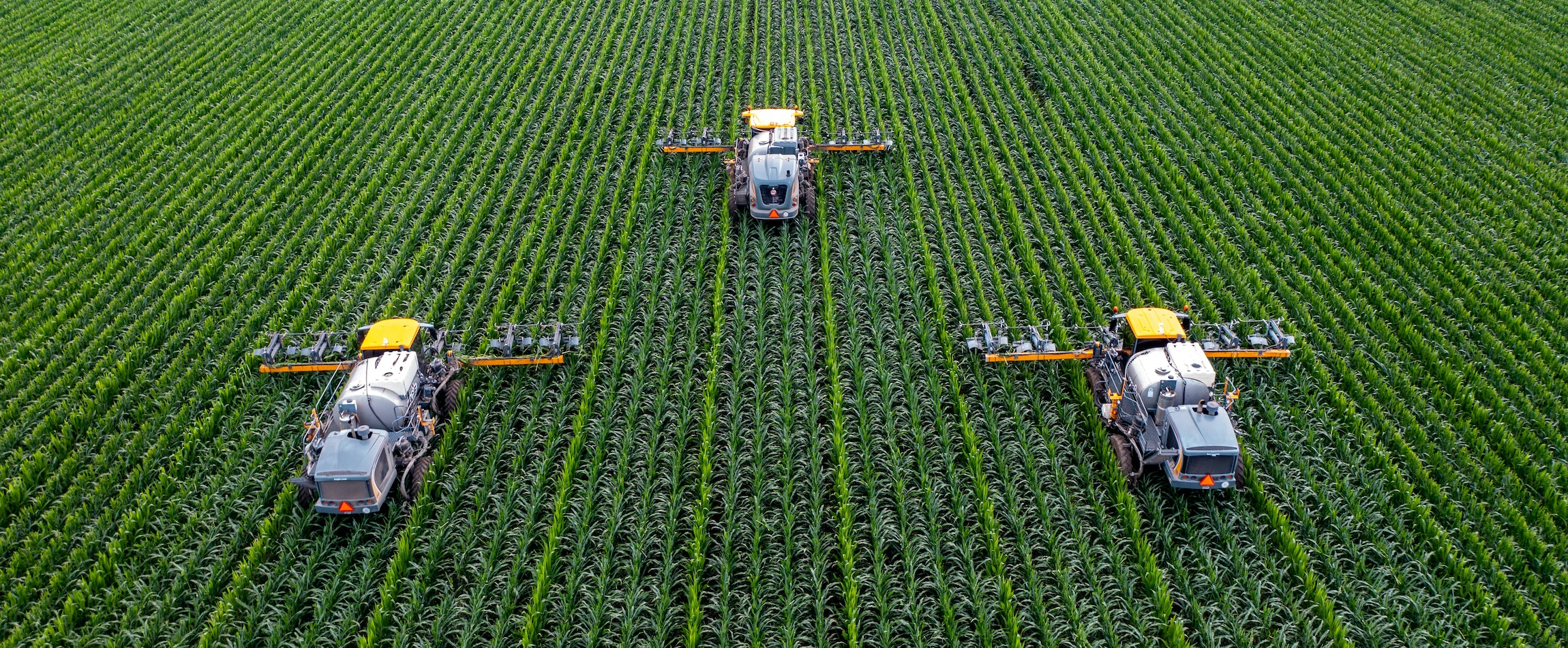
Years of input from public communications and marketing professionals have taught F&FC to avoid negative and reactive attacks, and outrageously false statements. Campaigns now focus on positive, reassuring narratives and “good news stories” about agriculture. The focus has shifted from activists to farmers, presenting them as relatable and trustworthy. Publications are now replete with images of folksy farm families operating computers and large machinery, while sharing the public’s values at the same time.
This shift is evident in more recent editions of The Real Dirt, as well as F&FC’s newer website campaigns. F&FC PEI, for example, hosts Soil First Farming, claiming to support practices that protect the environment and foster farm sustainability. The campaign promotes livestock and manure production, and regenerative grazing, without any acknowledgement of the scientific warnings about the impact of livestock and manure on the environment, or studies discrediting regenerative grazing. The site operates in conjunction with PEI’s Department of Agriculture, whose environmental and economic programmes include increasing livestock production in the province.
Canadian Food Focus
F&FC Saskatchewan receives federal funding through the Sustainable Canadian Agricultural Partnership to host its online campaign, Canadian Food Focus (CFF). CFF’s stated purpose is to improve Canadian consumers’ food literacy “from farm-gate to plate” by providing videos, courses, and articles written by experts. It claims to explore how food is grown and raised, all with the goal of helping people to make confident food choices. It is similar both in purpose and messaging to other front group websites purporting to inform the public about food, such as the U.S. Center for Food Integrity’s Best Food Facts, and the Canadian Centre for Food Integrity’s Canada’s Food System.
The website’s articles are replete with industry-friendly advice and thoughts about the importance of eating meat and dairy products, as well as the value of livestock in the fight against environmental degradation and climate change. Multi-generation farm families with family values and a passion for farming are a recurring theme.
Like all farm-to-plate initiatives, CFF omits information that would help consumers make informed choices, such as descriptions of any cruel practices inherent to animal industries. It also leaves out the crucial middle stage of the journey: slaughter.
Targeting Children Via Classroom Education
F&FC develops campaigns and materials directly aimed at children. In 2021, it began collaborating with Ag in the Classroom (AITC) to produce The Real Dirt on Farming in the Classroom. AITC produces resources for schools that promote agriculture to young children. Like F&FC, it receives funding from industry giants and has been criticized for promoting industry-friendly messaging. Even supporters have acknowledged it as one of the tools industry has to help build public trust in agriculture and maintain social license, and that its value is getting into schools early and reaching children before they make up their minds about the future.
The Real Dirt on Farming in the Classroom is a teachers’ guide with pre-prepared lessons designed to impart industry messaging onto children. Sources for lessons include The Real Dirt publication, and AITC’s snapAG Information Sheets, which are infographics intended to address hot-topic issues. Students are instructed to use specific sections and complete assignments reflecting their messages. In one of its lessons, What’s Up with Animal Welfare?, students are instructed to read The Real Dirt’s section on the humane treatment of farmed animals and AITC’s info-sheets on hot-button issues such as The Myth of Factory Farms, Animal Welfare or Rights, and Biosecurity. They are then provided with two exercises, including pretending to be a farmer and developing a response to criticism of inhumane treatment on social media, and explaining how to promote animal welfare over animal rights without relying on emotion.
Recommendations
It’s not difficult to see and assess F&FC’s agenda. A glance at their websites or annual reports reveals the industry executives, corporations, and public relations advisors who serve as sponsors, directors, partners, and members. Activities created for the public range from curated and sanitized video tours to uninformative public experiences. Despite claims to promote dialogue, a cursory look through their social media platforms shows little to no engagement with the public.
While it can be difficult to get animal welfare in the media and on the political agenda, challenging what is already there could be a viable inroad. Animal advocates can be powerful critics through targeted campaigns, both big and small. Something as simple as a letter to the editor in a newspaper carrying The Real Dirt on Farming can lead both the media and readers to view glossy industry inserts in a more informed and critical way. The industry has the option of either maintaining its silence when confronted with critics, or being drawn into a response.
Attending industry events like Breakfast on the Farm and Open Farm Days may also be an effective way to encourage others to think more critically about what they are being shown and told. The purpose of these public events is not to provide complete and balanced information to help people make informed choices, but to ensure that they have just enough information, wrapped in feel-good assurances, so that they can rationalize their choices. By providing a positive and fun experience, the goal is to distract the public and desensitize them to standard industry practices and the harms they cause. Asking probing questions that reveal omissions and half-truths, and challenge the feel-good messaging, can expose not only the realities of animal agriculture, but the purpose of farm events themselves.
NGOs are likely well aware of the significant influence that industry front groups and public trust initiatives are having on decision-making and policy. From Alberta and Saskatchewan, to Nova Scotia, to Ottawa, governments have been persuaded to adopt the concepts of social license and public trust in place of meaningful welfare improvements and regulatory reform. This is happening not just behind closed doors but in the open, through government studies, agriculture committee meetings, and consultations. Critics are speaking up in these forums, including the National Farmers Union, but animal advocacy organizations can and should add their voices.
From individual efforts to large-scale campaigns, every action that confronts the PR of agriculture industry front groups is important. Exposing their tactics and goals can lead to a better-informed public. Deconstructing the industry’s social license and public trust messaging can challenge politicians to justify support for PR campaigns in place of legitimate welfare reforms. By bringing light to the reality behind front groups, we can bring light to the inherent failures of the animal agriculture system, and the suffering of farmed animals.


