The Bullfighting Paradox


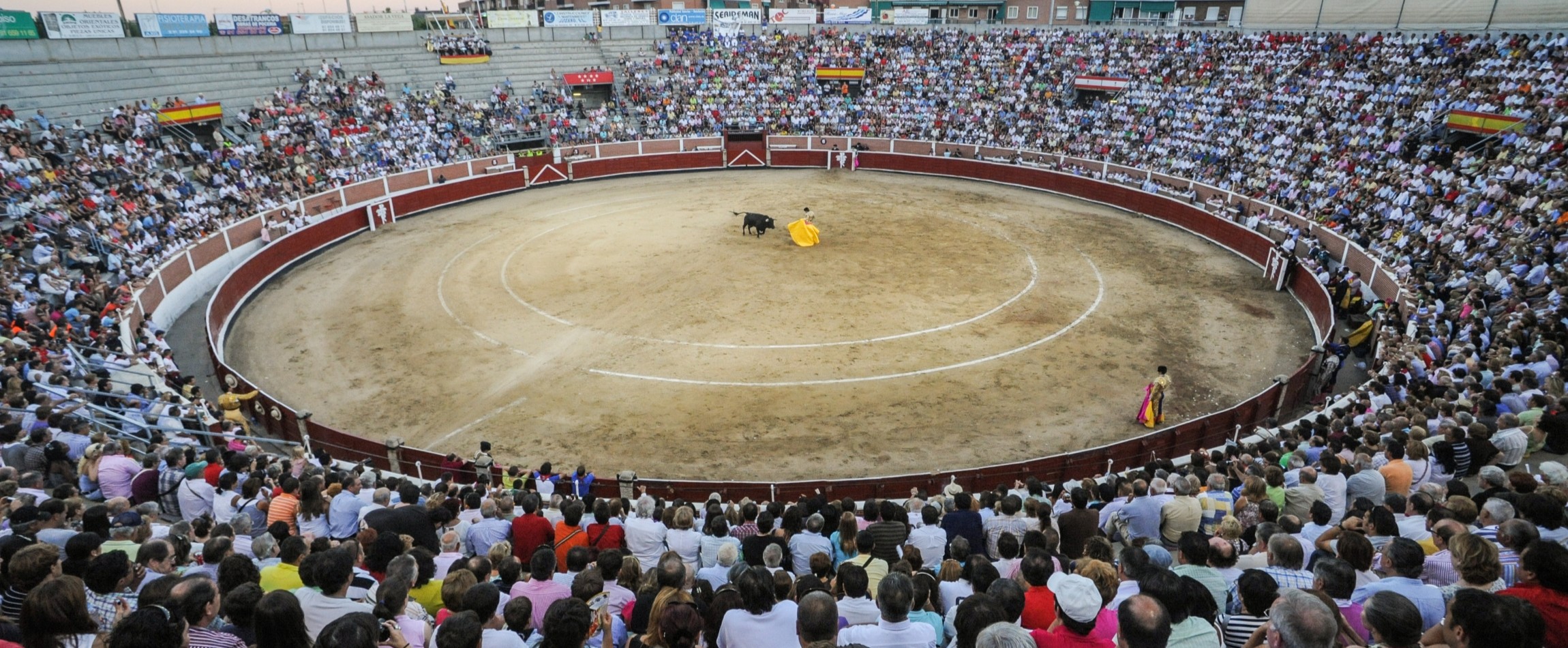
Bullfighting is a cultural touchstone of Spain and Latin America, but it’s not without its detractors. While supporters view it as an artful performance symbolic of courage, opponents denounce it as a barbaric and cruel animal rights violation. The bullfighting defender’s relationship with the sport is a paradoxical one: the bull is seen as both a worthy adversary and a beast to be dominated and ultimately defeated.
Cognitive dissonance also seeps in, as spectators revere the bull’s strength and dignity, but are still entertained at the expense of his life. To resolve this internal conflict, bullfighting enthusiasts may disregard the bull as less sentient and therefore less emotionally complex than humans. In the process, his suffering is dismissed as less intense or less relevant.
To better understand the spectator’s relationship to and justification of bullfighting, researchers conducted two studies. The first study explored the bull’s dehumanization through images and emotions, while the second study examined the adjectives used to describe bulls in narratives about bullfighting.
Study 1: Do People Believe That Bulls Feel Emotions?
The researchers circulated a flyer at four prominent universities: the National Autonomous University of Mexico, Autonomous University of Ciudad Juárez, and the University of Guanajuato in Mexico, and the Complutense University of Madrid in Spain. These flyers explained the purpose of the study and had a QR code to access an online questionnaire in Spanish.
In the questionnaire, participants were presented with an image of a bull — either one wounded from bullfighting or one in good health — as well as eight pairs of emotions. These consisted of a primary emotion assumed to be shared with animals and a secondary emotion seen as uniquely human, and a corresponding question. For example, anger and resentment were presented along with a question asking how the bull feels when seeing someone who has harmed him, while caring and tenderness were presented along with a question asking how the bull feels when seeing his offspring.
Participants then rated how much the bull felt these emotions on a five-point Likert scale from “not at all” to “completely.” They were also asked how interested they were in bullfighting on a five-point scale from “not at all” to “a lot.” The final sample included 973 participants from Mexico and 203 from Spain.
Most participants (81%) reported no interest in bullfighting, while 12% had little or very little interest and 5% had some interest. Only 3% stated they had a lot of interest in bullfighting.
Overall, participants attributed more primary emotions (average of 3.38) to the bull than secondary emotions (average of 2.81), regardless of whether they had any interest in bullfighting or which image of the bull they were shown. That said, those who disliked bullfighting assigned more primary and secondary emotions to the bull overall, whether he was shown wounded or not, than those who liked the sport.
Surprisingly, participants who liked bullfighting to some extent assigned more secondary emotions to the wounded bull than the healthy one, while those who disliked bullfighting attributed the same number of secondary emotions to both bulls. The researchers expected that liking bullfighting would mean perceiving bulls as less emotionally complex, not more, to justify enjoyment of the sport. They suggest that seeing the bull as a more emotional being may instead elevate his status to an almost human-like rival in a fight.
Study 2: How Are Bulls Portrayed In Writing?
The researchers looked at adjectives used in narratives about bullfighting. These narratives, commonly known as bullfighting chronicles, were collected from the websites Mundotoro and Cargando La Suerte. The chronicles covered bullfights held in Spain and Mexico between 2023 and 2024. The researchers analyzed a total of 97 chronicles and found 180 unique adjectives.
Once all the adjectives were identified, the researchers assigned them to one of four categories and counted how often they were mentioned within each category.
- Dynamism (48 adjectives with 180 mentions): This category included adjectives focused on the bull’s energy and performance during the fight (e.g., docile, powerful).
- Character (30 adjectives with 160 mentions): This category included adjectives describing the bull’s behavior and character (e.g., aggressive, dignified).
- Stamp (31 adjectives with 133 mentions): This category included adjectives focused on the bull’s desirable and undesirable physical traits (e.g., enormous, ugly).
- Physical attributes (36 adjectives with 111 mentions): This category included adjectives describing the bull’s actual physical characteristics (e.g., short-horned, tall).
Many of the adjectives used in the chronicles referred to the bull’s considerable size and strength, emphasizing the danger he poses to the bullfighter and reinforcing his worthiness as an opponent. Words like “fierce” and “noble” appeared frequently in the character category (31% and 36% of mentions, respectively), while “imposing” (18%) and “enormous” (13%) were popular adjectives in the stamp category. The researchers suggest that this helps create the impression of the bull as a willing participant in the fight rather than an animal simply trying to survive.
The Bullfighting Paradox Revealed
Results from both studies demonstrate the paradox of bullfighting. The authors argue that the bull’s reputation as a fierce and substantial adversary both honors his nobility while also justifying his demise. In turn, through defeating the bull, the bullfighter’s masculinity and heroism are affirmed. Humanizing rather than dehumanizing the bull is what permits any violence against him.
However, there are some limitations to consider. In the first study, because so few participants reported any interest in bullfighting, the researchers combined everyone who expressed at least some interest (from little to a lot) into a single group to compare them against participants with no interest at all. Including more bullfighting fans would provide greater insight into how bulls are perceived.
For the second study, because the chronicles were authored by experts in the field dedicated to promoting the sport, they don’t necessarily reflect the viewpoints of bullfighting spectators. However, the authors highlight how the chronicles have the potential to influence spectators’ perceptions.
Regardless of one’s stance on bullfighting, this study asks that readers consider their own relationship with animals and the complexities within it. Gaining a better understanding of an animal’s nature may ultimately lead to a greater understanding of ourselves.
https://doi.org/10.1080/08927936.2025.2509381

Citations:
Cruz-Torres, C. E., del Campo-Ríos, J. M., Fernández-Ballbé, O., & Díaz-Rivera, P. E. (2025). The paradox of bullfighting: Emotions and (infra)humanization in bullfighting enjoyment. Anthrozoös, 38(4), 615–635. https://doi.org/10.1080/08927936.2025.2509381