
Needy Cats: Can Play Or Puzzles Help?


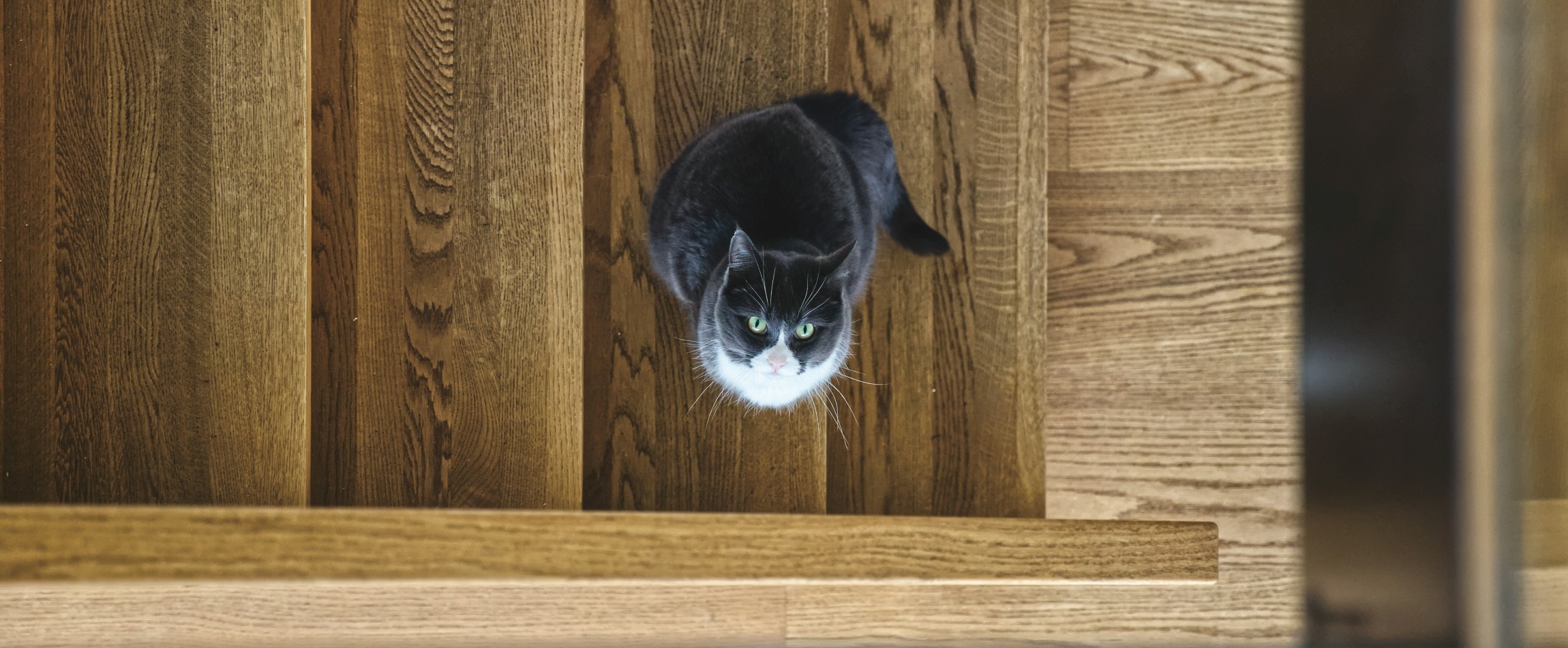
Anyone who cares for an indoor cat has likely had to deal with loud meowing, paw taps, and 5 a.m. wake-up calls. This kind of attention-seeking behavior is a normal way cats communicate with humans, but it can escalate into scratching, biting, or sleep disruption that strains the relationship. Cats with little or no outdoor access may be especially prone to this, in part because they lack outlets for their natural hunting instincts.
Cat behavior professionals have long recommended enrichment to prevent or reduce problematic behavior. An enrichment can be considered anything that adds mental or physical stimulation to a cat’s day. Food puzzles are one commonly suggested tool. But until now, no study has tested whether enrichment reduces attention-seeking behavior specifically, or whether food puzzles work better than ordinary toys.
To address this gap, researchers in Denmark recruited 102 cat guardians and their cats via social media and posters put up around a university. To qualify, cats had to be:
- The only cat in the home;
- Neutered;
- Over one year old;
- Kept indoors or allowed only limited outdoor access;
- Fed at least some dry food;
- Relatively unfamiliar with food puzzles; and
- Displaying at least one attention-seeking behavior on a daily or near-daily basis, including waking their guardian up at night, begging, meowing, pawing or nudging for attention, attacking their guardian, or otherwise doing things they weren’t allowed to do.
The cats were randomly split into two groups. Guardians in one group received two food puzzles, one stationary and one mobile. The other group was given two non-food toys designed to resemble the food puzzles as closely as possible.
The toys were given close to the cats’ usual feeding time and taken away after about an hour to make sure they didn’t get bored of them. Cats in the food puzzle group had their daily kibble slowly switched from their normal bowl to a food puzzle, so that by the end of the four-week study, they ate all of their dry food from the puzzle.
Neither group knew a second group existed, which helped prevent guardians from anticipating a particular result. Every week for four weeks, guardians rated how often their cat displayed each of the six attention-seeking behaviors from “several times a day” (score of five) to “not at all” (score of one). The final sample included 92 cats as 10 guardians dropped out of the study, leaving 48 cats in the toy group and 44 in the food puzzle group.
By the end of the study, both groups showed a meaningful drop in attention-seeking behavior overall. Most individual behaviors also declined to a statistically significant degree. For example, 81% of cats given toys and 93% of cats given food puzzles were waking their guardian up in the night at the start of the study. After four weeks of access to their enrichment, only around 65% of cats were still doing so, regardless of which toy or food puzzle they were given. The only behavior that didn’t show a clear improvement was attacking. However, this was already relatively uncommon, with only about one in three cats attacking their guardian to seek attention to begin with.
When the two groups were compared directly to see whether the type of enrichment mattered, there was no meaningful difference between them. Cats given food puzzles didn’t improve significantly more than cats given ordinary toys. This runs counter to the study’s original hypothesis, which predicted food puzzles would outperform toys because of their tie to natural hunting behavior. Instead, the results line up with other research suggesting object play can tap into a cat’s hunting instincts just as effectively as food-based puzzles.
However, the study didn’t have a group of cats who received no enrichment, so it’s hard to tell whether the improvements were caused by the toys and food puzzles or by other factors. For example, because guardians knew they were taking part in a study, they may have paid more attention to their cat or unconsciously rated their cat’s behavior more favorably. And because guardians judged their own cat’s behavior, inconsistency may have been introduced; what’s considered annoying by one person may not be annoying to another.
This study offers an evidence-based strategy for indoor cat guardians: consistent daily enrichment with either toys or food puzzles may ease attention-seeking behavior linked to unmet stimulation needs. That also means advocates don’t need to steer guardians specifically toward specialized and often pricier food puzzles since an ordinary toy used consistently at feeding time appears to work just as well. This could be a useful, low-barrier strategy for shelters, veterinary clinics, or behavior helplines aiming to prevent relinquishment linked to behavioral problems, since attention-seeking and other behavioral issues are commonly cited reasons cats are surrendered. Given the study’s small scale and limitations, advocates should treat these findings as encouraging but preliminary, and watch for follow-up research addressing these gaps.
https://doi.org/10.1016/j.applanim.2026.107017

Citations:
Hoff, A., Lundegaard, L. S. R., Møller-Petersen, M. L., Nielsen, S. S., & Sandøe, P. (2026). Dealing with annoying cats: A randomised controlled trial of feeding-time enrichment to reduce attention-seeking feline behaviours. Applied Animal Behaviour Science, 300, 107017. https://doi.org/10.1016/j.applanim.2026.107017
