Why Do Bearded Dragons “Glass Surf”?


Captive animals of all kinds sometimes develop what researchers call abnormal repetitive behaviors: actions that repeat over and over with little variation and serve no clear purpose. These behaviors take many different forms depending on the species. Some animals pace, while others dig, gnaw, or repeatedly interact with parts of their enclosure. Researchers widely agree that, whatever form it takes, this type of behavior usually indicates poor welfare and is therefore important to address.
Addressing abnormal repetitive behaviors involves understanding what motivates them in the first place. In reptiles, one of the most common forms of repetitive behavior involves climbing up, digging at, or rubbing against the barriers of an enclosure, often called “glass surfing” by keepers. While many have assumed this behavior stems from a desire to escape, the underlying motivation remains unclear.
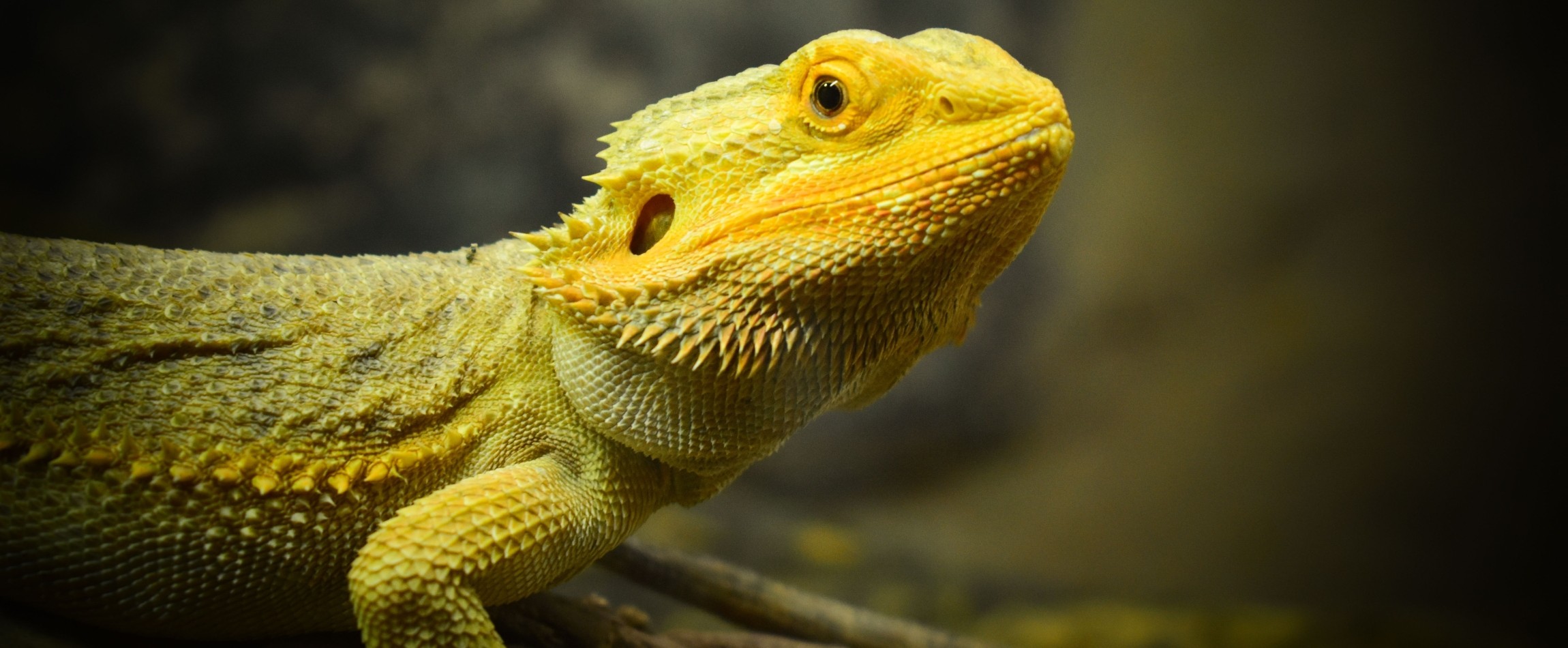
This study investigated repetitive barrier interactions in 24 captive bearded dragons over a three-year period to determine whether these interactions are truly escape-motivated and what they might reveal about reptile welfare.
The dragons (11 males and 13 females) were housed in 39-gallon enclosures with three black sides and one transparent side where the door was located. The researchers conducted a total of six observation rounds, filming each dragon continuously for a 12-hour lights-on period each time. A behavior counted as a barrier interaction when it was repeated at least three times in a row or continued for 90 seconds or more. The team tracked which barrier each dragon interacted with and for how long, and then compared this to instances of defecation and feeding recorded in the same footage.
In a separate, one-time observation, the researchers covered half of each enclosure’s only transparent side with black paper and monitored whether the dragons still targeted the remaining visible section. Finally, they compared each dragon’s total barrier-interaction time between winter and spring to look for seasonal and sex-based differences.
The study found strong evidence that repetitive barrier interactions are tied to escape motivation. Compared to all other barriers, the transparent side received significantly longer durations of interaction. This front wall was the only one associated with entering and exiting the enclosure, suggesting the lizards recognized it as the primary escape route.
When half of the front wall was covered with black paper, the dragons disproportionately focused their interactions on the remaining transparent section. While random chance predicted only 12.5% of interactions would occur there, the observed median was 29.5%, reinforcing the idea that the animals were intentionally targeting visible escape routes.
However, the evidence for why bearded dragons are motivated to escape is more mixed. The dragons were roughly 15 times more likely to defecate during periods when they were performing repetitive barrier behaviors. This may reflect an attempt to leave the enclosure before defecating, as many species naturally avoid eliminating waste near sleeping or shelter areas, although the researchers aren’t certain.
In contrast, the study found no link between barrier behavior and feeding time. This points to bearded dragons’ life history: these lizards are mostly herbivorous as adults and inactive for around 70% of the day. As they don’t need to travel far to find food in the wild, movement and eating might not be as tightly coupled for this species compared to highly active predators, for example.
The study also identified important seasonal and sex-based differences. The researchers originally predicted males would show the greatest increase in repetitive behaviors during breeding season due to territorial movement patterns observed in wild populations. Instead, females showed the strongest seasonal change in barrier interactions. In winter, only four females performed repetitive barrier behaviors, while in spring, nine did. Females also performed significantly longer durations of repetitive interactions during spring. This may reflect the fact that female bearded dragons are less likely to maintain a territory in the wild, but instead are “floaters,” roaming large distances to find new areas or mates.
One limitation of the study is that some of its predictions were based on research in mammals, particularly studies of stereotypic pacing in captive carnivores. Reptiles, however, differ substantially from mammals in their ecology, activity patterns, and behavioral motivations. As a result, applying mammal-based assumptions (e.g., pacing in anticipation of mealtime) may not accurately reflect the motivations underlying repetitive behaviors in reptiles. This highlights the broader need for reptile-specific welfare frameworks rather than relying on those developed primarily from mammalian models.
Another important limitation is that the bearded dragons were housed in 39-gallon enclosures, which more modern reptile welfare guidance would consider severely undersized for adult individuals. Because enclosure size itself may have contributed to escape-motivated behaviors, it becomes difficult to fully separate the effects of environmental complexity, barrier visibility, reproductive drives, and exploratory motivations from the potential impacts of spatial restriction. Even so, the results suggest repetitive barrier behaviors likely arise from a complex interaction of multiple factors rather than a single cause alone.
Most importantly, the paper challenges long-standing assumptions that reptile behaviors are largely instinctive or lacking in complexity. The findings add to a growing body of research demonstrating that reptiles possess nuanced behavioral motivations and may experience compromised welfare when captive environments restrict their ability to engage in natural behaviors.
https://doi.org/10.1016/j.applanim.2024.106484

Citations:
Denommé, M., & Tattersall, G. J. (2025). Investigating the motivations of repetitive barrier interactions in Pogona vitticeps. Applied Animal Behaviour Science, 283, 106484. https://doi.org/10.1016/j.applanim.2024.106484