The Weight Of Evidence Against Fast Growth


Chickens raised commercially for meat (known as broilers) have been intensively selected for greater muscle production and rapid growth, with growth rates increasing by over 400% from 1957 to 2005.
While this rapid growth benefits producers with greater efficiency and higher profits, it comes at a steep price for animal welfare. Fast-growing broiler chickens, who gain over 60 grams of weight a day, are more prone to leg disorders, cardiovascular issues, and reduced mobility, leading to higher mortality rates and diminished quality of life — raising serious ethical concerns about current breeding practices.
To better understand these welfare challenges, researchers conducted a comprehensive review of existing studies on the relationship between growth rate and welfare outcomes in broiler chickens. They gathered data on a number of key welfare issues, including mobility, skeletal and cardiovascular disorders, behavioral expression, and mortality rates. The goal was to determine whether slower-growing breeds experience fewer health problems and improved well-being compared to their fast-growing counterparts.
Too Heavy To Move
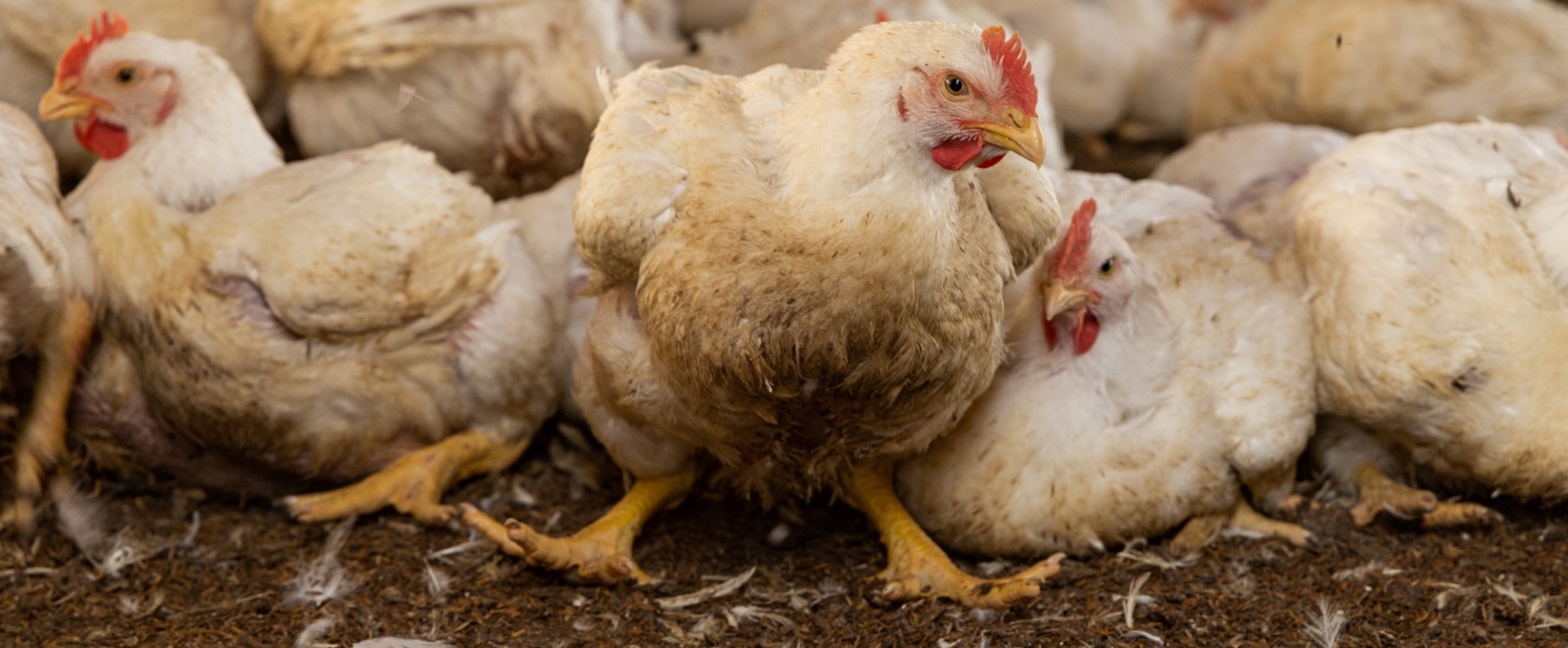
Fast-growing broiler chickens struggle with mobility. Their rapid weight gain outpaces their skeletal development, leading to joint pain, lameness, and difficulty walking. This forces them to remain sedentary for long periods. As a result, they develop painful conditions like footpad dermatitis, hock burns, and skin lesions, which further reduce their quality of life. In addition, many birds are unable to properly access food and water.
Conversely, slower-growing breeds exhibit better movement, improved gait scores, and fewer skeletal disorders.
At Risk Of Sudden Death
Another major concern is the increased risk of cardiovascular disease in fast-growing breeds. Accelerated growth puts extreme strain on broiler chickens’ organs, particularly the heart and lungs. This is associated with increased rates of sudden death syndrome, a fatal condition where the birds die abruptly due to heart failure.
Fast-growing broiler chickens have a higher incidence of ascites, a build-up of fluid caused by increased blood pressure, leading to respiratory distress. Due to their increased metabolic rates, they also struggle to regulate their body temperature, making them more vulnerable to heat stress. Ultimately, these result in a shortened lifespan and higher mortality.
In contrast, sudden death syndrome and ascites are virtually eliminated in slower-growing broiler chickens, who are also less prone to heat stress.
Unable To Behave Like A Chicken
Beyond physical health, growth rate also impacts behavior and psychological well-being. Unlike their red junglefowl ancestors, fast-growing broiler chickens are far less active, spending up to 80% of their day sitting. They engage in little to no natural behaviors such as foraging, perching, roosting, or dust-bathing. The absence of these highly motivated behaviors suggests that their physical constraints severely impair their overall well-being.
Slower-growing breeds, on the other hand, show higher activity levels and greater engagement with their environment, reinforcing the link between growth rate and quality of life.
Broiler Breeders Suffer Too
Selection for fast growth also has implications for so-called broiler breeders — the parent birds of the chickens being raised for meat. To keep them healthy and reproducing, broiler breeders are raised in feed-restricted conditions, causing them to feel chronically hungry and frustrated. This, in turn, leads to harmful behaviors such as increased aggression, injurious pecking, and cannibalism. The parents of the fastest-growing breeds are usually the most feed-restricted.
In comparison, the parents of slower-growing breeds can be fed larger quantities of feed, which also take longer to eat. Thus, they’re able to spend more time engaged in foraging behavior and tend to have fewer signs of feeding frustration.
While numerous studies have examined the impact of growth rate on the welfare of broiler chickens, a significant advantage of this review is the authors’ detailed qualitative descriptions of the interrelated health and behavior concerns. Given the weight of evidence, they conclude that even minor reductions in growth rate can result in improved welfare.
Despite the clear welfare benefits, transitioning to slower-growing breeds presents economic and logistical challenges. Slower growth requires more feed, space, and time before slaughter, potentially increasing production costs. However, shifting consumer preferences toward higher-welfare products presents a potential market-driven solution to adopt more humane practices. Thus, animal advocates can use the findings of this review to push for welfare reforms and consumer awareness by:
- Encouraging producers to adopt slower-growing breeds through corporate campaigns and policy initiatives;
- Educating consumers on the welfare costs of fast-growing broiler chickens and promoting higher-welfare alternatives; and
- Advocating for stronger welfare regulations that limit genetic selection for excessive growth at the expense of the birds’ health.
While further research is needed to optimize sustainable breeding practices, this study makes one thing clear: fast-growing broiler chickens suffer significantly more than their slower-growing counterparts. Prioritizing production efficiency over welfare leads to chronic pain, disease, and early death. Industry-wide change takes time, but consumer demand and advocacy efforts can drive a shift toward more humane poultry production, ensuring that efficiency doesn’t come at the cost of animal well-being.
https://doi.org/10.3390/ani14223330

Citations:
Riber, A. B., & Wurtz, K. E. (2024). Impact of growth rate on the welfare of broilers. Animals, 14(22), 3330. https://doi.org/10.3390/ani14223330