
Summary Of Findings From Telephone Survey


This survey measured the acceptability of certain practices related to egg farming, among 124 females (61%) and 78 males (39%).
“Egg laying hens have access to natural light and the opportunity to engage in natural behaviors, including walking, perching, scratching and pecking, stretching their wings and dust bathing.” Acceptable (91%), Unacceptable (3%), Unsure/Refused (6%).
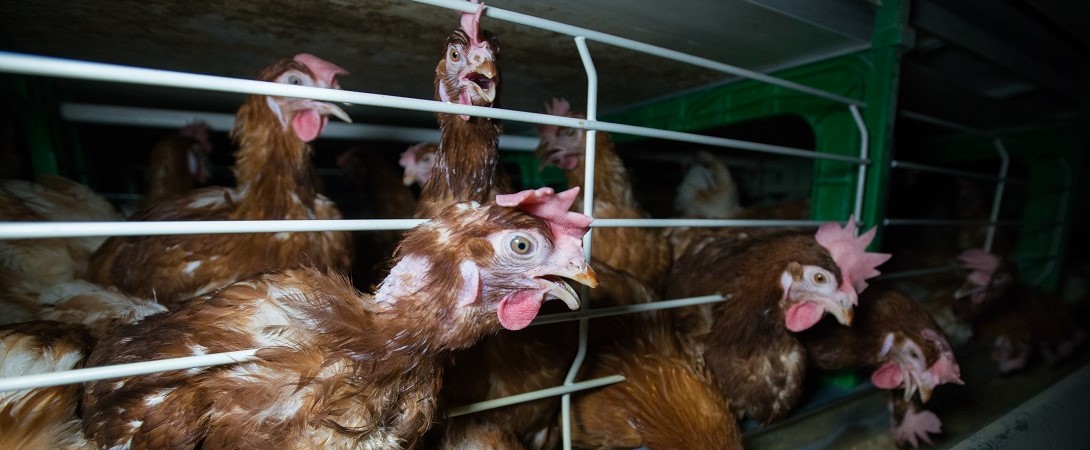
“6 or more egg laying hens are confined for their entire adult lives in wire cages the size of a file drawer with no outside access.” Acceptable (30%), Unacceptable (69%), Unsure/Refused (1%). “Because the birds are caged, there is a practice of slicing off part of the hen’s beak so the overcrowded, stressed hens cannot peck at each other and cause injuries.” Acceptable (40%), Unacceptable (58%), Unsure/refused (2%).
“The starvation practice known as “forced molting” is used to increase egg production. To force molting, food is withheld from the hens for up to 14 days and water is withheld for up to 3 days.” Acceptable (16%), Unacceptable (82%), Unsure/Refused (2%).
“Antibiotics are typically used in an attempt to prevent diseases in caged hens. However, researchers have found a link between the use of antibiotics and the development of antibiotic-resistant strains of bacteria, such as salmonella, e. Coli, and campylobacter, which may be transmitted to humans through consumption of food.” Acceptable (26%), Unacceptable (67%), Unsure/Refused (7%).
Respondents were also asked about their awareness of these factors prior to the survey.
“The practice of keeping 6 or more egg laying hens confined for their entire adult lives.” Aware (56%), Unaware (42%), Unsure/Refused (2%).
“The practice of slicing off part of the hen’s beak.” Aware (36%), Unaware (62%), Unsure/Refused (2%).
“The starvation practice of forced molting to increase egg production.” Aware (23%), Unaware (76%), Unsure/Refused (1%).
“The use of antibiotics to prevent diseases.” Aware (73%), Unaware (27%), Unsure/Refused (0%).
The majority of respondents were willing to pay more for eggs from egg laying hens that are raised without cages, forced molting, antibiotics or slicing off their beaks. 58% were very likely to pay 2-4 cents more per egg, 23% were somewhat likely to pay 2-4 cents more per egg, 7% were not very likely to pay 2-4 cents more per egg, 11% were not at all likely to pay 2-4 cents more per egg, and 1% were unsure/refused.

Citations:
The Gilmore Research Group, Progressive Animal Welfare Society, 2001
