
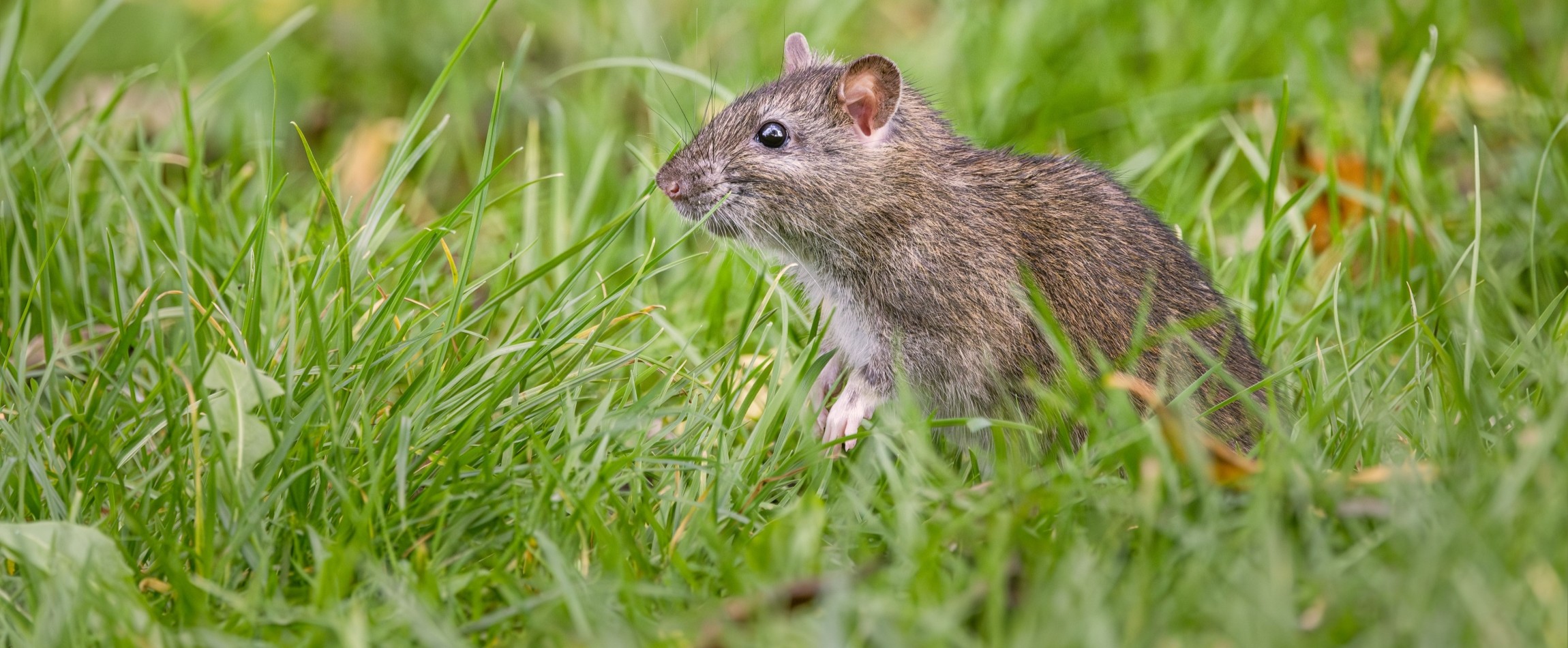
Rat Poison: Widely Used But Little Valued


Cities around the world manage rats using chemical poisons known as anticoagulant rodenticides, which cause a slow death from internal bleeding. These poisons don’t just harm rats; wild animals who eat poisoned rats, or the bait itself, can become sick or die too. Research has found traces of these poisons in more than 90 wild animal species, contributing to population declines in some endangered species, and thousands of children and dogs are accidentally poisoned each year. Because anyone can buy these products at hardware stores and major retailers without training, understanding why people choose rat poison over other rodent control methods is a key step toward reducing the harm it causes.
This study surveyed and interviewed Chicago residents to find out how often they use rat poison, how important they consider it compared to other control methods, and what drives that choice.
The researchers mailed survey invitations to 4,644 Chicago households spanning a range of income levels and received 446 complete responses. They also interviewed 50 of these respondents in depth to hear, in their own words, why they used or avoided rat poison.
The survey asked about residents’ attitudes toward rats, using a previously validated scale nicknamed the “Rattitude” scale, along with their views on wild animals and how big a problem they felt rats were on their block. It also asked whether residents thought their neighbors were doing a good job of controlling rats, and how capable they felt of controlling rats themselves. Finally, the survey gathered demographic information, including age, gender, income, housing type, and whether children, dogs, or cats lived in the home. Using a well-established model for understanding what drives behavior, the researchers then tested which of these had the strongest link to rat poison use.
A Widely Used, Little-Valued Tool
Almost 39% of respondents had used rat poison at least once in the past six months — less common than cleaning up their property (72%) or repairing rat holes (50%), but more common than setting traps (33%) or hiring a rodent control professional (27%).
Despite this, rat poison was the method least often rated “extremely important” of all the options in the survey. Only 30% of respondents gave it that rating, compared to 76% for cleaning up garbage.
Fear Matters More Than Facts
How people felt about rats mattered more than how many rats they’d actually seen. Attitudes toward rats had the strongest link to how important someone considered rat poison, which, in turn, had the strongest link to whether they’d actually used it. Concern about catching a disease from rats also had a strong link to seeing poison as important, second only to general attitudes about rats.
Simply spotting more rats on the block wasn’t significantly linked to poison use, while perceiving rats as a “big problem” — a more subjective judgment — was. Residents earning less than $50,000 a year were also more likely to have used rat poison.
Valuing local wild animals more generally made no difference to poison use, even though support for lethal wildlife management showed a small but significant link. This suggests that residents don’t connect their general appreciation of wild animals with the harm rat poison causes them.
Why Residents Reach For Poison, Or Don’t
In interviews, the most common reason residents gave for using rat poison was simply not knowing what else to do, cited by 10 of the 41 participants who discussed the topic. Others mentioned wanting to avoid direct contact with rats, or feeling pressure from neighbors to join in on rodent control efforts.
Residents who avoided rat poison almost always cited safety concerns, most commonly for:
- Dogs (11 participants)
- Wild animals (seven participants)
- Children (five participants)
- The environment, including soil and water contamination (four participants)
Many residents on both sides of the issue wanted to learn about or use alternatives, such as traps or fumigation, along with more help from the city.
Study Limitations
The sample skewed toward respondents who were white and women, and toward higher incomes, compared to Chicago’s overall population. This may limit how well the findings apply to other communities. And because the study focused on one U.S. city, the findings may not generalize to other cities or countries.
Advocacy Opportunities
This research suggests that reducing rat poison use isn’t primarily a matter of proving it doesn’t work, as residents already rate it as their least important method. The bigger opportunity lies in addressing fear and convenience.
Since negative attitudes toward rats were the strongest driver of poison use, it’s important to replace fear-based, hostile language about rats — like “the war on rats” — with neutral, fact-based messaging. Because concern for companion animals (dogs in particular) was high, and general appreciation for wild animals didn’t reduce poison use, campaigns could explicitly connect rat poison to harms to these other animals.
Advocates could also push for stronger restrictions on public access to rat poison, such as limiting sales to licensed professionals as the study’s authors suggest, building on momentum already underway in states like California and provinces like British Columbia. Pairing tighter access with accessible alternatives could help: in a separate study in Cape Town, South Africa, providing households with rat traps and training led 84% to say they’d stick with trapping rather than turn to pesticides. Given how often Chicago residents said they simply didn’t know what else to do, making humane alternatives as convenient as poison may protect more animals than warning people about the risks alone.
This summary was drafted by a large language model (LLM) and closely edited by our Research Library Manager for clarity and accuracy. As per our AI policy, Faunalytics only uses LLMs to summarize very long reports (~50+ pages) that are not appropriate to assign to volunteers, studies that contain graphic descriptions of animal cruelty or animal industries, and research on niche topics. We remain committed to bringing you reliable data, which is why any AI-generated work will always be reviewed by a human.
https://digitalcommons.lmu.edu/cate/vol18/iss3/3/

Citations:
Murray, M. H., German, D., Buckley, J. Y., Magle, S. B., & Byers, K. A. (2025). Why do people use rat poison to manage rats? A mixed methods study in a large American city. Cities and the Environment, 18(3), Article 3. https://digitalcommons.lmu.edu/cate/vol18/iss3/3/
