Lead Ammunition Poisons Eagles And Bears Across Canada


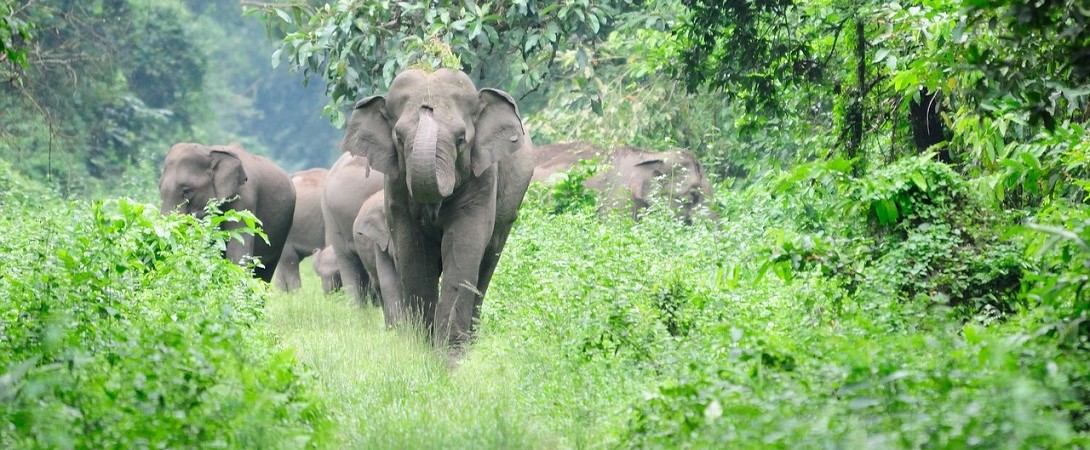
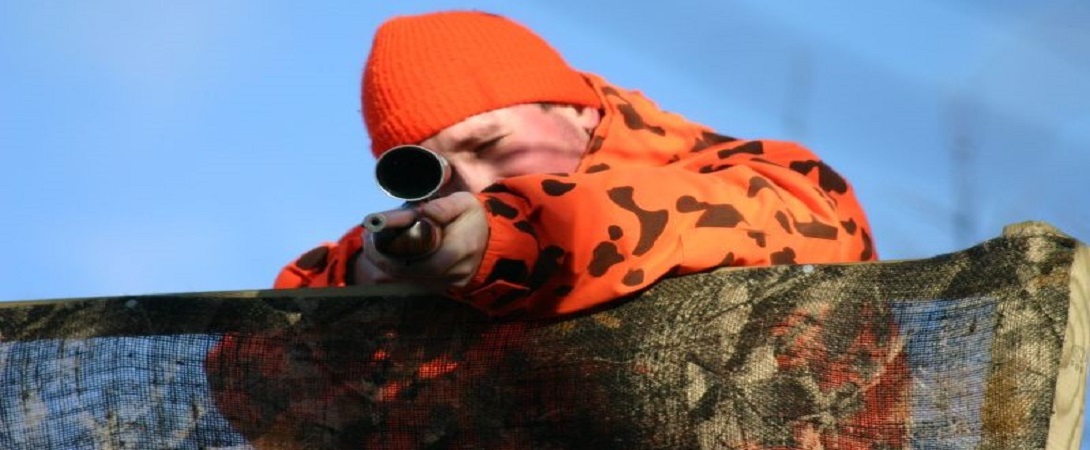
When a hunter field-dresses a moose, elk, or deer, they usually leave the internal organs (called “gut piles”) behind in the woods. Scavengers such as eagles, bears, wolves, coyotes, mountain lions, wolverines, crows, and ravens quickly take advantage of the free meal. But when hunters use lead ammunition, that meal can carry a hidden danger.
Lead bullets shatter into many tiny fragments on impact, scattering metal throughout an animal’s body. Scavengers who eat contaminated tissue can absorb this lead and develop toxic, sometimes fatal, poisoning. Scientists have documented this problem in wild birds and mammals for decades. But, until now, no one had measured how much lead big-game hunting adds to the Canadian landscape each year.
In this study, researchers tallied the big-game harvest across Canada and neighboring U.S. states for a single hunting season. They then modeled how much lead those kills likely left behind for scavengers to find.
Modeling A Season’s Worth Of Lead
The researchers pulled hunting records for the 2023–2024 season from nearly every Canadian province and territory, plus 12 northern U.S. states bordering Canada. No study has directly measured lead levels in Canadian gut piles. So they relied on the only available data of its kind: a study of moose shot in northern Europe. That research measured how much lead a bullet sheds on impact, estimating that at least 30% of that lost lead typically ends up in the gut pile. The researchers applied this figure across the harvest data to estimate a season’s total lead deposit using three common bullet calibers, .264, .300, and .338.
Hunters aren’t required to report what type of ammunition they use, so the researchers modeled results assuming all hunters used lead bullets. They also modeled how those numbers might change if more hunters switched to non-lead ammunition.
Hundreds Of Kilograms Of Lead, Every Year
The researchers estimated that a single .264-caliber bullet would leave 0.78 grams of lead behind. A .300-caliber bullet would leave 0.84 grams, and a .338-caliber bullet would leave 1.35 grams.
During the 2023–2024 season, hunters harvested about 383,000 big-game animals across Canada, and roughly 1.7 million more in the 12 bordering U.S. states.
Based on every hunter using lead ammunition and .300-caliber bullets, hunting scattered about 340 kilograms of lead across Canada in a single season, and 1,442 kilograms across the neighboring U.S. states. Using a more realistic estimate of two bullets per kill instead of one, the researchers noted, these totals would double.
Switching to non-lead ammunition would help. But even if half of all hunters made the change, hundreds of kilograms of lead would still enter the environment every year — roughly 891 kilograms across both countries.
Two Danger Zones For Migrating Eagles
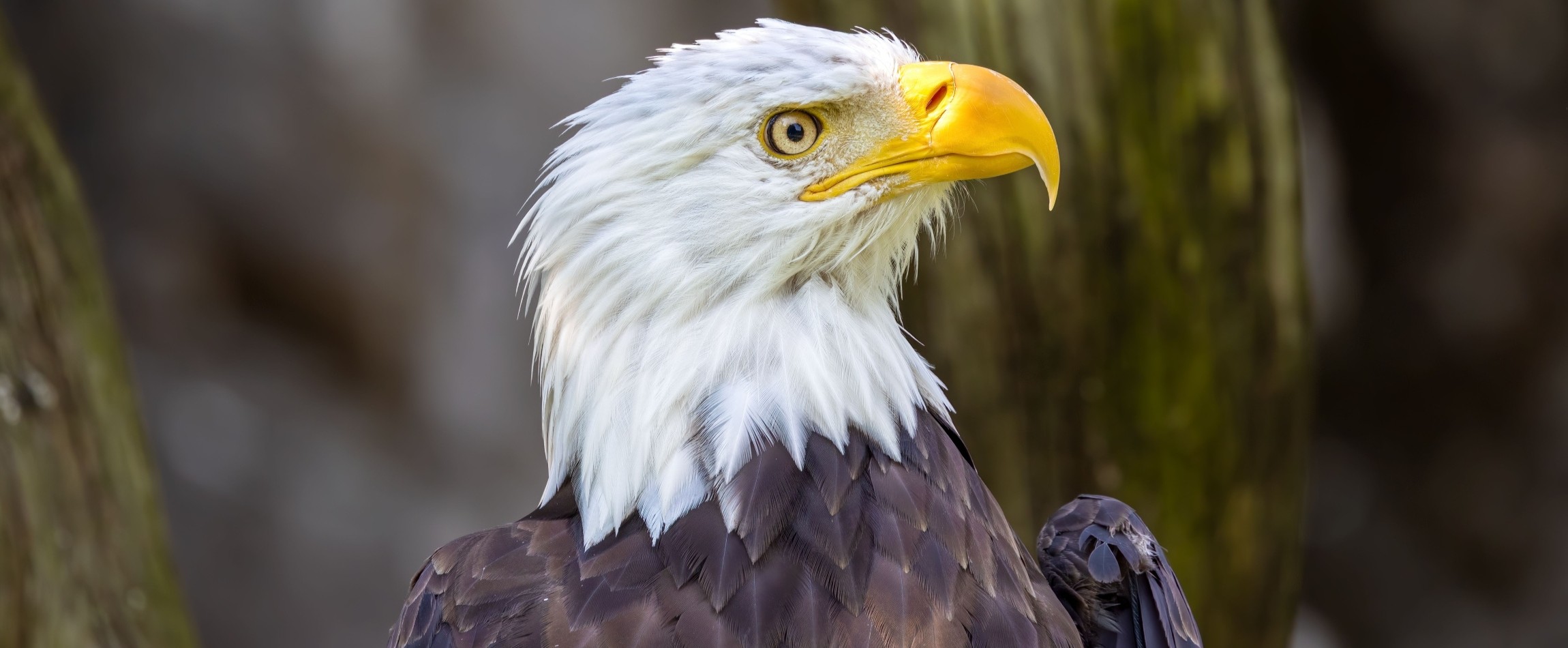
Bald and golden eagles face special risk. Golden eagles migrate along two major routes through North America. Both cross regions with heavy big-game hunting on both sides of the Canada-U.S. border. One route runs through eastern Canada into New York, Vermont, and Maine. The other runs from Alaska through western Canada into Washington and Montana. Along each route, migrating eagles could encounter gut piles from more than 300,000 harvested animals, risking repeated lead exposure on a single journey.
Earlier studies cited in the analysis reinforce these concerns. Across the U.S., 99% of bald eagles and 94% of golden eagles sampled carried detectable lead in their livers. Researchers confirmed lead bullet fragments in the digestive tracts of 14% of bald eagles and 12% of golden eagles tested. In one Canadian study, lead poisoning directly caused 10% of bald eagle deaths examined between 1991 and 2016 in the Maritime provinces.
Black bears face a different kind of exposure. Because they live within hunting regions rather than migrating through them, they can encounter many gut piles over a lifetime. And because of their size, they may be able to eat an entire gut pile at a time. Researchers have already documented this kind of cumulative lead buildup in Canadian black bears.
What The Data Can’t Show
This analysis has real limits. Government harvest data likely undercounts the true number of animals killed. One U.S. study found that hunters fail to retrieve about 20% of the elk they shoot. Canada’s First Nations harvest, which isn’t required to be reported, may also be substantial. The analysis also excludes small mammals like prairie dogs and ground squirrels, who are shot in large numbers with highly fragmenting bullets. Unlike big game, these rodents aren’t field-dressed. Scavengers who eat these whole carcasses are guaranteed to ingest lead fragments.
Some hunters use crossbows or long bows instead of rifles, and animals they kill don’t carry the same fragmentation risk. But most provinces don’t track how many animals are taken this way. So the harvest data may include some animals who pose no lead risk at all.
Perhaps most importantly, the researchers relied on lead-transfer data from a single European study on moose, not direct measurements from Canadian gut piles. They also couldn’t determine how much lead individual scavengers actually absorb.
A Preventable Problem With A Proven Fix
The researchers describe their work as a preliminary look at a much larger problem. But they land on a clear conclusion: only a shift to non-lead ammunition would end this risk permanently. The evidence already exists that this works. When California banned lead ammunition for hunting, exposure among golden eagles and turkey vultures dropped noticeably within just one year. Denmark and the U.K. have also banned lead ammunition for all hunting.
The study’s authors call for a single, national Canadian law requiring non-lead rifle ammunition for all hunting. A patchwork of provincial rules, they argue, is unlikely to protect animals like eagles who cross jurisdictional lines during migration. They also note a parallel benefit for people. Ending lead ammunition use would reduce lead contamination in game meat, particularly meat that’s ground for processing.
For advocates, this research adds another dimension to hunting’s toll on wild animals: the harm doesn’t end with the animal killed. It radiates outward, poisoning eagles, bears, and other scavengers who never encountered a hunter at all.
This summary was drafted by a large language model (LLM) and closely edited by our Research Library Manager for clarity and accuracy. As per our AI policy, Faunalytics only uses LLMs to summarize very long reports (~50+ pages) that are not appropriate to assign to volunteers, studies that contain graphic descriptions of animal cruelty or animal industries, and research on niche topics. We remain committed to bringing you reliable data, which is why any AI-generated work will always be reviewed by a human.
https://doi.org/10.1139/facets-2026-0130

Citations:
Thomas, V. G., & Arnemo, J. M. (2026). Assessing contributions from big-game hunting to lead (Pb) ingestion by Canadian wildlife scavengers. FACETS, 11, 1–11. https://doi.org/10.1139/facets-2026-0130