
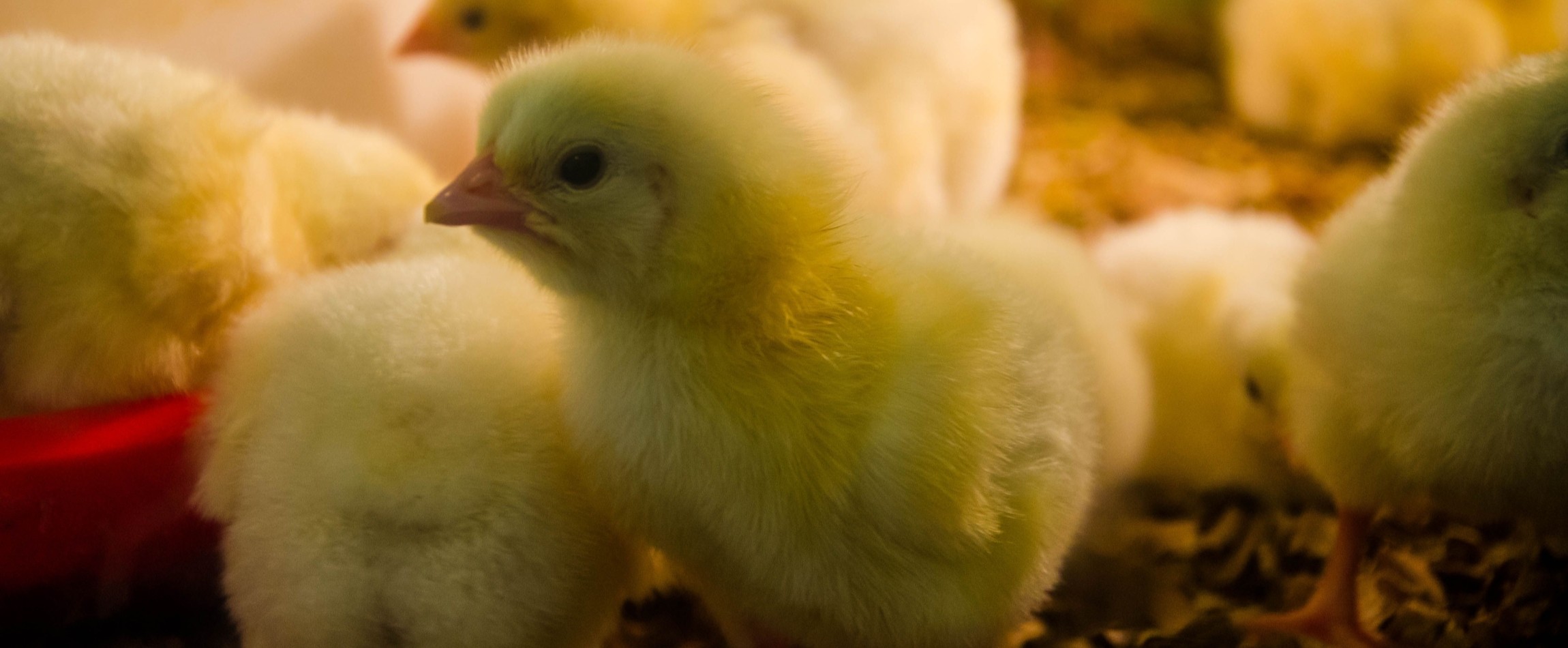
How Smart Camera Technology Can Benefit Chickens And Farmers


The digital revolution in agriculture, also known as smart or precision farming, involves the use of new technology with the potential to boost productivity, reduce costs and environmental impacts, and improve animal welfare. Yet many farmers are reluctant to embrace it. This is often due to the cost of purchasing and maintaining the equipment, concerns about the accuracy and timeliness of the information provided, or uncertainties around the expected return on investment. Smart farming technology also carries data security risks, and may be seen by the public as further reducing human-animal contact on farms and prioritizing efficiency over animal welfare.
Proponents of the technology argue that it will lead to better and more proactive decision-making and therefore improved animal health and reduced mortality. It can offer farmers automated, objective, around-the-clock monitoring that supports rather than replaces their personal assessments. This study focused on smart farming technology in the context of chickens raised for meat, investigating whether it could provide valuable enough information about their health and welfare to convince farmers that it’s worth the investment. The research was funded through a grant co-sponsored by McDonald’s, and the lead researcher is a member of the company’s Chicken Sustainability Advisory Council.
Data Collection
The researchers collected data from two commercial farms, one in the E.U. and one in the U.S., between December 2020 and August 2024. This included:
- A total of 40 flocks across four barns on the E.U. farm, with an average of 23,170 birds per flock; and
- A total of 48 flocks across four barns on the U.S. farm, with an average of 18,800 birds per flock.
Barn conditions on the U.S. farm, such as lighting and enrichment, were much more variable than on the E.U. farm.
There were two sources of data for each location. Farm data included:
- Estimated daily feed and water consumption
- Daily mortality
- Weekly body weights
- Daily indoor relative humidity and temperature ranges (U.S. farm only)
- Rates of leg and foot lesions (E.U. farm only)
OpticFlock, the smart camera system, supplied flock movement data. Cameras were positioned in each barn to capture the birds between feeder or drinker lines and recorded video footage continuously. The footage was broken into a grid of small sections within each frame, and the system measured how much movement occurred in each section — a technique called optical flow. This produced several statistics describing the flock’s overall movement pattern, capturing both how much the birds moved and how that movement varied over time. These readings were calculated continuously, then summarized into 15-minute segments, and finally combined into a single daily value for each measure, based on footage from the birds’ most active hours (8:00 AM to 8:00 PM).
The researchers compared how well each data source predicted flock outcomes alone and in combination, focusing on the first 15 days of the birds’ lives.
Flock Outcomes
Mortality rates, feed conversion ratios (a measure of how efficiently flocks convert feed into body weight), and leg and foot lesion rates were very low and very uniform on the E.U. farm. For the U.S. farm, mortality rates and feed conversion ratios were higher and showed considerable variability.
| E.U. Farm Average | U.S. Farm Average | |
| Mortality (%) | 3.99 (at 42 days of age) | 9.56 (at 52 days of age) |
| Hockburn (%) | 1.63 | — |
| Foot pad dermatitis (%) | 2.63 | — |
| Feed conversion ratio | 1.68 | 1.91 |
Notably, the study didn’t find a link between any of the flock movement measures and feed conversion ratio. Farmers often assume that active flocks are inefficient flocks, and this finding suggests that chicks can be active for at least the first 15 days of their lives without negatively impacting overall feed efficiency.
Farm Versus Camera Data
Despite the very different conditions on the farms, combining the farm data with the smart camera system data led to more accurate predictions for all flock outcomes in both locations (starting from day two).
Water consumption data on days zero and one weren’t reliable at either farm. Sometimes, none was recorded, likely because the water meters couldn’t capture such small levels of consumption. At other times, the numbers were so high they likely reflected practices like flushing the drinker system. This kind of early data unreliability is common across chicken farms. However, OpticFlock was able to fill this gap, providing an assessment of young chick welfare and behavior that was otherwise very difficult to obtain.
The technology also predicted final flock mortality rates based on data from when chicks were up to three days old. Although it can’t determine whether any observed problems are environmental or due to chicks arriving from the hatchery already in poor health, it seems it can provide an early warning system for flocks at risk of developing future welfare issues.
What This Means For Farmers
The study lacked the randomized design and complete data sets of a laboratory setting. For instance, due to some incomplete records, only 34 flocks from the U.S. farm were used (14 fewer than originally planned). However, the real-world commercial farm conditions are arguably more relevant to farmers’ experiences.
It’s also worth noting that OpticFlock assesses welfare at the flock level rather than tracking individual birds. This means it could miss problems affecting a subset of animals within an otherwise healthy-looking flock. However, the researchers argue that this matches how farming decisions are currently made. They suggest that smart camera technology could directly benefit farmers financially in five ways:
- Provide an early assessment of chick health to help farmers choose the best hatcheries as well as raise issues with their hatcheries.
- Enhance the value of existing data collection systems by providing additional, objective information and more accurate early warning of welfare issues.
- Reduce bird mortality and food wastage by improving monitoring and enabling farmers to intervene earlier on.
- Identify and implement best practices as chicken behavior data becomes more standardized and comparable at scale.
- Reassure consumers and food companies that welfare is monitored throughout the birds’ lives, which may increase the value of the meat being sold.
The study concludes that smart farming technology, along with farmers’ own assessments, can contribute significantly to the early detection and prediction of chicken welfare outcomes. Although this technology doesn’t address all animal welfare concerns, it can support farmers to be more proactive in their interventions, with potential benefits for themselves and the birds in their care.
https://doi.org/10.1016/j.atech.2025.101500

Citations:
Dawkins, M. S., Ellwood, S., Roberts, S., Weathers, K. B., & Donnelly, C. A. (2025). The benefits of smart farming: Broiler chicken welfare is indicated earlier and more accurately with automated measurements of flock behaviour. Smart Agricultural Technology, 12, 101500. https://doi.org/10.1016/j.atech.2025.101500
