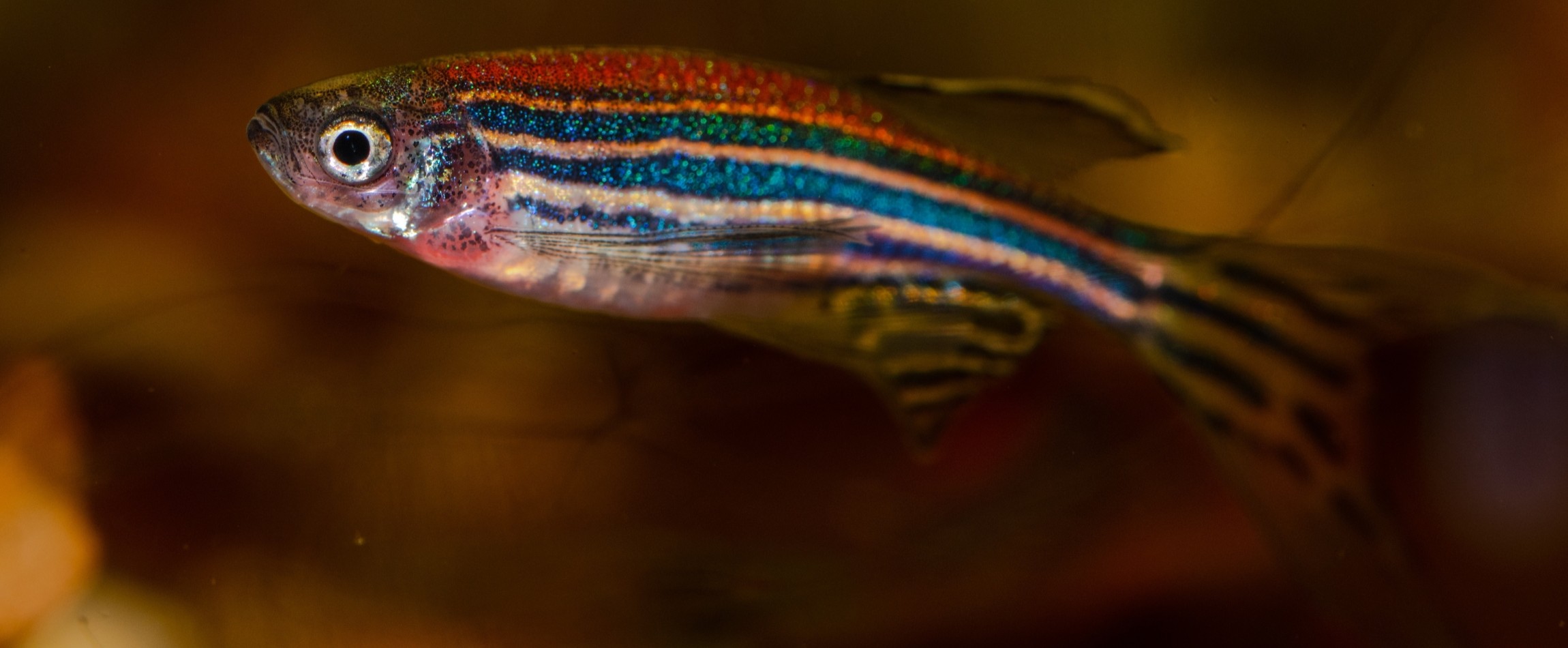
Fishes Are The European Union’s Overlooked Chemical Testing Casualties


The Registration, Evaluation, Authorization, and Restriction of Chemicals (REACH) regulation is the European Union’s main chemical safety law. It requires companies to test chemicals they manufacture or import for health and environmental effects, and the European Chemicals Agency, or ECHA, oversees the process. Most public discussion of REACH’s animal use focuses on mammals. But fishes are tested extensively, too. Along with water fleas and algae, they represent the aquatic food chain that regulators use to judge a chemical’s environmental risk.
Whether fishes can suffer is central to why this matters. Fishes share brain structures with other vertebrates, including pathways involved in pain and empathy. And while evidence for fish sentience is still debated among scientists, REACH’s precautionary approach treats that uncertainty as reason to minimize or replace testing regardless. Thus, this study set out to count how many fishes REACH testing has already used, is currently using, and has approved for future use. It also estimated how a 2022 regulatory change could push that number even higher.
How The Study Counted The Fishes
The research team searched two ECHA databases for reports on four types of toxicity tests that REACH may require. These include:
- Short-term toxicity (what chemical concentration kills 50% of test fishes within 96 hours);
- Long-term toxicity (what impacts a chemical has on a fish’s early survival);
- Bioaccumulation (how much a chemical builds up in a fish’s tissues over time); and
- Endocrine disruption (whether a chemical interferes with a fish’s hormone systems).
The researchers screened out likely duplicates and any non-REACH tests, and then pulled fish counts directly from the test reports.
Long-term toxicity tests needed an extra step. These tests start with fertilized eggs. But European Union law doesn’t classify fishes as protected animals until they can feed independently, which occurs about five days after fertilization for the two species used most often (zebrafishes and fathead minnows). Since reports rarely stated how many fishes reached the legal “animal” stage, the researchers estimated it from each test’s number of initial eggs, hatching rate, and final survival rate.
The Toll So Far
The researchers estimate that REACH testing has used or is using about 266,000 fishes so far, with another 116,000 fishes already approved for tests that haven’t yet been completed. Combined, that’s about 382,000 fishes across 2,220 tests since 2009.
Long-term toxicity tests account for about 74% of that total (281,900 fishes), by far the largest source of fish use. Short-term toxicity tests make up about 66,000 fishes, bioaccumulation tests about 24,000 fishes, and endocrine disruption tests about 10,100 fishes. This last test is requested only when regulators have a specific hormonal concern. Zebrafishes and fathead minnows are used most often in long-term tests; zebrafishes, rainbow trouts, and common carps dominate short-term testing.
One detail is easy to miss: an estimated 7% of the fishes who hatch for long-term tests — roughly 24,000 in total — die before reaching the legal “animal” stage. The researchers exclude them from the official count, even though they note these fishes can still suffer during this period.
A Rule Change Could Push The Numbers Much Higher
None of the totals above include the impact of a 2022 REACH amendment that closed a major loophole. Under REACH, companies must also complete a chemical safety assessment — a paper-based risk review built on existing data and predictions, not new experiments. For years, if that review found no cause for concern, that conclusion alone was treated as grounds to skip the long-term toxicity test. A 2020 legal ruling invalidated that argument, and the 2022 amendment made the change permanent. The long-term toxicity test is now required regardless of what the paper-based review concludes.
The amendment also newly requires long-term testing for some smaller-volume, poorly soluble chemicals that didn’t need it before. Together, these changes could trigger up to 1,240 new long-term toxicity tests, requiring an estimated 520,000 to 680,000 more fishes — potentially more than the entire historical total combined.
The researchers note some uncertainty in their overall estimate. This is especially true for short-term toxicity tests, which don’t require advance approval and are used for many purposes beyond REACH, making them hard to verify with confidence. If anything, they believe this makes their total more likely an underestimate than an overestimate.
What This Means For Advocates
The study’s authors are direct: fishes deserve humane consideration. REACH’s mandate to use animal testing only as a last resort applies to fishes exactly as it does to mammals, but fish testing rarely receives the same level of attention. They urge regulators to quickly incorporate non-animal alternatives into REACH guidance, especially for long-term toxicity testing, which drives most fish use and currently has no validated replacement.
Shortly after this study came out, the European Commission adopted a roadmap committing to phase out animal testing for chemical safety assessments across the European Union, giving advocates a rare moment where advocacy goals and regulatory direction point the same way.
- For short-term toxicity testing, the opportunity is clear. A genuinely non-animal option already exists: computer modeling paired with a lab-grown fish-cell assay that needs no living fishes. It isn’t yet required or incentivized under REACH guidance, so pushing for this is a concrete, immediate ask.
- Bioaccumulation is murkier. Regulators have approved a substitute that uses a small crustacean instead of a fish, shifting the burden to an invertebrate (also not a protected animal under the law) rather than eliminating animal use outright. Because the roadmap’s guidance is clear about “ultimately relying on non-animal approaches only,” continued scrutiny is needed to ensure that progress doesn’t stop at just reducing vertebrate use.
- Long-term toxicity testing, where no such alternatives yet exist, is the clearest priority for research funding and campaigning, especially now that regulators have closed the main legal off-ramp companies used to avoid the test. The finding that many fishes suffer and die before the law even applies to them is also useful evidence for advocates. It could support a push to close welfare gaps in how animals are protected at life’s earliest stages.
This summary was drafted by a large language model (LLM) and closely edited by our Research Library Manager for clarity and accuracy. As per our AI policy, Faunalytics only uses LLMs to summarize very long reports (~50+ pages) that are not appropriate to assign to volunteers, studies that contain graphic descriptions of animal cruelty or animal industries, and research on niche topics. We remain committed to bringing you reliable data, which is why any AI-generated work will always be reviewed by a human.
https://doi.org/10.14573/altex.2506011

Citations:
Knight, J., Rovida, C., Willett, K., & Ingram, J. (2026). Fish count, too – The animal toll of REACH aquatic toxicity tests. ALTEX – Alternatives to Animal Experimentation, 43(1), 142–157. https://doi.org/10.14573/altex.2506011