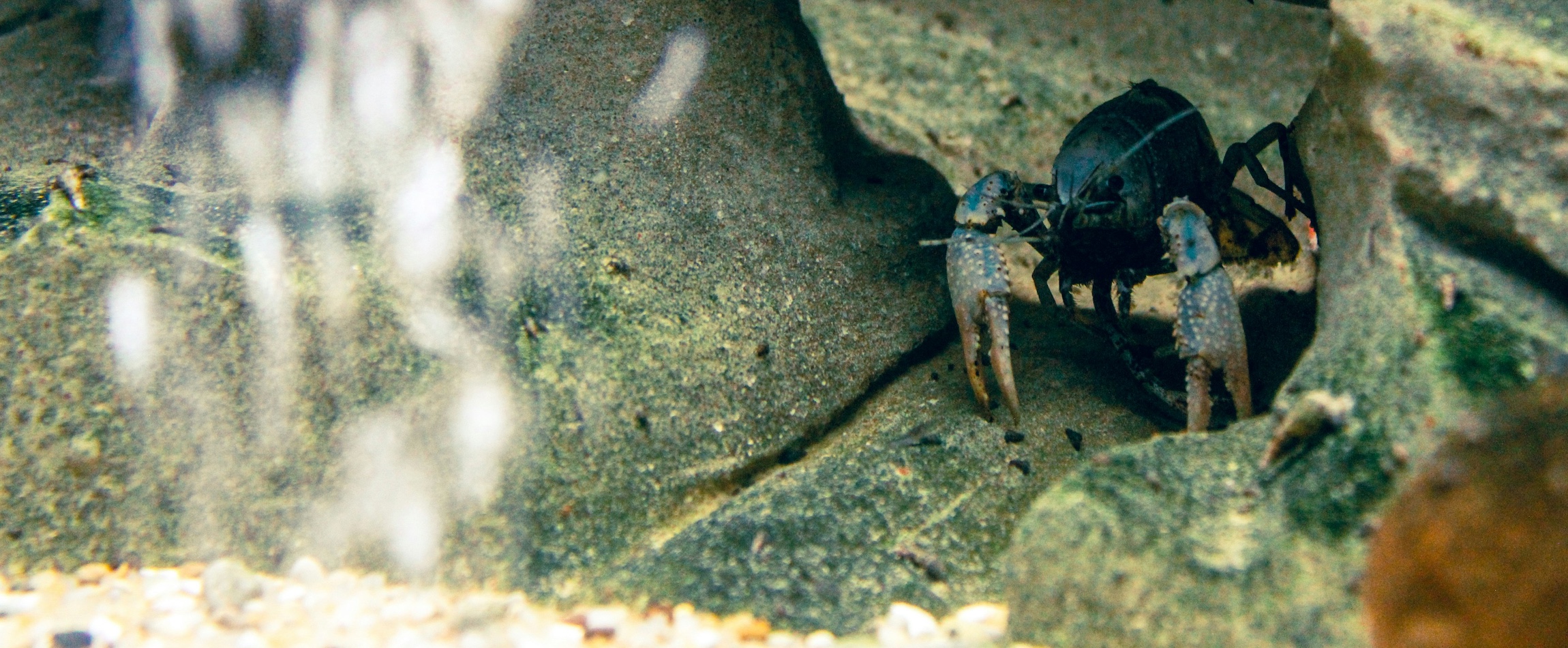
Translocation Alters Behavior In Endangered White-Clawed Crayfish


Translocation, or moving animals to start or boost a population, is a common conservation method with variable success. Success is usually measured by survival and reproduction, which overlooks the welfare of both the moved animals and the ones already living there.
The white-clawed crayfish (Austropotamobius pallipes) is the U.K.’s only native crayfish species, and it is endangered. Translocations are common for this species, but little is known about how they affect welfare. In this study, researchers at the Bristol Zoological Society looked at how releasing captive-born crayfish into a wild population affected both groups.
Methods
The researchers observed crayfish at two sites: a stream in Bishop Sutton, Somerset, with a wild population of mixed sexes and ages, and the Bristol Zoo Gardens hatchery. They tagged and marked 116 wild crayfish. The captive crayfish hatched in 2022 from wild-caught females, and six of the 10 available for the study (three males and three females) survived to be released. Observations began in early July 2024. The captive crayfish were released into the stream on August 12, and observations continued until September 18.
The researchers scored each crayfish’s body condition at the start and end of the study, using 15 categories each scored as perfect (0) or compromised (1).
They also recorded water quality, temperature, weather, lunar phase, and whether predators were present. The behaviors they tracked are listed in the table below.
| Active | Passive/Reactive | Non-interactive |
|---|---|---|
| Threat display | Displaced | Resting |
| Displacing | Jack-knifing | Grooming |
| Attacking | Retreating | Foraging |
| Non-agonistic interactions | Attacked | Movement |
| Refuge |
Do Wild And Captive-Born Crayfish Behave Differently?
Before the release, wild and captive-born crayfish showed no statistically significant differences in behavior, though the small sample makes this far from conclusive.
Captive-born crayfish did tend to come out of their shelters earlier in the evening than wild crayfish, based on limited data. The authors suggest this could be because captive crayfish don’t face predators and are fed during the day, and that coming out early could make them easier prey in the wild.
Does Translocation Of Captive-Born Crayfish Affect Their Welfare?
The released crayfish’s behavior changed somewhat after release, but the researchers could rarely find them to observe, so these data may not be representative. The two released crayfish that were recaptured showed no change in body condition and grew about as much as the wild crayfish, which suggests they adapted to the wild. The study didn’t run long enough to show long-term effects on welfare.
Does Release Of Captive-Born Crayfish Affect Resident Crayfish Welfare?
After the release, aggressive behavior among the resident wild crayfish increased significantly, and they spent significantly more time in their shelters. The authors suggest the newcomers may have disrupted the residents’ social hierarchy, and that the residents may have been retreating from aggressive encounters. Only six crayfish were released in this study; releases often involve more, which could make the effect larger.
The study didn’t track whether the increase in aggression lasted, though research on related species suggests hierarchies settle over time. The seven resident crayfish that were recaptured showed no change in body condition.
What Other Factors Affect Crayfish Behavior?
Sex: Males foraged more and spent less time in shelters than females.
Weather: Crayfish foraged less in light rain and partly cloudy weather.
Social context: When more crayfish were visible, individuals foraged more and spent less time in shelters, which may reflect busier periods or the influence of other crayfish.
Time of day and year: Behavior seemed to vary by time of night and over the season, and the approaching breeding season may have contributed to the rise in aggression.
Temperature, dissolved oxygen, and lunar phase had no significant effect.
Limitations Of The Study
The study was small, and the researchers could not consistently find the released crayfish to observe them. The captive-born crayfish were all a similar age and size, unlike the wild ones, so some differences may reflect age or size rather than where they were raised. The rise in aggression also came as the breeding season approached and after the crayfish had been trapped and tagged, so either could explain some of the change. Still, the study is a useful starting point. The authors suggest that making captive conditions more like the wild may improve welfare and help releases succeed, and they call for long-term monitoring and better ways to measure crayfish welfare.
https://doi.org/10.1017/awf.2026.10080

Citations:
Crowe, I., Heley, O., Dancer, A., Lemos de Figueiredo, R., Cooke, N., Nightingale, J., & Richdon, S. (2026). Welfare considerations during a conservation translocation of white-clawed crayfish (Austropotamobius pallipes): Proof of concept. Animal Welfare, 35, Article e27. https://doi.org/10.1017/awf.2026.10080