
The Moral Weight Project Explained: Part 2


Last week, we discussed how researchers at Rethink Priorities undertook the Moral Weight Project to compare welfare capacity between species, and ultimately guide decision-making around cost-effective interventions to reduce animal suffering. After reviewing 90 traits across 11 species, the researchers produced relative estimates of how much welfare each animal might be capable of compared to humans. The results were eye-opening.
Mammals And Birds: Surprisingly Close To Humans
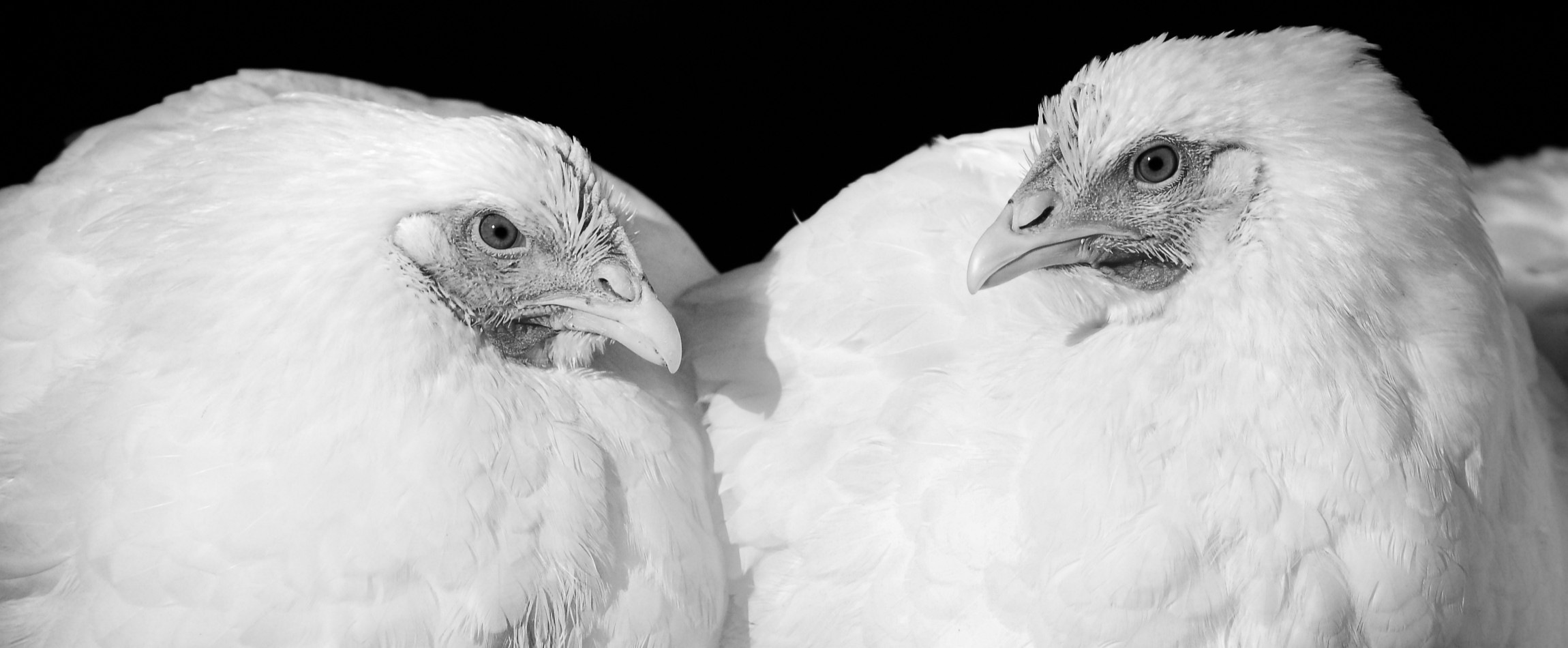
The findings suggest that pigs and chickens may be capable of far more intense experiences than most people assume. Pigs had an estimated welfare range of approximately 52%, while chickens scored around 33%.
It’s important to understand what these numbers do and don’t mean. A welfare range of 33% for chickens doesn’t mean they suffer 33% as much in every situation, or are only 33% as morally important. It means that in the best or worst conditions for their species, a chicken might experience about 33% of the intensity of pain or pleasure that a human could.
Fishes: Modest, But Meaningful
Fishes scored lower than mammals and birds, but still showed non-zero capacity for suffering and well-being. Carps had an estimated welfare range of around 9%. Salmons scored slightly lower, with an estimated welfare range of close to 6%.
These numbers reflect evidence for traits like learning, basic memory, and responses to pain-like stimuli. While they lack many of the higher cognitive traits seen in mammals, the results suggest that fishes are capable of meaningful positive and negative experiences.
Given the immense numbers of fishes who are farmed and caught each year, many without any welfare protections, even these modest estimates point to a large potential for reducing suffering.
Cephalopods And Crustaceans: Complex, But Uncertain
Some invertebrates showed moderate to low welfare range estimates, though their rankings varied widely based on the strength of available evidence. Octopuses had the highest welfare range in this group, with an estimate of about 21%. Crayfishes were estimated at roughly 4%, while shrimps scored slightly lower at 3%. Crabs had the lowest among the crustaceans at around 2%.
These results reflect both biological differences and gaps in the evidence. Octopuses are widely recognized as intelligent and behaviorally complex, which likely explains their relatively high score. Crustaceans, by contrast, showed limited evidence across many welfare-relevant traits, and much of what we know comes from a small number of studies. Still, their scores weren’t zero, suggesting that they may be capable of meaningful experiences, and that their welfare deserves moral consideration, especially given the scale and conditions of their use in food production.
Insects: Low, But Not Nothing
Insects received the lowest welfare range estimates in the study, reflecting both limited evidence and substantial scientific uncertainty. Bees had the highest estimate among insects, with a welfare range of 7%. Black soldier flies scored lower at about 1%, and silkworms had the lowest estimate at just 0.2%.
These results don’t necessarily mean that insects can’t suffer — only that the available evidence is extremely limited. Bees showed some traits related to learning, memory, and sensory processing, which may explain their higher score. In contrast, black soldier flies and silkworms had few confirmed welfare-relevant traits, and most judgments were marked “unknown.” This lack of data likely led to conservative estimates. As research on insect cognition and behavior grows, these estimates may shift. But, for now, they highlight the importance of caution and further investigation.
Moreover, even if further research corroborated these welfare ranges in insects, a low estimate doesn’t mean an animal doesn’t matter. With billions of insects involved in some interventions, even small welfare gains could add up to large impacts.
Patterns Across Models: Rankings Held Up
The researchers used multiple models with different assumptions about which traits matter most. Some focused on cognitive traits, others on pain-related traits, and some excluded social or low-confidence traits altogether.
While the exact numbers varied, the broad ranking of species remained consistent: pigs and chickens ranked near the top, fishes and octopuses in the middle, and insects at the bottom. This suggests that the results aren’t tied to one method, but reflect a robust pattern across reasonable approaches.
However, the researchers also reported uncertainty ranges for each estimate, reflecting gaps in the data and variation across simulations. For example, chickens had an average welfare range of 33%, but estimates ranged from under 1% to 86% depending on the exact approach.
Big Picture: The Gap Is Smaller Than Most Think
The key insight from these findings is that the difference in welfare ranges between humans and many animals may be much smaller than expected. In many public discussions, animals like chickens or fishes are treated as morally negligible, if they’re considered at all. But if chickens are capable of around 30% of a human’s suffering, and if billions of them live in severe conditions, the moral stakes are enormous.
Even for animals with lower welfare ranges, the sheer number of individuals and the intensity of the conditions they face mean that small improvements, especially when applied at scale, could result in large moral gains.
Common Objections And Clarifications
Even people who agree with the general goals of animal advocacy often have doubts about this kind of research. Here are some common questions and concerns, along with how they might be addressed.
“Isn’t this all just guesswork?”
It’s true: we can’t directly measure what it feels like to be a chicken or a crab. But we also can’t directly measure what it feels like to be another human, and yet we still make moral judgments based on behavioral and neurological evidence.
The Moral Weight Project doesn’t pretend to give precise or certain answers. Instead, it aims for transparent, structured reasoning based on the best available data. Every assumption and method is published, so you can see how the conclusions were reached and where you might disagree.
It’s not perfect. But it’s far better than going with gut feelings, cultural bias, or ignoring the question entirely.
“Aren’t humans just obviously more important?”
Most people intuitively rank humans higher than animals. However, human biases may be responsible for much of this thinking. For example, all humans have roughly the same welfare range, yet we still care far more about close friends and family than about distant strangers. Something similar may be happening across species: we may overemphasize familiarity and underweight capacity for experience.
The project doesn’t claim humans and chickens are morally equal. But it does suggest that the difference in moral weight may be much smaller than most people assume. That matters when we’re making trade-offs, especially when billions of animals are involved.
“What about intelligence or language? Don’t those matter more?”
Traits like intelligence, tool use, or language are often cited as reasons to prioritize humans. But from a welfare perspective, what matters is how intensely a being can suffer or flourish, not how smart or articulate they are.
A dog in pain doesn’t suffer less because they can’t solve algebra. And most humans, including babies, many disabled people, and even many healthy adults, can’t solve algebra either, yet we still recognize that their welfare matters just as much as anyone else’s.
Some cognitive traits may correlate with welfare range, but they’re only one part of a much broader picture. The project evaluates nearly 100 traits, many of which have little to do with intelligence per se.
“What if we’re wrong about animal consciousness?”
That’s a real possibility. But uncertainty doesn’t mean we should ignore the issue; it means we should be cautious. If there’s a decent chance that animals can feel deeply, and it’s cheap or easy to help them, then the moral risk of inaction is high. When the stakes are large and uncertainty is high, it often makes sense to act anyway.
“I don’t share the project’s assumptions.”
You don’t have to fully agree with the project’s ethical framework to find its findings useful. The estimates are based on clear assumptions, like hedonism and unitarianism, but these are made explicit so you can adjust or question them. Even if you think some types of welfare matter more than others, or you assign more value to human experiences, the core evidence about animals’ emotional capacities still matters.
In short: the numbers can serve as a structured starting point. If you disagree, you can apply your own values on top.
“So you’re saying a chicken is worth a third of a person?”
Not quite. The project isn’t saying that a chicken is one-third as important as a person. It’s estimating that their most intense experiences may be about a third as strong as a human’s.
That doesn’t mean chickens matter less in every case, or that trade-offs are simple. It just helps us reason more clearly about the moral weight of helping animals. If a chicken’s pain is a third as intense, but you can help 100 chickens for the cost of helping one person, that’s morally significant, even under conservative assumptions.
“Should we stop helping humans altogether, then?”
No. This isn’t about abandoning humans; it’s about including animals in our moral reasoning. Many human-focused causes remain hugely impactful. But if the goal is to reduce suffering as much as possible, then it’s worth asking whether some animal-focused interventions might offer even more moral value per dollar or hour.
In practice, this means animal advocacy deserves more attention and funding, not that human causes are unimportant.
“Aren’t some of these traits kind of a stretch?”
That’s a fair question. Though some of the traits may seem less directly relevant to welfare, they are based on the best available evidence in the literature, and the project doesn’t claim any single trait proves sentience or moral status. Instead, it looks at many traits in combination, using them as indirect clues. The idea is that more evidence across more dimensions gives a stronger picture of a species’ ability to experience rich emotional states.
If some proxies are imperfect, that’s okay. The method is designed to be transparent and adjustable as we learn more.
“Don’t these traits come in degrees?”
Yes, and ideally, we’d measure them that way. In reality, though, the scientific literature often lacks fine-grained data, especially for less-studied species. To avoid bias or overinterpretation, the project used cautious, categorical scoring based on available evidence. This approach isn’t perfect, but it avoids smuggling in assumptions. As research improves, future models may use more nuanced, quantitative data.
“I can’t believe bees beat salmons!”
This result may seem surprising, but rather than adjust the outcome to match expectations, the researchers let the evidence guide the estimates. Bees scored higher on some traits than expected, and salmons also had lots of gaps in the data, suggesting that further research is needed on them. As noted, the estimates were conservative due to this lack of research.
Still, the project acknowledges high uncertainty and doesn’t treat any result as final. What matters is that surprising results prompt further inquiry, not dismissal. If we’re going to care about animals based on evidence, we have to be open to where that evidence leads.
Why It Matters For Advocacy
These estimates aren’t just theoretical. They have direct, sometimes uncomfortable implications for how we spend money, design policy, and choose what causes to work on. If the welfare range estimates are even roughly right, then some of our most neglected, highest-impact opportunities to reduce suffering are in animal welfare.
With welfare range estimates in hand, adopting the additional assumption of utilitarianism (maximizing happiness and minimizing suffering regardless of who experiences it) forces us to take animal welfare seriously. If animals like chickens and pigs can suffer and flourish at intensities not far below humans, then helping them becomes morally urgent. Improving the lives of billions in poor conditions could yield vast moral gains. And even if you don’t accept utilitarianism, the idea that animals with significant capacities for welfare deserve moral concern holds across many ethical views.
Animal Suffering Is Widespread And Fixable
Hundreds of billions of animals are farmed for food globally each year. Most live in conditions that cause prolonged physical and psychological suffering:
- Chickens bred to grow too quickly to support their own weight
- Pigs confined in barren crates, unable to turn around
- Fishes kept in overcrowded tanks, exposed to disease and stress
- Shrimps and crabs processed alive, without stunning
If chickens, pigs, or fishes have welfare ranges even a fraction of humans’, then improving their lives could prevent staggering amounts of suffering. And unlike many human-focused interventions, many animal welfare reforms can be quite cheap ways to reduce suffering:
- Corporate campaigns have convinced hundreds of companies to ban cages or adopt slower-growing breeds.
- Legal advocacy has led entire countries to phase out some of the worst practices, like sow crates or live maceration of chicks.
- Welfare improvements, like enriched environments, more space, and humane stunning, can drastically reduce suffering at scale.
Compared to many human-focused interventions, the costs are low and the numbers are massive. A modest investment can help thousands — sometimes millions — of animals live significantly better lives.
Rethinking Priorities Under Uncertainty
Some people hesitate to act on this kind of research because it feels speculative. After all, we can’t ask a chicken how much they’re suffering, and we don’t know for sure whether insects are conscious. But uncertainty isn’t a reason to ignore the problem; it’s a reason to take it more seriously. If there’s even a reasonable chance that animals like chickens or shrimps experience intense suffering, and if we can help them easily and at scale, the moral risk of doing nothing becomes hard to justify.
Uncertainty is also a strong reason to invest in further research. When the stakes are this high, improving our understanding of animal welfare could be one of the most impactful steps we can take. Even if you’re skeptical that some animals have substantial welfare ranges, research can help clarify whether those concerns are justified. If future evidence shows their capacity for welfare is minimal or even non-existent, that would be a strong reason to shift resources toward more promising causes. Either way, better data helps us make better decisions.
Final Takeaways
The Moral Weight Project doesn’t give us the final answer on how to value animals. But it does something just as important: it gives us a serious, systematic starting point.
Across hundreds of pages of analysis, the researchers reviewed 90 traits across 11 species, built transparent welfare estimates, and tested their assumptions with multiple methods. The results suggest that many animals may have far more moral importance than we typically assume.
The numbers are uncertain. The science is still evolving. But one message comes through clearly: if even a fraction of this is right, the moral stakes of animal suffering are enormous. This matters because:
- Animal farming affects billions of beings each year.
- Many interventions are extremely cost-effective.
- Wild animal suffering from disease, starvation, and predation may affect even larger numbers.
- If animals’ suffering counts for even a fraction as much as humans’, the case for prioritizing their welfare becomes hard to ignore.
You don’t need to be certain that chickens suffer like humans do. You just need to believe that they can suffer somewhat and that we can help them a lot.
For people working in animal advocacy, global priorities research, or moral philosophy, the Moral Weight Project offers a new foundation. For everyone else, it’s a reminder that our circle of moral concern may still be far too small.

