
The Moral Weight Project Explained: Part 1


Imagine you’re deciding where to donate $1,000. One option is to help prevent blindness in humans. Another is to support campaigns that reduce suffering for chickens in factory farms. How should you choose?
At first glance, it might seem obvious; humans are smarter, more complex, closer to us. But if chickens can suffer in ways that are even somewhat comparable to humans, and if far more chickens can be helped per dollar spent, then the answer may not be so clear.
This kind of decision comes up constantly when trying to maximize your impact with limited resources. Whether you’re an individual donor, a policymaker, or a campaigner, you may face the following questions: How much does it matter morally to improve the life of a non-human animal, and how does that compare to helping a human being?
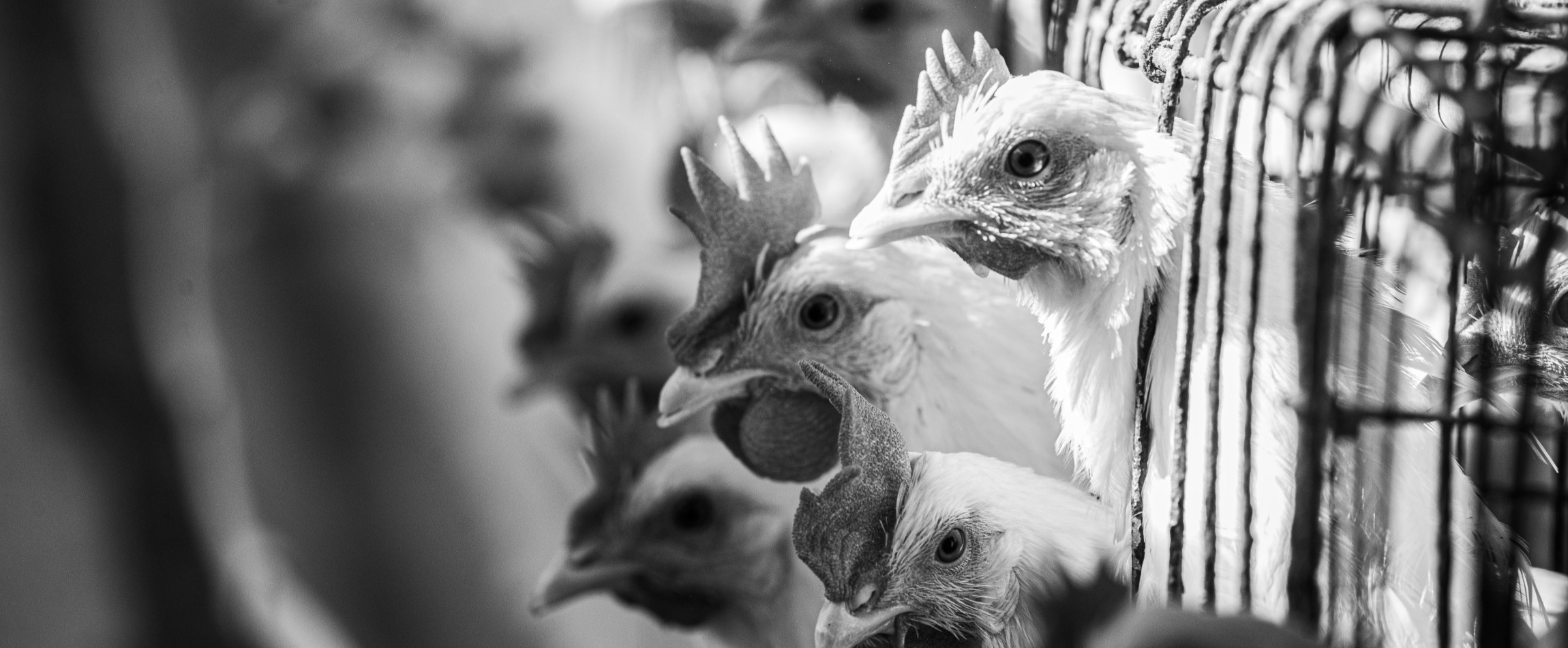
These questions have practical consequences. Every year, billions of animals are farmed for food, often in cramped, painful conditions. Many charities aim to improve these animals’ lives by changing housing systems, feed, or slaughter practices. But how should we weigh those improvements against the value of improving human lives?
Until recently, there wasn’t a clear way to do that. Some people argued that humans just matter more because we’re more intelligent, or more “advanced.” Others felt intuitively that animals do matter, but weren’t sure how much, or which ones.
Whenever we decide how to allocate resources across species — whether to invest in broiler chicken reforms, shrimp welfare improvements, or interventions for humans — we’re making trade-offs. Often, these are made implicitly based on habits, heuristics (mental shortcuts), or what feels most salient or shocking. But the absence of explicit comparison doesn’t mean comparison isn’t happening. It just means it’s happening unexamined and without transparency.
The Moral Weight Project’s Approach
The Moral Weight Project, led by researchers at Rethink Priorities, set out to address this gap. The researchers started with the idea of taking seriously the suffering and joy of all sentient beings. This means that what matters isn’t who is having the experience; what matters is how good or bad the experience is. From here, they asked the question: How much suffering or joy can different animals experience, compared to a human?
That core idea leads to a concept called welfare range. The more intense a being’s possible experiences — good or bad — the more they have at stake, morally speaking. If one species can only feel mild discomfort while another can experience agony, then reducing suffering matters more for the second species.
The team spent over a year reviewing scientific evidence on 11 commonly farmed species, including chickens, pigs, fishes, mollusks, crustaceans, and insects, plus humans as a reference point. They evaluated around 90 different traits related to learning, memory, pain perception, and emotion. Their goal was to estimate each species’ welfare range: how wide the gap is between the best and worst they can feel.
Early Findings: Closer Than We Thought
Their findings surprised many, including the researchers themselves. Chickens and pigs, animals often dismissed as simple or less conscious, came out with welfare ranges much closer to humans than expected. Some fishes and invertebrates also showed wider ranges than assumed.
These results don’t claim that all animals are equal. But they do suggest that many animals matter far more than public opinion or current policies reflect. In fact, for some high-impact interventions, like eliminating the most extreme forms of factory farming, helping animals may be among the most effective things we can do to alleviate suffering.
This explainer walks through the main ideas, findings, and implications of the Moral Weight Project.
Understanding Welfare
When we talk about doing good, whether by reducing suffering or increasing happiness, a natural starting point is to think in terms of pain and pleasure and how they matter. It seems intuitive that pain is bad no matter who feels it, and that pleasure is good regardless of who experiences it. For example, if a stubbed toe is equally as painful to two different people, then it matters just as much in either case. The pain matters because of how it feels, not because of who feels it. The idea behind this is that what matters isn’t who is suffering, but how much they are suffering.
The Moral Weight Project extends this intuitive idea to non-human animals. Instead of pain and pleasure, it uses a more general term, welfare, to capture both the good and bad parts of conscious experience. Welfare includes all the ways a life can go subjectively well or badly for the individual: pleasure and pain, comfort and distress, suffering and joy.
This allows us to formulate one of the core ethical assumptions behind the project: one unit of welfare counts the same, no matter the species.
So, one unit of pain at a given intensity, or one unit of pleasure at a given intensity, should count the same regardless of who is experiencing it. Of course, this doesn’t mean a chicken and a human feel exactly the same in every situation. But it does mean that if their experiences, specifically their pains or pleasures, are equally intense, they should count the same in our moral reasoning.
Naturally, a common objection arises: doesn’t this assume that a chicken and a human can actually have equally intense experiences? Isn’t human pleasure or pain just deeper or more intense? And that’s exactly the question the Moral Weight Project set out to investigate: How much pain and pleasure are different species capable of?
Welfare Ranges
To answer the above question, Rethink Priorities’ approach was to consider the best and worst possible experiences that a being can have. The difference between these two extremes of experience is called their welfare range.
Imagine two animals: one who can only experience mild discomfort or satisfaction, and another who can feel deep pain or pleasure. Even if both are mistreated in the same environment, the second animal likely suffers more because they have a broader range of experiences available. That means changes to their environment, whether harmful or beneficial, have a bigger moral impact.
To explain this idea, researcher Bob Fischer uses a helpful metaphor: think of each being as having a “welfare bucket.” A being with a small bucket can only feel a limited amount of pleasure or pain, while a being with a large bucket can experience more intense pleasure or pain.
This means that changes to the life of a being with a large welfare bucket can have a bigger moral impact. Improving their life can do more good because there’s more room to improve.
Additionally, while a being’s welfare range refers to how good or bad their life can be at a given moment in time, we can also consider how long a being typically lives. We can multiply their welfare range by their average lifespan to get their capacity for welfare: this tells us how much welfare a being could experience across their whole life.
However, since lifespans are relatively easy to estimate and many decisions focus on fixed time periods, most of the researchers’ analysis focused on welfare range, and so this explainer will also focus on welfare range. We can then frame the overarching question as: What is each species’ welfare range?
Estimating Welfare Ranges
Welfare range is difficult to measure directly; we can’t put animals on a scale and weigh their suffering. So the researchers looked for evidence from biology, neuroscience, and behavior. They examined 90 traits relevant to feeling and cognition, grouped into categories like:
- Nociception (ability to detect harmful stimuli)
- Learning and memory
- Emotional responsiveness
- Cognitive sophistication
- Social complexity
The more of these traits a species exhibits, the more likely it is to have a large welfare range. By developing estimates for each species’ welfare range, we can start to compare how much different animals might be affected by changes in their conditions, and thereby make more informed decisions about where to focus our efforts to reduce suffering and improve lives.
How The Estimates Were Made
Measuring how much a being can suffer or feel joy isn’t something we can do with a scan or a questionnaire. Chickens can’t rate their pain on a scale of one to 10. Crayfishes won’t tell us if their lives are worth living. So how do you estimate something as elusive as an animal’s welfare range?
The researchers tackled this challenge with a mix of philosophy, biology, and structured guesswork. Their approach wasn’t perfect (and they’re clear about that), but it’s more systematic than anything that came before.
They began by laying out core ethical assumptions about how to compare welfare across species. After picking 11 key species, they reviewed scientific evidence on 90 traits linked to cognition, emotion, and pain perception. Based on this, they scored each species on those traits and used computer simulations to estimate how wide their welfare range might be.
We take a closer look at each step below.
Step 1: Choose A Framework
The team assumed a few foundational principles to make the project manageable and allow them to compare welfare across species.
First, the team had to decide what exactly they meant by “welfare.” They focused on hedonic welfare: the idea that what matters morally is how good or bad a being’s experiences feel to them. This includes pleasure, pain, stress, relief, contentment, and suffering. This assumption is known as hedonism.
Second, they assumed that one unit of welfare counts the same across all individuals, regardless of species. Crucially, this refers to standardized units of welfare: if two experiences are equally intense, they matter equally. This assumption is known as unitarianism.
Third, they assumed that positive and negative experiences of equal intensity have a symmetrical impact on welfare. This means that an intense pleasure contributes to an individual’s welfare in the positive direction just as much as an equally intense pain subtracts from it in the negative direction. This assumption is known as valence symmetry.
Additionally, in order to use the welfare ranges to compare interventions, the team assumed utilitarianism (the ethical view that we ought to maximize overall welfare), but it isn’t necessary for estimating the welfare ranges themselves.
Step 2: Select Species To Compare
The team picked 11 species that are commonly farmed or studied, spanning mammals, birds, fishes, mollusks, crustaceans, and insects. These included:
- Humans (as the reference point)
- Pigs and chickens (common land-farmed animals)
- Carps and salmons (aquatic vertebrates)
- Octopuses, crayfishes, crabs, and shrimps (mollusks and crustaceans)
- Bees, silkworms, and black soldier flies (insects)
Step 3: Identify Welfare-Relevant Traits
The researchers compiled a list of 90 traits that could indicate a species’ ability to have rich or intense experiences based on the available literature and current scientific understanding. These included:
- Brain complexity
- Evidence of learning or memory
- Signs of emotional states
- Problem-solving abilities
- Social learning and play
- Neurological structures associated with pain perception
The idea wasn’t that any one trait indicates the intensity of experience, but that the more of these traits a species has, the more likely that it can experience a wider range of welfare.
Step 4: Score Each Species Across Traits
For each trait, the researchers reviewed existing scientific studies to see whether there was strong, weak, or no evidence that the species had it. For example:
- Do octopuses demonstrate problem-solving? Yes.
- Do silkworms show signs of emotional responsiveness? Probably not.
- Do pigs exhibit long-term memory? Yes.
They were cautious in scoring: if the evidence was unclear or missing, that trait was marked as “unknown” and assumed to be absent in the species. This means the estimates are generally conservative, and favored more well-studied species.
Step 5: Convert Trait Profiles Into Welfare Range Estimates
Once each species had been scored across the 90 traits, the researchers ran computer simulations using various models to estimate the likelihood of each species having those traits. This allowed them to estimate how wide their welfare ranges might be (that is, how good or bad their experiences could be) compared to a human’s. Humans were used as the reference species with all 90 traits, establishing a baseline welfare range set at 100%, and all other species were compared to that standard.
Rather than relying on just one model, the researchers used several different models, including ones that gave extra weight to especially important traits or ones that focused on different aspects of welfare. They then combined the results into a final mixture model, which helped ensure that the welfare range estimates reflected a broad set of reasonable assumptions rather than just one way of looking at the data.
In short:
- They made clear assumptions (hedonism, unitarianism, and valence symmetry) to guide the analysis.
- They reviewed a wide range of scientific evidence across species, covering 90 traits linked to feeling and cognition.
- They scored each species based on how likely they were to possess those traits.
- They used computer simulations to generate estimates of each species’ welfare range.
Next week, we’ll look more closely at the key findings of the research. Stay tuned!

