
Raven See, Raven Feel: Emotional Contagion In Birds


Emotional contagion – the matching of emotional states between individuals – is a powerful mechanism for information sharing among animals. It’s linked to increased safety against predation and enhanced group living. Furthermore, emotional contagion is a critical prerequisite for experiencing empathy.
However, despite being observed in several species, the phenomenon remains very difficult to measure in non-human animals. This mainly boils down to the fact that, while human emotions often go hand in hand with our subjective feelings that we generously vocalize, they are currently considered nearly impossible to measure directly in other animals.
When looking at human and other animal psychology, studies have found that anxious people make pessimistic judgments, while those in a positive mood make optimistic judgments. Analogously, rats living in unpredictable housing show a pessimistic bias, while pigs kept in enriched environments demonstrate an optimistic approach to new stimuli.
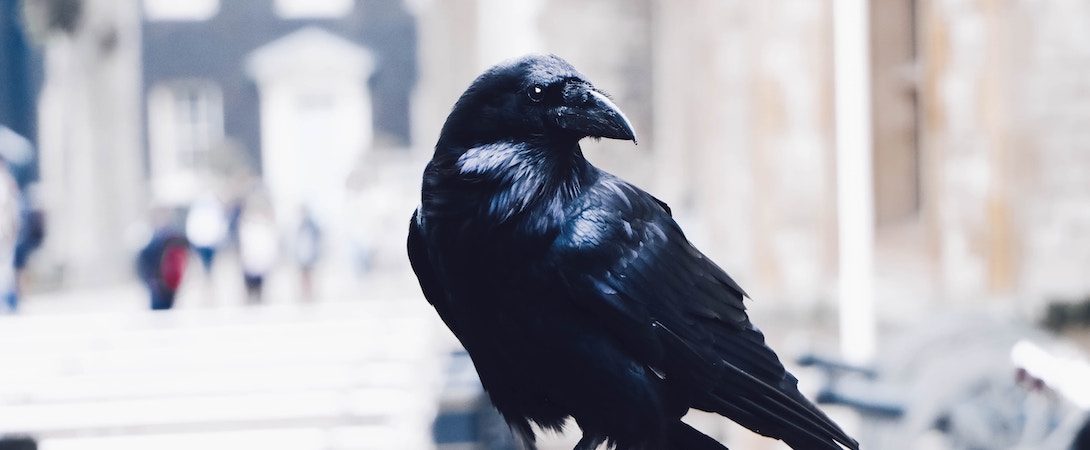
In this study, a group of researchers to attempt to find out if ravens exhibit emotional contagion. The researchers led some ravens to positive and negative affective states via experiments with different foods. Meanwhile, these demonstrator birds were observed by other ravens, not aware of the food experiment. By monitoring the subsequent behavior of the observers, the researchers were able to check if they show signs of emotional contagion.
Upon watching other ravens experience negative emotional states, the observers displayed a pessimism bias similar to that when expecting punishment or no reward. This clearly demonstrates that subjects do not have to be involved in a social interaction themselves – merely witnessing another’s response to a negative situation is enough evoke a corresponding effect. These findings suggest that negative emotional contagion is indeed present in ravens and should add to the knowledge base of understanding the evolution of empathy. The study further confirms previous indications that this fundamental component of empathy is present in birds, too, suggesting that similar socioecological challenges may have led to independent selection for emotional contagion in avian and mammalian species.
Interestingly, a positive contagion was not documented – the observers did not become optimistic after seeing their peers succeed. The researchers suggest that this could be explained by the fact that negative emotions may be easier to induce experimentally. Moreover, it seems that most animals, humans included, attend more to negative than positive information in their environment. Another possible confounding factor might be that upon seeing demonstrators in a positive state, the observers might have experienced negativity due to not being able to access the reward themselves.
The scientists highlight, though, that the current state of research in avian emotions is still in its early developmental stages. The implications of this new knowledge might be gruesome – imagine chickens, another species of highly social birds, exhibiting empathy and experiencing corresponding negative emotional states upon seeing their cohabitants being confined, hurt, or killed. These data come from captive animal experiments, which no animal advocate, nor Faunalytics, would support. However, animal advocates can still use such resources to back up their plight to reduce the damage inherent in farms raising birds on a mass scale.
https://www.pnas.org/content/116/23/11547.short

Citations:
Adriaense, J.E., Martin, J.S., Schiestl, M., Lamm, C. and Bugnyar, T. (2019). Negative emotional contagion and cognitive bias in common ravens (Corvus corax). Proceedings of the National Academy of Sciences, 116(23), pp.11547-11552.
