
Low Interest Or Low Awareness? What Japan’s Cage-Free Egg Data Show


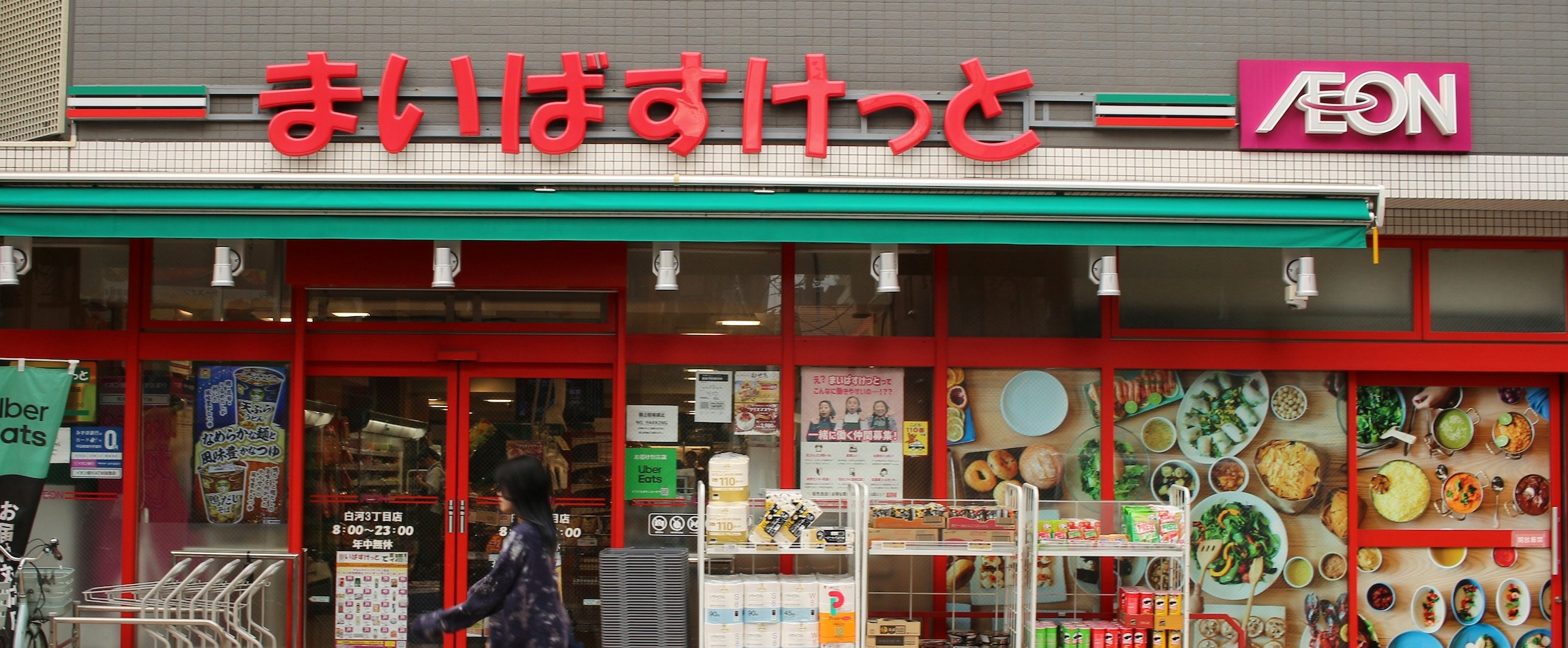
When you visit a supermarket in Japan, it’s not easy to find foods produced with consideration for animal welfare, at least compared with some countries in Europe and North America. Cage-free eggs, for example, are sold at some supermarkets and organic grocery stores, but in many stores they occupy only a very small portion of the shelf space. Even when they are available, stores often stock them only in small quantities in less prominent parts of the store. It’s also not uncommon to find stores that don’t sell cage-free eggs at all.
Consumer surveys likewise suggest that interest in animal welfare and the purchase rate of related products aren’t particularly high in Japan. However, it may be premature to conclude from these facts that Japanese consumers are uninterested in animal welfare.
In a survey I conducted in 2026 among 2,210 Japanese adults, 16.3% responded that they were “not interested” in cage-free eggs. By contrast, 31.3% responded that they “did not know / could not identify” them. In other words, there were almost twice as many people who said they didn’t know about cage-free eggs or couldn’t tell them apart as people who said they weren’t interested in them.
This result points to two possible explanations: Japanese consumers may have considered animal welfare and concluded that it’s not important when choosing food; or, many may not yet have had the chance to recognize animal welfare as something worth considering when choosing food, and to form their own views on it.
I believe the second possibility deserves much closer examination.
Interest In Animal Welfare Is Relatively Low In Japan
First, awareness of ethical consumption in general remains relatively low in Japan. Japan’s Consumer Affairs Agency surveyed 5,000 men and women aged 15 and over nationwide in October 2025. Of those surveyed, 27.1% said either that they “know both the term and what it means” or that they “know the term but do not know what it means.” Awareness has risen since 2016, when 6% of people aged 15 to 65 knew the term “ethical consumption” (that survey measured awareness differently), but since the first half of the 2020s it has plateaued between 27-29%.
Also telling are the reasons people give for not engaging in ethical consumption. The most common stated reason, at 24.9%, was “I do not know which products or services contribute to ethical consumption,” exceeding the 20.9% who responded that they “cannot afford it financially,” but less than the 40.5% who gave no particular reason. Before we even reach the value judgment that consumers don’t want to choose ethical products, there’s already the problem that they “do not know what to choose.”
That said, interest in animal welfare specifically is also lower than for most other social issues. In the Consumer Affairs Agency survey mentioned above, people were asked how interested they were in various social issues. The shares who said they were “very interested” or “somewhat interested” were 70.2% for climate change, 64.2% for environmental issues other than climate change, 57.7% for regional revitalization and support for disaster-affected areas, 51.5% for support for people with disabilities, 48.3% for support for traditional culture and the arts, and 47.7% for human rights issues other than gender equality.
By contrast, the figure for animal welfare was 40.7%. Only two of the nine issues scored lower: gender equality (36.0%) and support for developing countries (35.4%). Thus, interest in animal welfare isn’t completely absent. Nevertheless, compared with other ethical and social issues in Japanese society, animal welfare appears to be regarded as a relatively low-priority issue.
The question then is how this relatively low level of interest should be interpreted.
For Cage-Free Eggs, More “I Don’t Know” Than “I’m Not Interested”
Let us now return to my March 2026 online survey of 2,210 consumers in Japan. The respondents were aged 20 to 69 and answered on March 5, 2026, through Macromill’s online survey tool. When asked how often they purchased organic foods, cage-free eggs, Fairtrade foods, and plant-based foods (the survey defined the last three), the proportions who said they purchased them “at least once a week” were 5.2%, 5.7%, 3.1%, and 6.0%, respectively.
Source: “Can We Have Food Without Friction? — Differences Between Liberals and Conservatives Over the ‘Politicization of Food’ and Ethical Eating” (Masatsu Naki Shoku wa Kanō ka? — “Shoku no Seijika” to Rinriteki na Shoku wo Meguru Riberaru to Hoshu no Chigai), March 23, 2026.
None of these figures is particularly high. What stood out for cage-free eggs was the 31.3% of respondents who said they “did not know / could not identify” them. By comparison, the figure was 12.6% for organic foods and 15.3% for plant-based foods. For those two products, more respondents said they weren’t interested (21.3% and 18.6%, respectively) than said they didn’t know. Fairtrade foods were also relatively high at 28.8%, but cage-free eggs had the highest figure of the four categories.
The same problem emerged when respondents were asked what they considered important when choosing food. The proportions who said each value was “very important” or “somewhat important” were 52.2% for domestic origin (produced in Japan), 31.9% for environmental impact, and 22.4% for tradition and culture. Only 13.1% said the same of animal welfare. A straightforward interpretation would be that Japanese people do not place much importance on animal welfare.
Source: Created based on Takuya Akiyama, “Can We Have Food Without Friction? — Differences Between Liberals and Conservatives Over the ‘Politicization of Food’ and Ethical Eating” (Masatsu Naki Shoku wa Kanō ka? — “Shoku no Seijika” to Rinriteki na Shoku o Meguru Riberaru to Hoshu no Chigai), March 23, 2026.
Some respondents did clearly rate animal welfare as unimportant: 29.7% rated animal welfare unimportant (13.9% “somewhat unimportant” plus 15.8% “hardly important”), more than twice the 13.1% who rated it important. Another 37.0% chose “neither / cannot say.” The 13.1% also sits well below the 40.7% who said they were interested in animal welfare as a social issue, though the two surveys asked different questions. But here again, 20.2% of respondents answered “don’t know” with regard to animal welfare. The figure of 20.2% is overwhelmingly higher than the corresponding figures for the other values, and those respondents should not be placed in the same category as people who judged animal welfare to be unimportant.
“Not important” and “don’t know” are different attitudes. The former suggests that respondents may at least have recognized the issue and then evaluated it. The latter suggests that they may lack the knowledge or experience necessary to form an evaluation in the first place. Therefore, if low purchase rates are treated as evidence of low interest in animal welfare, we risk overlooking an important part of the situation in Japan.
Even Visitors To Direct-Sales Stores That Sell Cage-Free Eggs May Not Know About Animal Welfare
Another Japanese survey is relevant to this hypothesis. Miki Ueki, Professor Emerita at Nippon Veterinary and Life Science University, is an expert on animal welfare. A 2024 book that Ueki co-authored with two colleagues reports the results of a 2022 survey of visitors to a direct-sales store that sold cage-free eggs. The survey respondents weren’t randomly selected members of the general public; they were people who had actually visited a store that sold cage-free eggs.
When asked, “Do you know the term ‘animal welfare’?”, only 7.8% said “I know it,” 24.3% said “I have heard of it,” and 68.0% said “I do not know it.” Even among visitors to a store that sold cage-free eggs, approximately two-thirds didn’t know the term “animal welfare.”
Ueki points out that these results may suggest a gap. People in Japan may have heard of husbandry methods such as “hiragai” (barn or cage-free housing) and “hōboku” (pasture grazing), but they may not connect these practices with the concept of animal welfare.
This doesn’t mean that production methods related to animal welfare are completely unknown in Japan. In my observation, many cage-free eggs in Japan carry the label “hiragai” or “hanashigai” (free-range rearing, which has almost the same meaning as “hōboku”). Both terms refer to forms of non-cage housing, and consumers may encounter them on egg packaging or restaurant menus.
However, based on my own observations of restaurants and retail stores, sellers don’t necessarily present these terms as “husbandry methods that improve the welfare of chickens.” I often have the impression that sellers use them to emphasize product values such as “the producer’s dedication,” “high quality,” “naturalness,” and “deliciousness.”
That rests on my own observation, not a systematic survey of stores, so caution is needed in generalizing from it. Nevertheless, when considered together with the direct-sales-store survey mentioned above, an interesting hypothesis emerges. In Japan, there may be a gap between knowing about cage-free production methods and connecting them with the ethical idea that “animal welfare should be taken into consideration when choosing food.”
In this sense, buying cage-free eggs can carry different meanings. Someone may buy them because “this is a product that takes animals into consideration,” because “it looks delicious,” or because “the producer is particular about how it is made.” In Japan, even when products related to animal welfare exist, sellers may not communicate their ethical significance clearly enough to consumers.
Availability Limits What Consumers Can Choose
Product availability also matters.
In 2023, I was working at Mitsubishi UFJ Research and Consulting, a Japanese consulting firm. There I surveyed consumers in Japan, the U.S., the U.K., and Australia about foods produced with consideration for animal welfare and human rights. The online survey ran from February 9 to 21, 2023, with 554 respondents in Japan, 588 in the U.S., 551 in the U.K., and 559 in Australia.
In Japan, 5.8% of respondents had experience purchasing eggs or meat produced with consideration for animal welfare. By comparison, the figures were 35.2% in the U.S., 60.4% in the U.K., and 65.3% in Australia, showing a very large gap between Japan and the other countries. That question asked whether respondents had ever bought eggs or meat produced with consideration for animal welfare, which isn’t the same as the 2026 question on how often people buy cage-free eggs. A Consumer Affairs Agency survey in October 2025 also found that 5.0% of 5,000 respondents bought or used products that consider animal welfare.
These findings could be interpreted to mean that Japanese people don’t buy higher-welfare foods because their interest is low. However, when respondents who had not bought such products and didn’t plan to were asked why (up to three answers were allowed), the most common answer in Japan was “There are no stores nearby where I can buy them,” cited by 36.8% of respondents, ahead of “the price is high” at 31.5%. In the other countries, that answer came from 25.1% of such respondents in the U.S., 14.7% in the U.K., and 15.0% in Australia. This is a problem that can’t be explained solely by consumer values.
I have been continuously observing egg sections in supermarkets in Japan, and there are major differences in how easy it is to obtain cage-free eggs. In major Japanese cities such as Tokyo, Yokohama, and Osaka, I can find cage-free eggs in organic grocery stores and supermarkets that sell relatively high-priced products. However, at ordinary supermarkets, they may be sold only in a very small, inconspicuous part of the egg section, or they may not be carried at all. In rural areas, they appear even harder to find. Recent market data support this observation: as Maho Uehara-Cavalier reports in a recent Faunalytics article, cage-free eggs account for only 1.12% of egg sales value nationwide, with substantial regional differences in availability.
Whether stores stock cage-free eggs and whether shoppers want them looks like a “chicken-and-egg” problem. From the retailer’s point of view, perhaps they do not stock cage-free eggs because consumers do not want them. But from the consumer’s point of view, because the products aren’t stocked, consumers have no opportunity to learn about cage-free eggs or to try them. There may therefore be a vicious cycle in which insufficient demand limits supply, insufficient supply limits consumers’ opportunities to become aware of and purchase these products, and demand consequently fails to develop.
Four Reasons Animal Welfare Is Not Yet A “Value In Food Choice”
Taken together, the findings discussed so far suggest that there’s no single reason why animal welfare hasn’t become a basis for food choice in Japan. Four different reasons seem to matter.
The first is availability. If there are few stores where consumers can routinely purchase higher-welfare products, they can’t choose those products in the first place.
The second is visibility and identifiability. Japan doesn’t have a nationwide, unified animal welfare certification scheme that is widely recognized by general consumers. Schemes do exist, but certified farms are almost all in Hokkaido and Yamanashi Prefecture. Even if a product exists, consumers may not be able to easily identify it as a product that meets animal welfare standards. In my survey, 31.3% of respondents answered that they “did not know / could not identify” cage-free eggs, which is consistent with this problem.
The third is the question of what values consumers associate production methods with when they understand them. This differs somewhat from simple awareness. Consumers may know the term “hiragai,” or cage-free housing. Animal welfare still won’t become a criterion for choosing food unless they connect that term with an understanding that “this is a housing environment in which chickens can perform natural behaviors such as flapping their wings, walking, and using perches.” They must also connect it with the ethical value of “taking animals’ quality of life into consideration when choosing food.”
In Japan, cage-free production may be associated with values such as “deliciousness,” “quality,” “naturalness,” and “the producer’s dedication,” while not necessarily being associated with the meaning of being “for the animals.”
The fourth is price, which respondents in the 2023 survey who had not bought and didn’t plan to buy named almost as often as availability (31.5% against 36.8%). In the 2023 four-country comparison, slightly over 40% of Japanese respondents said they would accept a price increase associated with meeting animal welfare standards (for eggs, 27.3% of all Japanese respondents accepted only an increase of up to 5%; see the report), compared with more than 60% in the U.S., the U.K., and Australia. Moreover, cage-free eggs and other higher-welfare farmed animal products actually sold in Japan can have a substantial price premium compared with conventional farmed animal products. In May 2023, for example, one major supermarket’s private-brand floor-raised eggs cost about ¥480 per 10 (¥300 for six), compared with about ¥200 for ordinary eggs, and chicken and pork from certified farms cost two to three times the usual price. Therefore, even if consumers recognize some value in animal welfare, the price gap may be so large that this evaluation doesn’t translate into actual purchasing behavior.
“Japanese Values” Alone Cannot Explain the Situation
Of course, it wouldn’t be appropriate to attribute all the differences between Japan and Europe or North America to market conditions. Differences in history, culture, views of animal ethics, food culture, social movements, legal systems, and other influences may lead to different value judgments about animal welfare itself. However, the explanation that “Japanese people are not interested in animal welfare” alone can’t account for the large number of responses such as “I don’t know / I can’t identify it” discussed above.
The surveys cited in this article are separate surveys, with different respondents, survey periods, and question formats, so they can’t be treated as a single dataset. Nevertheless, the findings from these different surveys appear to point toward a common implication. It may not be that Japanese consumers have weighed animal welfare and concluded that it’s “not important.” Rather, they may not yet have had the chance to recognize animal welfare as an issue relevant to food choice, to gather information and experience about it, and to form their own evaluations.
My working assumption is that consumer preferences aren’t fixed before consumers encounter a product. Through experiences such as seeing cage-free eggs, reading labels, learning about the differences, and actually purchasing them, people may form judgments about “how much importance do I personally place on this value?”
If so, we should be cautious about concluding from Japan’s low purchase rates that Japanese people have little interest in animal welfare or that the animal-welfare market can’t grow significantly in Japan. This is because currently observed purchase rates alone may not tell us how large potential demand is.
What Animal Welfare Advocacy In Japan Needs
If my analysis is correct, it has implications for strategies to promote animal welfare in Japan.
First, advocacy should not consist only of persuading consumers that “we should treat animals better.” Before that stage, we need to create an environment in which consumers can learn about animal welfare and decide for themselves how much importance they wish to place on it when choosing food.
This could mean making higher-welfare foods available at stores near consumers and labeling them clearly so consumers can identify them. It could also mean explaining what “hiragai” and “hanashigai” mean for the animals, since sellers often present them as signs of high quality or deliciousness. And it could mean setting prices and retail conditions that let consumers try these products. Only when these conditions are in place may consumers be able to answer the question, “How much importance do I place on animal welfare when choosing food?”
This also means that advocacy should not be directed only at consumers. It’s important to engage with actors that shape the environment in which consumers choose food, including retailers, food manufacturers, food-service companies, and government.
In my view, civil society pressures companies on animal welfare less in Japan than in some countries in Europe and North America. If we wait until consumer awareness is high enough, market change may therefore come only very slowly.
Conversely, companies themselves may be able to help build consumer awareness and shape preferences by increasing the number of relevant products, improving labeling, and communicating the meaning of animal welfare. Supply does follow existing demand. But demand can also form in reverse: when products are supplied, become visible to consumers, and come with explanations of their characteristics and animal welfare significance.
The First Step Is Helping Consumers Recognize Animal Welfare
Purchase rates for higher-welfare foods are low in Japan. In the 2023 four-country survey, 4.2% of Japanese respondents named how animals are raised among the things they weigh when buying eggs or meat, compared with 10.9% in the U.S., 25.8% in the U.K., and 24.9% in Australia.
However, it would be premature to conclude from this that Japanese consumers don’t care about animal welfare. What struck me most in my own survey was the large number who said they “do not know / cannot identify” such products, more than the number who said they were “not interested” in them. And another survey finding — that even among consumers visiting a direct-sales store selling cage-free eggs, a majority didn’t know the term “animal welfare” — points the same way.
In Japan, rather than most consumers having rejected animal welfare as a value in food choice, for many consumers, it may not yet be widely recognized as “something to consider when choosing food.” Furthermore, the connection itself between production methods such as “hiragai” and “hanashigai” and the ethical question of “how animals live” may not yet be widely recognized among consumers.
If that is the case, advocacy in Japan has more to do than uncover consumer demand that already exists. The first step may be to create an environment in which consumers can find products, recognize the differences between them, understand what those differences mean, and form their own attitudes. That could make animal welfare a “reason for choosing food” in Japan.