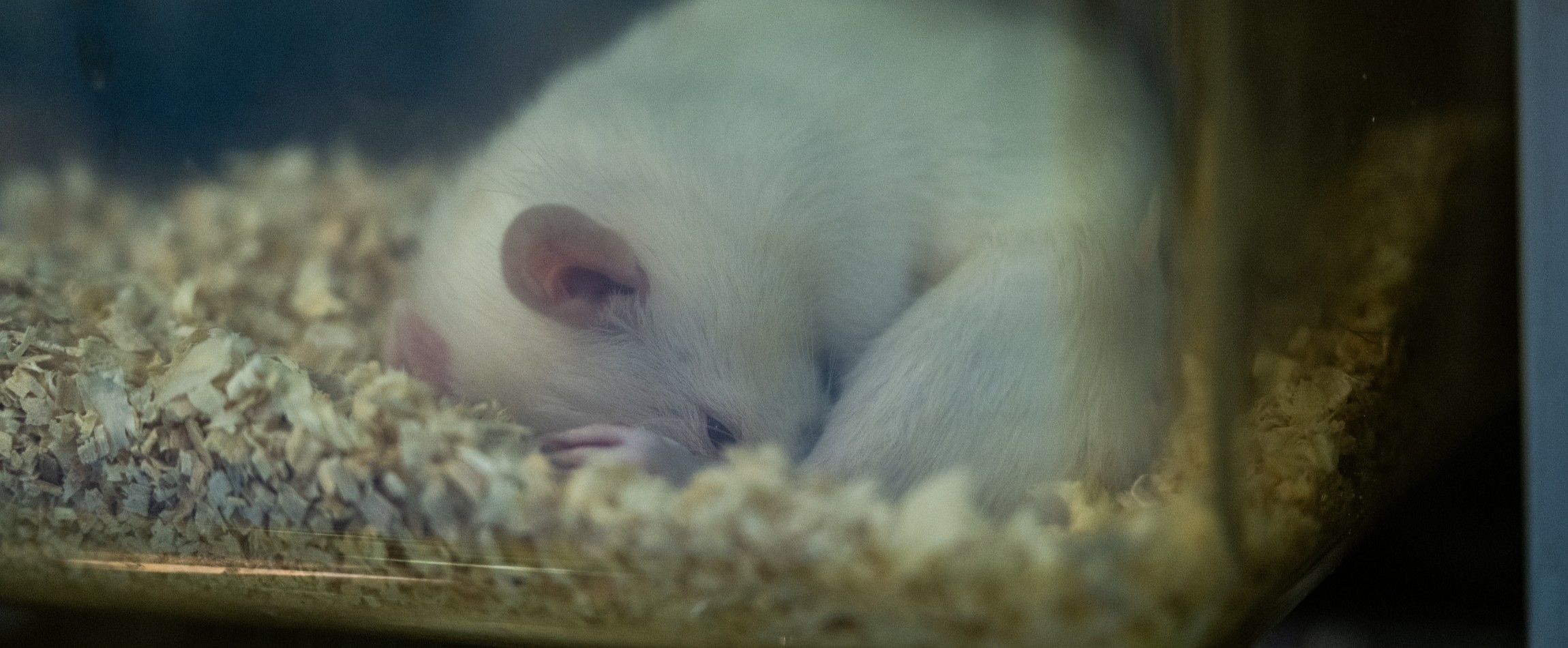
Gavage Harms Rats More Often Than Studies Acknowledge


Oral gavage is the most widely used technique for delivering test substances directly into the stomach in animal-based toxicology studies. The procedure involves manually restraining a conscious animal and inserting a rigid metal needle or flexible plastic tube through the esophagus to administer a fixed dose.
While gavage ensures that each animal receives the intended dose, it’s also considered the most stressful oral dosing method. The procedure elevates blood pressure, heart rate, body temperature, and corticosterone (a stress hormone) in rodents, with some effects lasting up to four hours. Repeated gavage has also been linked to weight loss, liver damage, and, over time, lesions in the mouth, trachea, and lungs.
Beyond this, gavage carries the risk of serious accidents, including insertion of the tube into the lungs or puncture of the esophagus with the needle. These typically cause rapid death.
A separate hazard is gavage-related reflux (GRR): because rats breathe exclusively through their noses and can’t vomit, substances administered to the stomach can reflux into the nasal cavity and be inhaled into the lungs. Clinical signs associated with GRR include labored breathing, excessive salivation, nasal discharge, and eating or rooting in bedding.
Despite these known risks, no study had previously examined how common such incidents are across the regulatory sector. Researchers at Cruelty Free International Trust conducted this study to determine, for the first time, the prevalence of reported gavage incidents in regulatory repeated dose toxicity testing. They drew on study summaries submitted under the European Union’s REACH (Registration, Evaluation, Authorization, and Restriction of Chemicals) regulation, which are publicly accessible through the European Chemicals Agency’s ECHA CHEM database.
The researchers identified 1,175 eligible studies conducted in rats between 2004 and 2023. They then randomly selected 300 for review, a sample sufficient to represent the broader pool with 95% confidence. Studies covered either 28-day or 90-day dosing periods.
For each study, the researchers recorded whether any deaths or clinical signs were attributed to the gavage procedure rather than the test substance, and whether symptoms linked to GRR appeared, regardless of what the study said caused them. They also analyzed variables related to study design, substance properties, and animal characteristics to identify risk factors.
The results indicate a substantially higher burden of gavage-related harm than previous accounts had suggested. Across the 300 reviewed studies, around one in five (21%) reported at least one death or clinical sign attributed to the gavage procedure. Looking at deaths alone, 14% of studies (roughly one in seven) reported one or more animals who died directly as a result of gavage. The risk for any individual animal was approximately one in 250 (0.4%). In total, 78 deaths among 20,180 animals were attributed to the gavage procedure across the reviewed studies. Post-mortem tissue examination confirmed the cause in 83% of studies reporting these deaths.
Study length was a clear risk factor. Around 40% of 90-day studies reported gavage-attributed harm, compared to 14% of 28-day studies. This may partly reflect the number of procedures involved (90 doses versus 28), but the researchers couldn’t say whether it comes from cumulative damage or simply more chances for something to go wrong.
Animals who received the test substance were significantly more likely to die than those in control groups, who underwent the same gavage procedure but with a plain substance like water. This suggests that substance properties influence risk beyond the procedure alone. Thicker substances were slightly more likely to be associated with incidents. But the researchers found no clear link between incidents and the rats’ strain, age, or weight, the volume of the dose, or whether the substance was an irritant.
Gavage-related harm hasn’t become less common. In fact, it nearly doubled in the most recent decade, 2014 to 2023, compared to 2004 to 2013. The researchers suggest this may reflect improved reporting standards under REACH rather than a true rise in incidents.
A striking secondary finding concerns non-fatal clinical signs. Of the studies that reported gavage-attributed deaths, 76% also recorded GRR-consistent signs in surviving animals. Yet only 19% of those studies attributed these signs to gavage. Symptoms like excessive salivation and breathing difficulties were instead frequently blamed on the substance’s irritant or toxic properties. An additional 16% of all reviewed studies showed at least one GRR-consistent clinical sign with no other adverse effects, also without attribution to gavage. Taken together, these patterns suggest the true prevalence of gavage-related harm may be considerably higher than 21%.
The misattribution problem also has scientific consequences. When GRR signs are credited to the test substance, its toxicity may appear greater than it really is. The stress of gavage can change an animal’s behavior, hormones, and metabolism, which may interfere with study results. Because it may delay how quickly food leaves the stomach, gavage can also affect how much of a substance is absorbed. The use of control animals can’t correct for this because they undergo the same procedure.
The researchers relied on the original study authors’ judgment about what caused each death or sign, and they worked from public summaries rather than full reports. Information on gavage needle type was rarely specified in the studies and technician competence was assumed, limiting the ability to assess these factors. The review was limited to REACH repeated dose toxicity studies, so findings may not generalize to other regulatory testing contexts.
This study offers animal advocates and science reformers a well-grounded, quantified argument that gavage — used routinely in chemical safety testing — causes significantly more animal suffering than current regulations acknowledge. Under Directive 2010/63/EU, gavage is classified as causing only “mild” suffering. The finding that one in seven studies reports at least one gavage-attributed death challenges whether that classification is appropriate. At minimum, the evidence supports advocacy for updated severity classifications, more rigorous gavage incident reporting standards, and serious investment in humane dosing alternatives. This includes voluntary dosing in palatable food, which research suggests can be less stressful, though it hasn’t yet been shown to work for the large daily doses that regulatory tests require.
More broadly, though, these findings point beyond just fixing gavage. Even in regulated studies, where staff are expected to be highly practiced, one in five reported harm from the procedure, with no decline over 20 years, and some harm may go unrecognized. Refinements may ease suffering, but they can’t remove it from tests that require daily doses of potentially harmful substances. For advocates, this study strengthens the case for replacing animal-based toxicity tests with non-animal methods.
This summary was drafted by a large language model (LLM) and closely edited by our Research Library Manager for clarity and accuracy. As per our AI policy, Faunalytics only uses LLMs to summarize very long reports (~50+ pages) that are not appropriate to assign to volunteers, studies that contain graphic descriptions of animal cruelty or animal industries, and research on niche topics. We remain committed to bringing you reliable data, which is why any AI-generated work will always be reviewed by a human.
https://doi.org/10.1177/02611929251334721

Citations:
Taylor, K., Rego Alvarez, L., & Grange, E. (2025). The prevalence of reported gavage incidents in repeated dose toxicity studies involving rats conducted between 2004–2023. Alternatives to Laboratory Animals, 53(3), 154–167. https://doi.org/10.1177/02611929251334721