Exotic Birds Suffer Serious Welfare Risks In Captivity


Parrots and toucans are among the most cognitively complex birds on earth. In the wild, they travel several kilometers each day, spend hours foraging, and form deep social bonds within pairs and flocks. Unlike cats or dogs, they aren’t domesticated. Their behaviors and needs remain essentially the same as those of wild birds of their kind. Yet they’re popular pets worldwide, often kept in conditions that can’t come close to replicating their natural environment. In Norway, an estimated 195,000 exotic birds were kept as companion and hobby animals in 2023, but almost no species-specific regulations govern how they’re cared for.
Recognizing this gap, the Norwegian Food Safety Authority commissioned a formal scientific assessment to inform potential new regulations. The Norwegian Scientific Committee for Food and Environment (VKM) was asked to investigate the welfare needs, welfare challenges, and mitigation measures for 24 parrot and three toucan species commonly kept in private homes in Norway.
What The Researchers Did
VKM assembled a working group of experts in animal welfare, behavior, veterinary medicine, environmental enrichment, and cognition. The team searched five academic databases, identifying over 1,300 peer-reviewed articles. After screening these for relevance, 122 were ultimately included. An additional 168 reports and articles were identified through supplemental searches, including reference lists, government and university websites, and sources recommended by team members.
The assessment followed a formal animal welfare risk framework developed by the European Food Safety Authority. For each welfare challenge, the researchers evaluated exposure (how likely the harm is to occur) and consequences (how severe the harm is should it occur). They combined these into an overall risk rating of low, medium, or high, with accompanying low, medium, or high confidence levels based on the availability and type of evidence.
What The Researchers Found
The team identified serious welfare challenges across nutrition, housing, health, behavior, social needs, and cognition. The most critical risks are rated high with high confidence, meaning the evidence is strong and the harms severe.
Seed-based diets, a common food given to birds, pose a high welfare risk for all 27 species. Seeds are high in calories but deficient in several vitamins, minerals, and essential amino acids. When given a choice, birds selectively eat the most calorie-dense seeds, leading to obesity and malnutrition. A formulated (pelleted) diet supplemented with fresh fruits and vegetables far better meets these birds’ dietary needs. Feeding practices should also allow birds to spend several hours foraging each day, as this is a powerful behavioral drive.
Social isolation is among the most serious welfare risks identified. All 27 species are highly social in the wild, living in pairs and in larger groups. The team concludes with high confidence that keeping any of these birds without at least one companion of their own species creates a high risk of poor welfare. Social isolation — even for just a few hours a day — can lead to chronic stress, feather-damaging behavior, and abnormal repetitive behaviors (stereotypies). The negative effects are apparent after three months and appear to grow more severe over time. While some caretakers spend considerable time with their birds, meeting these animals’ social needs through human interaction alone would require approximately six hours of active engagement daily. And even then, human contact can’t replicate the species-specific social environment that bird companions provide. Flock housing, in pairs or ideally multiple pairs, is the only way to adequately meet these needs.
Several common husbandry practices are also rated as high risk:
- Hand-rearing (separating chicks from their parents to socialize them to humans) increases the likelihood of stereotypic behavior, aggression, and feather-damaging behavior. Hand-reared birds are also less inclined to interact with enrichment items. These effects tend to be chronic and very difficult to reverse.
- Feather-clipping, often performed to prevent escape, eliminates the ability to fly, impairs balance, and denies birds one of their most strongly motivated natural behaviors.
- Cage housing prevents natural flight, leading to frustration, boredom, and chronic stress, as well as health issues from a lack of physical activity. Birds need tens of meters of horizontal and vertical space to express their full flying behavior, including reaching their full flight speeds. Even large aviaries fall short, and only unrestricted outdoor flight can meet this need.
- Barren environments are associated with boredom, chronic stress, stereotypies, feather-damaging behavior, and reduced physical activity. Access to a wide variety of enrichment materials is essential to support physical dexterity, foraging behavior, exploration, play, problem-solving, and cognitive development. Baths or showers and a choice of different perches are also core environmental needs rather than optional extras.
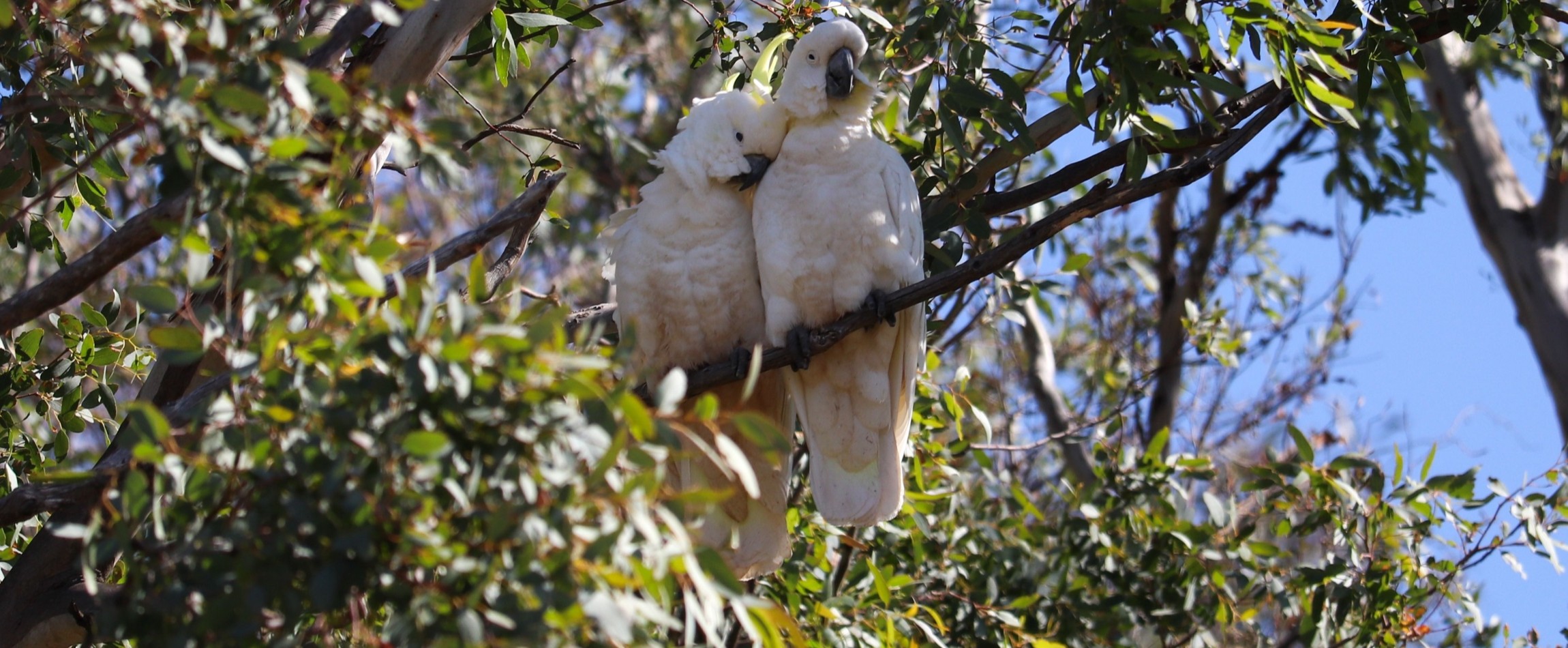
Seven species are identified as being at particularly high risk in captivity, such that their suitability as companion and hobby animals is questionable: the white cockatoo, sulfur-crested cockatoo, galah, Moluccan eclectus, chestnut-eared aracari, toco toucan, and white-throated toucan. For three species, the green-cheeked parakeet, ochre-marked parakeet, and eastern rosella, the available evidence was insufficient to draw conclusions.
Limitations And Data Gaps
The report acknowledges a significant lack of scientific literature on welfare outcomes for parrots and toucans in private keeping. Research on toucans and several parrot species is especially sparse, both in captivity and in their natural habitat. In some cases, the team relied on expert judgment in the absence of direct evidence.
Advocating For Exotic Birds
The team’s conclusion is unambiguous: achieving good welfare for all 27 species in private homes is extremely challenging. The combination of large space requirements, complex social and cognitive needs, specific nutritional demands, and a powerful biological drive to fly makes truly adequate care nearly impossible for most people, regardless of their dedication or resources.
This assessment was commissioned to directly inform regulatory decisions, and it provides robust scientific grounding for advocates pushing for meaningful legal protections for exotic birds in Norway and beyond. The case for requiring flock housing and ending practices like feather-clipping and hand-rearing rests on evidence reviewed here, not speculation. For the seven species deemed most unsuitable for life in captivity, the science supports prohibitions on keeping them as pets altogether.
More broadly, the report draws attention to a form of animal suffering that’s easy to overlook precisely because it’s been so normalized, and gives advocates and policymakers alike a rigorous scientific foundation to demand better.
This summary was drafted by a large language model (LLM) and closely edited by our Research Library Manager for clarity and accuracy. As per our AI policy, Faunalytics only uses LLMs to summarize very long reports (~50+ pages) that are not appropriate to assign to volunteers, studies that contain graphic descriptions of animal cruelty or animal industries, and research on niche topics. We remain committed to bringing you reliable data, which is why any AI-generated work will always be reviewed by a human.
https://doi.org/10.21373/4g5j-tt46

Citations:
VKM Panel on Animal Health and Welfare. (2026). Risk assessment of animal welfare in exotic birds kept as companion and hobby animals. VKM Report, 2026(7), 1–143. https://doi.org/10.21373/4g5j-tt46