
Social Learning Can Improve Conservation Translocation Success


Human-assisted movement of animals, or translocation, is a common strategy for conservation. Translocation includes the movement of wild animals to a different location in the wild, the transfer of captive-raised animals to the wild or wild animals to captivity, and the transfer of captive animals between facilities for conservation breeding programs.
The success of translocation depends on whether an animal can survive and reproduce in their new environment. In many cases, animals learn important behaviors, such as finding food, migrating, or avoiding predators, from others of the same species. These socially learned behaviors may form cultural variants that differ between populations of the same species and are specially suited to local environments.
An absence of socially learned behaviors can have dangerous consequences. Animals who haven’t learned to avoid humans or forage for natural resources may end up in conflicts with people. Those with different communication patterns than resident animals may find it difficult to integrate, potentially lowering reproductive success. These examples illustrate why deliberately considering social learning and animal culture in the translocation process can make a tangible difference.
Social Learning And Animal Culture Are Overlooked
Despite its relevance, thinking about social learning and animal culture in translocation interventions isn’t the norm. Translocation programs often overlook the role of social learning and culture, and both research and practical application are more developed for some species than others. The International Union for Conservation of Nature (IUCN), an organization whose translocation guidelines are widely referenced by government agencies, doesn’t directly connect social learning to translocation practice. IUCN also recognizes only wild-to-wild and captive-to-wild animal transfers as translocation, while this article’s authors advocate for a more inclusive definition.
The authors discuss several ways practitioners can integrate social learning throughout the conservation translocation process. They acknowledge the time and resources required to focus on social learning and present a framework to help practitioners decide if and how to incorporate it.
Where Practitioners Can Consider Social Learning
The authors suggest that opportunities to consider — and potentially incorporate — social learning exist at different scales across most documented conservation translocation strategies, although the specific approach depends on situational context, feasibility, and program goals. Below are a few real-world examples illustrating how practitioners might think about social learning throughout the translocation process.
- Intentionally selecting individuals to translocate based on their possession of certain traits (e.g., age) may encourage social learning. For example, young eastern water skinks learn foraging behavior from older individuals, so releasing them together could improve the young lizards’ survival.
- Incorporating social learning into pre-release training can help animals acquire relevant behaviors. For example, a prior study found that young regent honeyeaters who received “song tutoring” by listening to wild birdsong of the same species had better survival odds after being released.
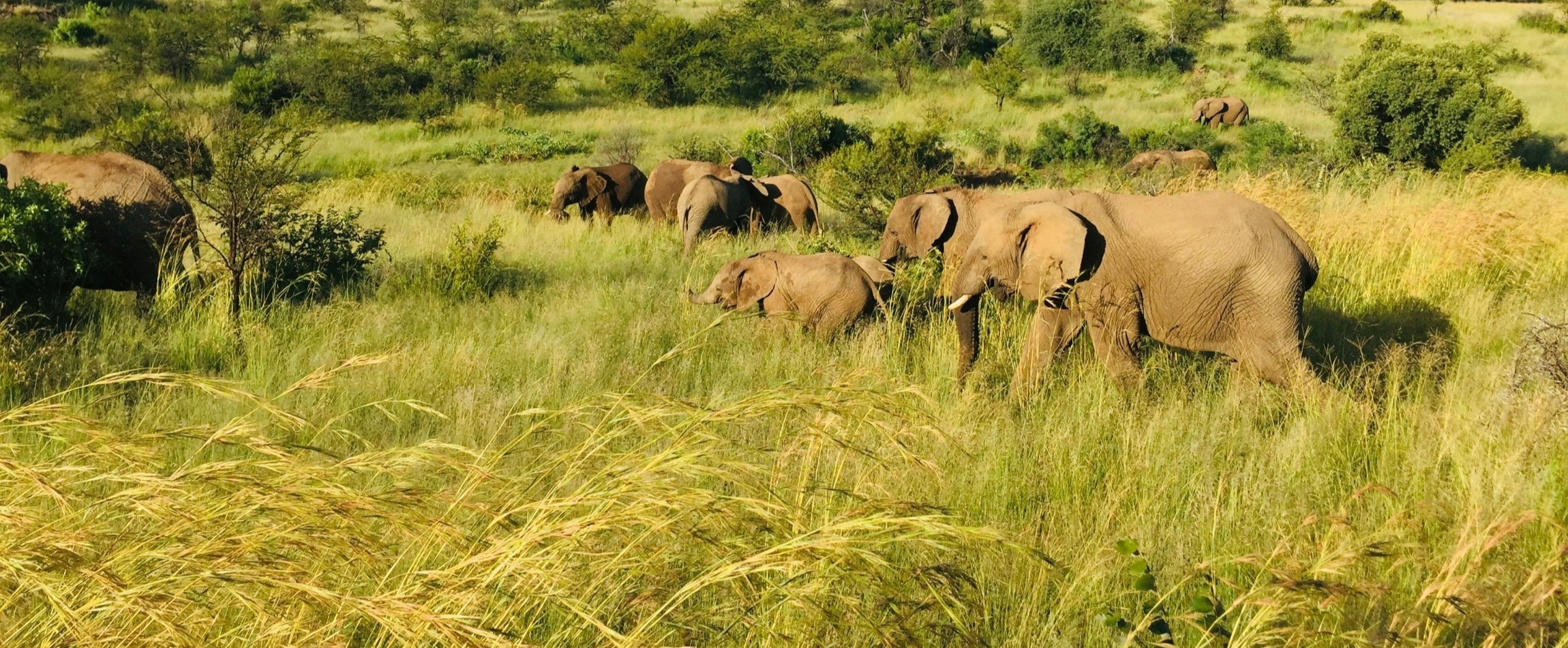
- Post-release monitoring can help practitioners identify whether animals developed appropriate behaviors and where social learning could improve the intervention. For example, young male elephants who matured without older males exhibited destructive behavior after being reintroduced to an area in South Africa. The subsequent introduction of older males helped suppress the aggressive behavior of the younger males.
When Targeting Social Learning Makes Sense
The authors acknowledge that changing a translocation strategy to focus on social learning isn’t always the right choice. Resource constraints can make altering one’s approach infeasible, and in some cases, emphasizing social learning may have a negative effect if doing so results in disruption to animals’ existing local culture.
They list six avenues practitioners should consider when deciding whether to direct time, funds, and other resources towards targeting social learning. These avenues are designed to be evaluated in relation to behaviors practitioners identify as potentially relevant to the success of translocation programs:
- Whether social learning applies to the behavior
- Whether the socially learned behavior supports reproductive success
- Whether a social learning-focused intervention would change the behavior
- Whether the necessary social learning process could realistically be replicated
- Whether there’s a conservation need to restore cultural diversity in a species
- The scale of resources needed
Using a traffic light framework, the authors provide guidance for practitioners to evaluate each avenue as a green, yellow, or red light. Some questions may not have a clear answer based on existing evidence — in those “yellow light” cases, practitioners may decide either to move forward or conduct more research.
Rather than ranking the avenues themselves, the authors advise that practitioners conduct their own cost-benefit analyses based on the species and behavior in question, as well as the overall goals of the translocation.
Putting Social Learning And Animal Culture On Practitioners’ Radar
Practitioners should actively consider the role of social learning and animal culture in conservation translocation, even if they ultimately decide not to change their strategy. Animal advocates can help bring greater attention to the importance that both social learning and animal culture play in conservation.
First, uplifting research and talking about social learning and animal culture can bring these topics into more conversations around translocation and conservation. Since much discussion on animal culture has been in academic spaces, animal advocates can help bridge the gap between researchers and conservation practitioners by sharing research in an accessible, action-oriented way.
Second, the authors discuss several changes to IUCN guidelines that would encourage more practitioners to think about social learning and animal culture. Overall, the authors suggest that the guidelines should discuss social learning and culture explicitly, in greater detail, and in relation to more aspects of the translocation process. A full list of recommendations can be found in the article’s supplementary material. As the “internationally recognized standard for translocation practice,” these changes could have a significant positive influence on the success of future translocations and the broader conservation goals they support.
https://doi.org/10.1098/rstb.2024.0138

Citations:
Greggor, A. L., de Silva, S., Brown, C., Jesmer, B. R., Noble, D. W. A., Mueller, T., Ruiz-Miranda, C. R., Rutz, C., Scott, S. E., & Williams, J. (2025). Strategies for integrating animal social learning and culture into conservation translocation practice. Philosophical Transactions of the Royal Society B: Biological Sciences, 380(1925), 20240138. https://doi.org/10.1098/rstb.2024.0138
